Follow Us on Google

By Steve Agbota
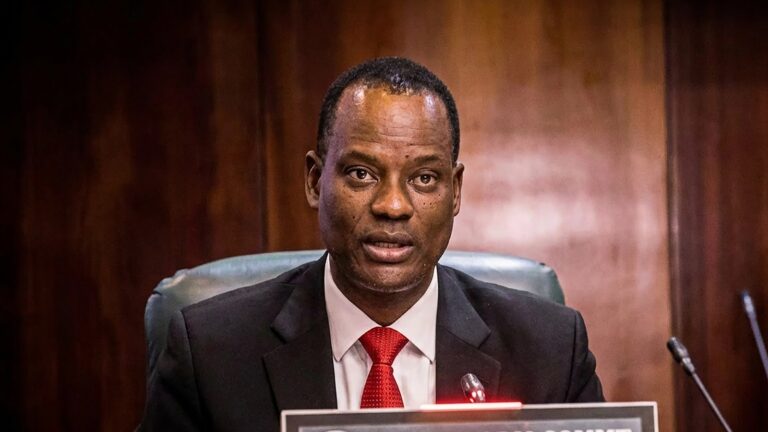
Yusuf Malanta is the Controller of the Apapa Area Command of the Nigeria Customs Service (NCS). The Apapa Port is the biggest seaport in Nigeria.
In this interview, Malanta talked about how he converted Apapa gridlock, non-compliance of traders and clearing agents among other challenges into opportunities to facilitate trade and boost revenue generation.
He said since he came onboard as the Area Controller of the Command, he has been able to block all the loopholes that could be an avenue to revenue leakages.
He said he made use of carrot and stick to get compliance at Apapa Port. He said the percentage level of compliance is above 40 per cent.
Excerpts:
Revenue drive
We have to thank the trust the management of the Nigeria Customs Service (NCS) under the Controller General of Customs (CGC), Ali Hammed has given to us. When we came onboard here, we first looked at the structures. What are the structures? The kind of officers we should post and where you post them. At this age, I know 80 per cent of the officers either through instruction, through somebody, through a fora or through what we called directive. First of all, I make sure that the officer I put in a place is an officer that has high level of integrity. So with that high level of integrity, I’m sure, he would perform his work diligently. Then I tried to strategise based on that to look at the gap and see the area we need to amend and where are the loopholes.
If you remember, for the first time, we started with the forensic manifest management system where we trail declaration through the manifest and make sure that illicit importation are sieved out and those who want to circumvent through under declaration of quantity, under declaration in terms of rate of duty through HScode are also being tracked and revenue is recovered back with the penalty to serve as deterrent. When they saw that there was no hidden place that is when I started getting compliance. So with the compliance level I get, the revenue is coming more and more. And not only that I ensured the issue of gridlock which has become a menace in the supply chain, I strategised the use of barges and I thank God the use of railway, standard gauge line that is coming up at least it has relieved the system of about 30 per cent of the containers going out of the port that means cargo throughput, the supply chain is moving, you hardly come to my gate now and see queue. Once, you are releasing; cargo is coming, space is creating and revenue is coming. So these are some of the basic things we have put in place. It is not rocket science. The more we get space, the more we accumulate cargo, and the more we release cargo.
COVID-19 pandemic
I have said it before. A management is what we want to look at, trying to maintain the balance between your operating environment and the easy environment and identify those causes that can bring challenges within this speed and capitalise on that and put them in order that is the simple thing. Maintaining the balance, every challenge has an opportunity. It is up to you to dick and find out the opportunities inside a challenge and leverage on that challenge that is the simple thing.
Return of scanners
You said scanner, anything machine can do is faster than what human being can do. I talk about cargo throughput and based on the cargo throughput, it means if AMPT can draw 100 cargoes from me in a day, for example, without scanner, then definitely they can do above 200 with scanners. There is going to be an increment on the output. So with that, we are expecting more.
Exports
You cannot talk about highest commodity under review because one thing about export is seasonal. Export is a seasonal market if today is a season of sesame seed, it may not be the same season for cocoa or cashew nut or hibiscus. We treat export based on season. Export today in Apapa Port, based on statistics I have, is growing to about 25 per cent and the record is there. Like I said on my last press briefing I think in the second or third quarter, the volume of export that we have exported from this Command, when we look at the statistic it was about 50 per cent compare to last year.
Multiple alerts
Apapa port is not only a premium port, it is a premier port. When you look at the attitude, the culture, and the kind of stakeholders we have in Apapa, there are different from other places. Apapa is the biggest port in Nigeria founded in 1913 before even the independence. So as such, if somebody says alert, I want you to go back and call him again. He must be making a mistake. We cannot stop alert but we have one stop-shop and that one-stop shop is that the moment anybody open the system and see somebody’s alert inside is not going to do anything because I told all my operatives, if you see alert and you see another alert, don’t do anything just tell me and I will call the guy and I will make sure that he has to prove to me first why this alert. After proving to me and I will ask him why did he put an alert on alert? If is likely, I can only change the seat. Otherwise, I can give him ear on standby until he reformed before he can go back to the field. Even recently, I have a stakeholders meeting with agents and it was very clear, they never mentioned alert. In fact, they are even appraising Apapa that there is no alert in Apapa. Is there written, it is not that I’m saying it. Even on radio communication, I heard one agent talking about it that Apapa is a different port.
Challenges
One of the challenges I met on ground and I take it as opportunity is the issue of gridlock, which I introduced the barge system. Carrying containers on barge through water to off dock terminals, which is working very well. Now the call-up system and the gridlock is now moving slowly. On the challenges with clearing agents, the issue of non-compliance, which I have converted to compliance, which has translate into revenue. I met non-compliance, I have converted it into compliance that is an achievement and the result is revenue. That is another challenge, which I have translated into opportunity. If I did not convert this non-compliance into an opportunity, if I’m imposing compliance, not informing compliance, I will stand there, fighting with them and I will not get opportunity the compliance and definitely the revenue will not be there. I eventually used carrot and stick method to get the compliance.
Compliance
You cannot quantify the percentage level of compliance because every Customs administration in the world must have non-compliance traders. But some are bigger than ours. All I know is that the compliance level by the time I came here up till today is more than 40 per cent because the difficult thing is to convert non-compliance to compliance. It is very difficult. Some people are habitually non-compliant by their nature. Non-compliance is in some agent’s blood. An importer will give them proper document and charge proper money for that document. Because of their non-compliance nature they will go and manipulate that document, make sure that they squeeze and make more money from that document and at the end of the day they come out looking foolish because I will catch you, you will pay demurrage, you will face penalty, get delayed and things like that. From there that is how I’m getting the compliance.
How we are treating overtime cargoes
Moving containers from here to Ikorodu will take a lot of logistics and financial commitment. To take one container to Ikorodu will cost about N600, 000 and above.
Now if we are moving 500 containers to Ikorodu, how much is that going to translate into? However, we have series of procedures before it comes to moving of containers to Ikorodu. Moving containers to Ikorodu is the responsibility of NPA not Customs. Customs will make sure that they receive all uncleared cargo lists from the shipping companies and the terminal operators. Then, they will now examine those uncleared cargo lists after free storage period. After examination, they will leave it for a certain number of days for importers to come and clear their cargo. After that day expired, they send it for gazetting by the court because of litigation. When the court gazette it, it will now go for aution. After the auction, people will now go online and buy them. In most cases, most consignments that will find out that they are outrightly seized and consumable, we give them to IDPs through a presidential committee not even Customs. So these are the procedures of the logistics aspect of it. It is not that Customs will just come and carry overtime cargoe and start auctioning it. When they concessioned the Port they are forgetting that there is Customs and therefore the government warehouse where we use to keep cargo is no more there.