Follow Us on Google

By Zika Bobby
Bello Mohammed Jibo, Customs Area Controller in charge of Seme Border, in a chat with newsmen, explained how he is mobilising community support in the anti-smuggling war.
Jibo gave an insight into the state of the border after full reopening following almost two years closure ordered by President Muhammadu Buhari.
He also talked about trading activities at one of Nigeria’s busiest and economically vibrant land frontiers between Nigeria and the Republic of Benin.
Give us an overview of trade at the borders after reopening, what has it been like?
After the reopening of the land borders by the Federal Government, it is expected that the borders will be bubbling for business as usual.
When the government was opening it, the Nigerian Customs Service gave some conditions for goods to be brought into the country.
One of the conditions was that goods from transit countries must arrive Nigeria in their original mode of transportation. That is, if a container leaves China, transits into Benin Republic and is trying to come into Nigeria, it must arrive in that container. That was a very important aspect of the conditions.
Before that, goods that were meant for Nigeria were normally trans-loaded from containers into trucks, and when you follow transit procedures and protocols, if something is bound for a country, it must arrive there in that original form or mode of transportation.
So, to our importers, our agents, the borders are now open for business. ECOWAS Trade Liberalisation Scheme (ETLS) goods produced from West African countries and export are the ones that have started in earnest, when we compare it to these goods that normally pass through Benin Republic and are meant for Nigeria, because, so far, there are some kind of conditions that Benin wanted to impose on Nigerian importers. Up till now, they have not reached an agreement on those conditions, thereby making it almost impossible for Nigerian importers to pass their consignments through Benin. What I learnt from the agents is that they were given some days for the containers to arrive in Nigeria and then be taken back to Benin.
Initially, they told them that their container must be returned within three days of release from Benin Republic, which is not practicable, and they (Nigerian importers) objected to it.
There is also what they call transit fee, that Benin Republic charges on such goods coming to Nigeria, and they are also yet to agree on the amount, because Nigerian importers felt it would amount to double taxation since the goods are not bound for Benin, and then such fees should be collected in Nigeria, which is the standard.
Also, the amount they are being asked to pay for these service charges is like asking them to pay for duty in two places.
Do you have an idea of the cost and likely adjustments in days?
An agent recently told me that they have agreed to give them 11 days, and that they are still negotiating on the issue of the cost. That is why we scheduled a meeting with the two authorities, the agents and the importers from both countries, including the private sector like the shipping companies in Benin Republic, in order to iron it out and see how we can progress.
…And have a middle ground?
Yes. But for ETLS, goods coming from West African countries, and also exports out of Nigeria, so far, so good, they have been impressive.
We believe there was a backlog of goods that were trapped during the period of the border closure. How were you able to manage this backlog?
Before the border was closed, there were some importers that had already made their declarations with payments on them, and some of them were already at the border, but they could not finish their documentations before the border closure caught up with them.
They remained here until the reopening of the border. Our headquarters at Abuja sent us a team to come and ensure clearance of these trapped trucks. Fortunately for us, they have finished their assignment and all those importers that had their trucks trapped have taken custody of their trucks.
Has there been an increase in the volume since the reopening, going by what you said regarding the Benin Republic condition, is it safe to conclude that there is a decline?
There has been a decrease in goods transiting through Benin Republic to Nigeria, but on the other ones, I think it is normal. There is a decrease in those goods that come from other non ECOWAS countries and pass through Benin into Nigeria.
Nigerian exporters are using our border very well. Since the reopening of the border, we have recorded an increase compared to what we used to have before.
For example, we have companies like Dangote that was not using this border before, but now they do. You must have seen a lot of their trucks when you were coming.
Other News
If I may give you some statistics, since the opening of the border till now, on export we have treated almost 1,154 trucks, which shows things are looking good for Nigerian export. Equally on the ETLS goods, those that come from West African countries to Nigeria, so far, I think we have processed 374 trucks.
That looks like good statistics. What is the most prominent export commodity or products?
Presently, Dangote has the highest and it is cement.
How are you coping with COVID-19 challenges and restrictions, where people are trading in the face of social distancing and all that, has it affected trading in any way?
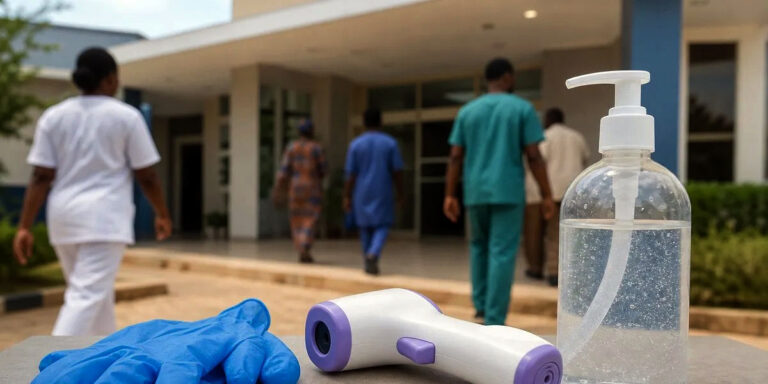
You know during the COVID-19 period, there were some restrictions that automatically affected some commercial activities, but when you talk of how the command is handling that, we made it mandatory to wear face mask at work, most especially our officers that are along the road.
We are fully compliant with all the protocols as laid down by the Nigeria Centre for Disease Control (NCDC).
In our offices, we have a bucket and water for people to wash their hands before they enter and apart from that, even at the checkpoints, we have asked them to ensure that too. So we try to see that we adhere to the safety protocols in every thing we are doing.
Coming to Seme was not easy; how do you cope with this road? The road for normal commuters looked very challenging, and then I began to imagine what it is like for trade. Has the road impacted on your officers coming to work in any way? And has it affected adversely those who trade along this corridor?
Most of my officers are resident here. As for the road, I think, if you observe, things are happening there courtesy of the government. Because from Okoko to Agbara has been tarred now, and if you observe towards Badagry, work is ongoing in that area, so we believe that the road will be okay soon.
There has been this challenge over time that border communities have a way of posing challenges to customs’ anti-smuggling activities. How are you able to manage custom-community relations in the face of the need to educate and keep re-educating your host community?
For the community; I think I will say it here again today, so far, this border happens to be the most peaceful in Nigeria.
Why I am saying this is that I have never had any crisis involving the community and the customs officers. We have a very good working relationship with the elders; traditional rulers, and also the youths.
They cooperate with us, they seem to be like part of us, because we get some intelligence from them, and they assist us in arresting some of the perpetrators of smuggling.
Why I am saying this is that somebody maybe smuggling a vehicle, and upon sighting our officers decides to run into the village. The smugglers will be surprised that the villagers will stop them and assist us in turning the vehicle back to the road.
You mean they assist your anti-smuggling efforts?
Yes, they do that a lot here. What I am saying is that we have always had that synergy with the elders especially, and the youths. So when I came in, I could not thank them enough, as they had been assisting us since before I arrived here.
I tried to look at the needs of the people; how we could reach out to them, to show appreciation for hosting us. My officers went round to study the area, and we found out that there is an international park here. And in our bid to give back to the society, we decided to construct some conveniences; like toilets and bathrooms for the park, just to show you the kind of synergy we have with them.
In the coming week, we will be handing it over to the local government. And as I told you, they always collaborate with us. When there were crises all over the country like during the #EndSARS protests, no unrest was recorded here.
Wow! This is very unique.
Yes it is. Let me add something else. Apart from the park project, we are also partnering with an NGO, Community Football Foundation (CFF), to ensure that we reach out to the youths.
So, we have decided to form a football club named Badagry United. This team does not belong to anybody; it is for the community. Just as we have teams like Manchester United and Barcelona that are community driven, we want to ensure that we form this team and leave it to the community.
As I am talking to you, we have registered it with the Corporate Affairs Commission, and about to do same with the Lagos State Football Association. We have also extended invitations to all sports enthusiasts from Badagry and they have answered us. We are already having meetings on how to form the team. So, there are many ways we have been reaching out to the people and we will continue in this part to jointly fight all forms of crime.