Follow Us on Google
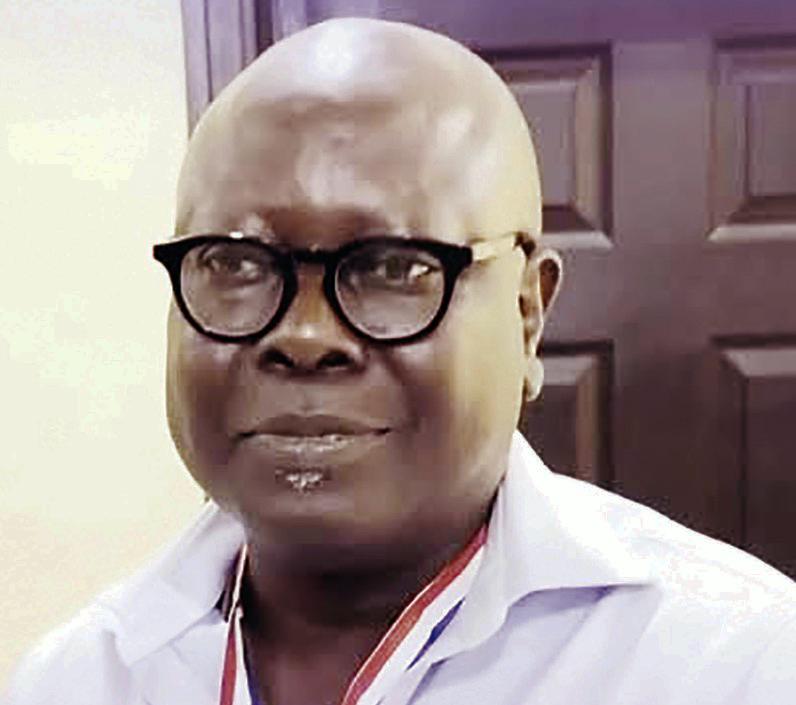
By Lukman Olabiyi
Twenty years ago, Dr. Olatunji Yusuf was mixing skincare products in a makeshift factory behind his modest two-bedroom home, where he, his family and workers shared a single toilet.
With little capital and no government support, the retired Assistant Commissioner of Police took a gamble that would define the rest of his life: he sold his property in Ibadan to fund a dream.
Today, that dream has grown into Cacatine Pharmaceutical Limited, one of Nigeria’s most recognisable indigenous body treatment brands, operating round the clock and employing 129 Nigerians.
In this interview, Dr Yusuf reflects on the challenges of building a business in Nigeria’s difficult economic climate, the sacrifices that kept the company alive, his plans to expand into pharmaceuticals, and why he believes small-scale industries hold the key to tackling unemployment and securing the future for the next generation.
Your product, Cacatine, is more popular than your name. How did you start the production of one of the most popular brands in Nigeria?
Well, I’m CEO of Layus Investments Company Limited, now Cacatine Pharmaceuticals. We started about 20 years back, in the production of Cacatine products. We are into body treatments. Our slogan is ‘We’re championing the best in body treatments.’ So, we started from the back of my house.
I’ve been producing a lot of products but, thank God, the Cacatine cream is one of the best I can say. When I started producing the cream, it was at the back of my house and gradually we have been in business for the past 20 years.
The company name has been changed to Cacatine Pharmaceutical Limited because we have a pharmacist and we want to go into pharmaceuticals which is going to be an indigenous company.
Though raw materials are expensive, we will still be in business. We are not going anywhere. We will continue struggling to make our country better.
Without some of us establishing a company like this, there is nowhere for our children to work. I have 129 staff today and we run 24 hours for us to meet up the demands of the people.
In the last 20 years, how have you been able to survive the harsh Nigerian economy because several companies that started like yours have folded up?
You are right. Most of my friends who had companies had closed down but in this life, whatever you wanted to do, just try to do it better.
I travel all the time and I continue to look for more formulas for my products such as how to package the products and how to manage the materials.
When we started with our Cacatine hair cream which is one of the best hair creams in the market, petroleum jelly was N80,000 but now it is N800,000. So you can imagine the difference in percentage in increments between then and now. We still have to pay salaries, buy diesel, petrol and manage the little that remains to run the company. If you are also not strong in marketing, you cannot survive because there is competition. There are more than 400 body cream products competing in the market including imported ones.
However, we have ensured to keep our integrity in terms of the quality of what we produce. Even the imported ones cannot beat us because we are sincere. If I want to remove anything from the materials we use just because we want to make more money, the integrity and confidence we are talking about today will not be there.
What’s your succession plan for the company?
I am working with my children. The pharmacist is my daughter, the director is my son. So we are all together. I have an accountant. We are together like a family business and we are focused on serving my people and country.
How do you think the government can help indigenous companies like you?
If the government is ready to help us we will do much better, but till now, both state and federal governments have not helped us.
We have never received any assistance from anybody, not even a phone call from the government to ask us how we have been surviving and how they can help us.
I could remember when I wanted to open this new factory on January 25, 2018, we wrote a letter to the Lagos State Government Ministry of Commerce and Industry. They were the ones that opened this place. I don’t know what attempt I will make again to get government attention. They know we are here because we are paying tax. We pay tax for my staff every month and I pay personal tax too.
The government is supposed to be looking at small scale industries by now, not focusing only on petrol. Look at the university, students graduate every year but no jobs for them. If we have hundreds of the types of my company in Lagos, it is better. I employed 129 staff, another company will employ 200 staff and another may employ 300 somewhere and by that we can accommodate our children who graduated who will develop more than people like me.
The government can give us tax exemption on raw materials or VAT to support us so that we can make more money and employ more graduates. The commerce and industry ministry knows us, they know me. We went to the Trade Fair every year, and they showcase us.
If you were to look back when you started, what would you say are your good and bad moments?
The way I started. I don’t see any graduates that can start like that now. I was living in a two bedroom house with my mother, wife and children. I made a very small factory at the back of the house. All the staff, including myself, were using the same single toilet.
Today if a graduate wants to rent a two bedroom, they will be asking you for two million naira per year and you have never started production.
It was very difficult for me back then. I had no money. I sold some of my property in Ibadan and put the money on this product to make it successful. I didn’t want my children to finish school and be looking for a job or begging. I told myself; it is only me that can start something that my children can grow with. Nobody did it for me when growing up but I wanted to do it for my children, family and the nation.
Will you say you are fulfilled and what are your dreams for the company in the future?
I am planning to go into pharmaceuticals. The NAFDAC has given us the approval for the building so we are contracting the job to the Indian people to come and build.
We don’t want to make any mistakes because we need the WHO standards. We want to build a very good one. It might be small but it has to be good where we can produce blood tonic, capsules and others.
You retired from the police. If you look back, how would you describe your time in the police compared with what we have now in terms of discipline?
It is not the same. To enforce discipline might be difficult. Whenever I travel abroad and see the police, I always think of my country. The way policemen perform over there, their dressing, structures and the way they will approach you. Even though they want to arrest you, they will still be polite.
The government can introduce training on small scale industry to police officers. They can bring somebody like us to talk to them to make them see why they should plan for their retirement by starting small scale businesses like a food bakery now. By this, many policemen may not even wait till 60 years of age before they retire to fall back on the business they have been able to establish.