Follow Us on Google
From Scholastica Hir, Makurdi; Tony John, Port Harcourt; Noah Ebije, Kaduna; Femi Folaranmi, Yenagoa; Ighomuaye Lucky, Benin and Okey Sampson, Umuahia
According to research, social media platforms expose young people to cyber bullying and online predators.
In order to curb mental health risks and addiction associated with it, several countries, including Australia, United Kingdom, Indonesia, Malaysia, Brazil ,Spain and the United Arab Emirates, have officially passed and enacted laws banning children under 16 from social media platforms – Tik Tok, Instagram, Facebook, X, Snapchat, You Tube and Reddit.
In this report, some Nigerians suggest how the government should handle exposure of minors to social media platforms.
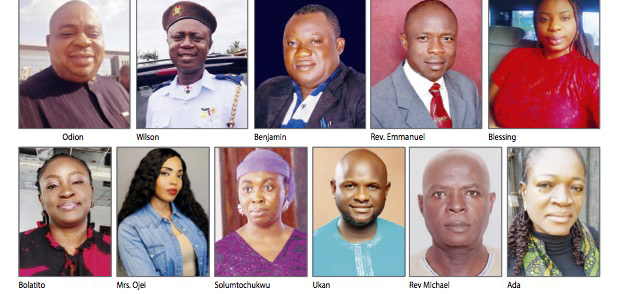
Some social media certain inappropriate for minors -Kennedy Odion, politician; Benin
Children under the age of 16 should not be allowed to participate freely on social media platforms because much of the information available there is not healthy for children’s consumption.
At that age, they are still developing and may not yet have the maturity or independence of mind needed to properly assess what they see online.
When they are exposed to certain ideas, behaviours, or trends, they may be tempted to imitate them without fully understanding the consequences. I believe this is one of the main reasons those countries placed restrictions on young users.
Personally, I support such a ban. In Nigeria, we value culture and family guidance.
While growing up, our parents often asked children to excuse themselves when adults wanted to discuss certain matters. It was not because they were hiding something from us, but because they understood that some conversations were not suitable for children.
In the same way, certain content on social media is not appropriate for young minds.
Mental wellbeing, healthy development of young people must come first -Wilson Ekhomogiazin, activist; Benin
As parents, educators, and policymakers, we must not ignore the growing dangers that unregulated social media use poses to children.
While technology has its benefits, however, the safety, mental wellbeing, and healthy development of young people must come first.
It is therefore important for governments, schools, communities, and families to work together to establish stronger protections, digital literacy, parental guidance, and responsible online policies that shield children from harm while promoting healthier and more productive use of technology.
Govt should monitor social media platforms against abuse -Isaiah Benjamin, journalist; Kaduna
As much as cyber bullying and cyber crimes are condemnable acts, banning children under 16 years from social media platforms may work in other countries. It will be very difficult to implement in Nigeria. In countries where the ban is effective, the government makes necessary provisions to engage such active children.
In Nigeria today, there are children under 16 years, who have taken to banditry and other forms of social vices, apparently for lack of education, which knock them out of social platforms. Again, some parents use their talented children under 16 years on social media platforms to earn a living, so banning it will be a challenge for such parents except the government will provide a source of livelihood for them.
For me, the government should rather carry out monitoring of social media platforms and check those using it for negative purposes and bring them to book accordingly but attempt to ban it for children under16 years may boomerang.
Nigeria must develop policy that reflects our unique circumstances, not imitating foreign policies -Rev. Emmanuel Olorunmagba, cleric; Kaduna
The conversation around protecting underage children from the dangers of social media is important and cannot be ignored. Every responsible government has a duty to safeguard its young citizens from cyber bullying, online predators, harmful content, and digital addiction.
While some countries have introduced age-based restrictions according to their own social and technological realities, Nigeria must develop a policy that reflects our unique circumstances. We must be careful not to imitate foreign policies without first establishing the institutions, enforcement mechanisms, and support systems required to make such policies effective.
Other News
Protecting our children is a responsibility we must take seriously. However, government must understand that leadership is not about banning every problem it finds difficult to manage; true leadership lies in developing intelligent, practical, and sustainable solutions that protect our children while preparing them to thrive in the digital age.
Govt should urge social media companies to turn off addictive features -Blessing Akoko, NGO director; Yenagoa
Social media can cause anxiety and addiction for children. I understand why other countries are banning under-16s, but a total ban won’t work in Nigeria because we cannot enforce it. That is how the system is built. Kids can use a VPN to get online. So, trying to ban social media totally for under-16s actually gives them room to be smarter because kids these days are actually smart. So, instead of making laws that we cannot enforce in this country, the government should urge social media companies to protect young users by turning off addictive features and late-night notifications by default.
We need to teach digital safety and mental health awareness in our schools. Nigeria does not need a total ban.
FG should enact, enforce legislation banning minors from social media -Bolatito Folaranmi, sociologist; Yenagoa
As the founder of Shielded Lives Initiative, I am committed to the protection and well-being of children. I support a complete restriction of social media access for underage children. I believe that children below the age of 16 are particularly vulnerable to the harmful effects of social media, including addiction, cyber bullying, and exposure to inappropriate content, mental health challenges, online exploitation, and negative influences that can affect their emotional, psychological, and social development. While technology offers many benefits, childhood should be a period of healthy learning, physical interaction, and character development.
I therefore encourage the Nigerian Government to enact and enforce legislation prohibiting underage children from accessing social media platforms.
Parents should implement age verification systems -Mrs. Sylvia Ojei, creative expert; Port Harcourt
It’s no longer news that social media platforms have become a medium where cyber bullying and online predators breed, record-high underage addictions and unruliness, unsupervised content viewings, peer pressure, and the craze of unrealistic wants, which lead to depression, abuse, anxiety and so on. No wonder some countries have taken drastic measures to completely ban underage children in order not to diminish their moral conducts.
We should adopt approaches such as ensuring parents implement age verification systems in all their social media platforms; parental control capabilities for their underage children, encouraging parent-child relationship that fosters understanding, guidance and trust, and adopting computer literacy programmes for parents and children who have no prior knowledge of how to use the media, so that they are better equipped in understanding the platforms their children sign up to.
Social media companies should implement age verification systems -Solumtochukwu Ozobulu, lawyer; Makurdi
I understand the concerns about cyber bullying, online predators and the mental health impact of social media on children. However, banning children under 16 from social media addresses the symptoms rather than the disease.
We cannot continue to respond to harm by removing young people from digital spaces instead of making those spaces safer and holding those responsible accountable.
The real policy conversation should be about the duty of care owed by social media companies. These platforms deliberately design algorithms to maximise engagement, yet they do not invest enough in age-appropriate content moderation, child safety measures and the swift removal of harmful content. They should be required to implement robust age verification systems, curate content according to age groups, strengthen parental controls and proactively detect and remove bullying and predatory behaviour.
Banning children from social media is akin to telling a child to leave a school because they are being bullied instead of holding the bully and the school accountable for creating an unsafe environment. The answer to harm is not exclusion; it is accountability, regulation and the creation of safer digital spaces where children can learn, connect and thrive.
Stricter enforcement needed against cyber bullying, online predators -Ukan Kurugh, gender rights activist; Makurdi
I support stronger regulation of social media use by children, but any ban should be balanced and practical.
The government should introduce age verification measures, digital safety education, parental controls, and stricter enforcement against cyber bullying and online predators.
Protecting young people’s mental health and safety is important, but policies should also ensure that children can still benefit from educational and positive online opportunities under proper supervision.
Nigeria should ban underage from accessing social media platform -Rev Michael Igu, cleric; Aba
In Nigeria, good things are always applied from the wrong perspectives. That’s why the gains which the computer revolution has brought are turning into a different thing among the youths, particularly, the underage. They have been exposed to so many ills and the society is worst for it.
In order to curb mental health risks and addiction associated with it, several countries you have mentioned have banned children less than 16 years from social media platforms. That’s a very good move. I am advising that Nigeria should follow those countries that banned underage from social media platforms. This will help to curb insecurity in the country.
NASS should enact law banning underage from social media -Ada Chima, public servant; Umuahia
Social media platforms have done a lot of wrongs to youths in this country, particularly, the underage. Apart from exposing them to cyber bullying and online predators, these youths have used social media to learn so many bad things, and many of them no longer read their books as they are preoccupied with their phones and laptops.
To stop this malaise, the National Assembly should enact law banning the underage from social media platforms. But the problem we have in Nigeria is that laws are made for the poor. You will not be surprised that if such law should be made, it will be targeted at the children of the poor. The children of those who make the law and those of the very rich in society would not be touched.