Follow Us on Google
By Fred Itua, Abuja
The Independent National Electoral Commission (INEC) has published the final list of candidates for the January and February 2027 general elections, formally opening a campaign season that will run over the next four months. With the ban on campaigning lifted and the timetable now fixed, the country moves into what is expected to be one of the most consequential election cycles in its recent history. The elections will be contested by 18 presidential candidates, 4, 860 candidates for the 109 Senate and 360 House of Representatives seats, and thousands more standing for governorship and state assembly positions across the 36 states.
A close reading of the final Senate list, however, points to a development that will shape the character of the National Assembly long after the ballots are counted. Nigeria’s Senate, already dominated by a political class drawn heavily from former state executives, is set to deepen that pattern in 2027, with a striking concentration of sitting and former governors seeking seats in the Red Chamber.
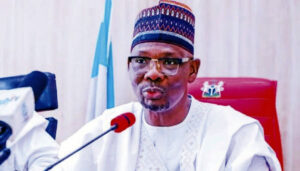
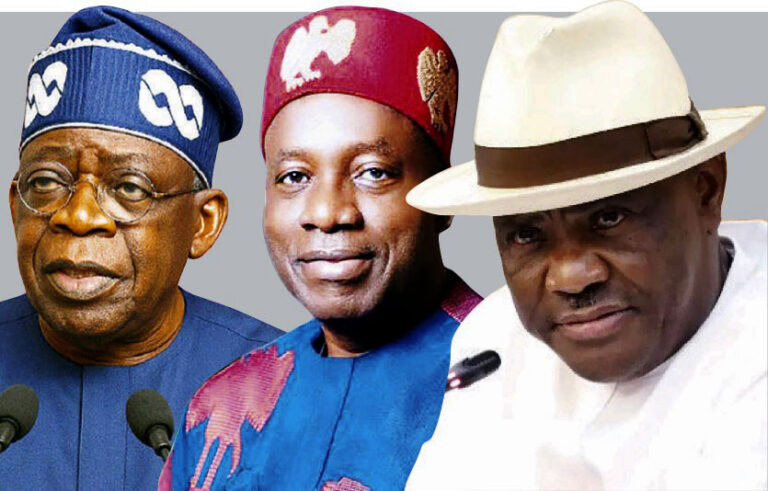
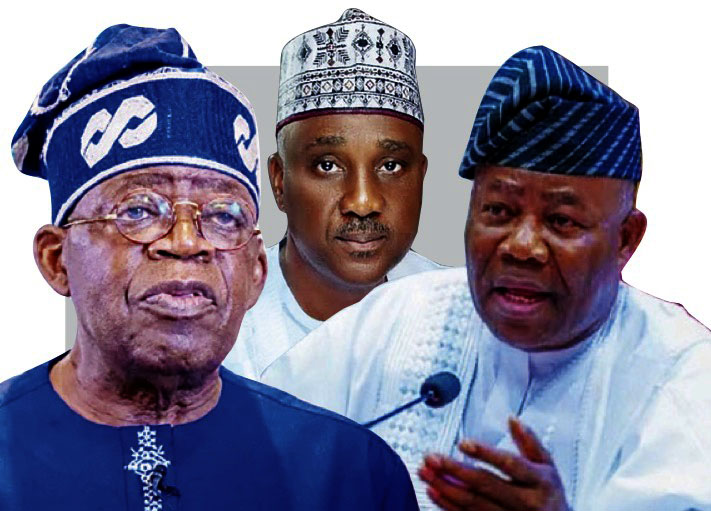
The presidential field itself offers a preview of how thoroughly the political establishment has repositioned itself for the coming contest. President Bola Ahmed Tinubu leads the All Progressives Congress (APC) ticket with Vice President Kashim Shettima as his running mate. The African Democratic Congress (ADC) is fielding former Vice President Atiku Abubakar alongside former Rivers State Governor and one time Transport Minister Chibuike Rotimi Amaechi. The Nigeria Democratic Congress (NDC) has nominated former Anambra State Governor Peter Obi, running with former Kano State Governor Rabiu Kwankwaso as his vice presidential candidate. The arrangement effectively pairs two former governors from opposite ends of the country on a single presidential ticket.
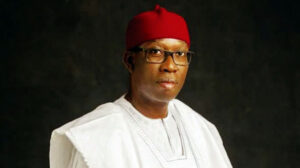
Further down the ballot, the Peoples Democratic Party (PDP) settled for Professor Sandy Ojang Onor, while the Social Democratic Party (SDP) is fielding lawyer and businessman Adewole Adebayo.
The Allied Peoples Movement (APM) has nominated sitting Oyo State Governor Seyi Makinde, whose candidacy places a serving governor directly into the presidential race itself. Of the 18 presidential and vice presidential pairings certified by INEC, two presidential candidates and four running mates are women, out of a slate whose ages range from 35 to 80 years.
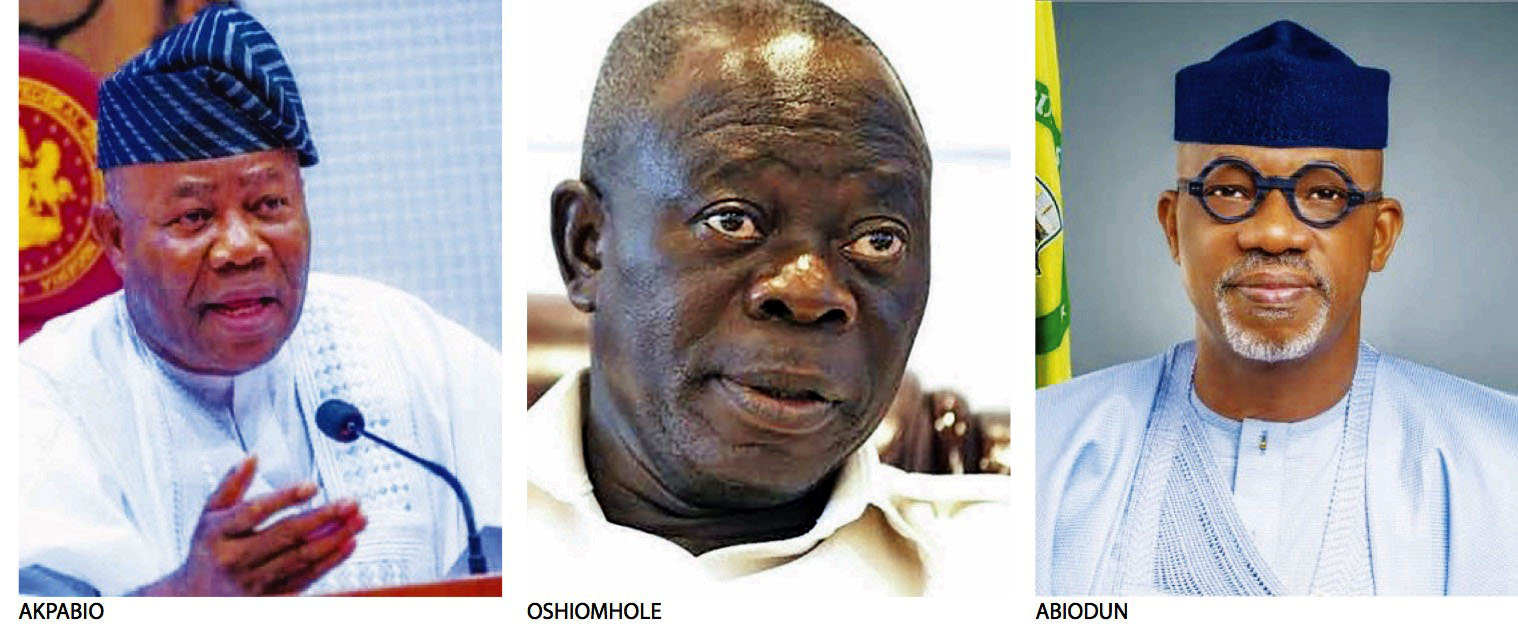
According to the final list released by INEC, six serving governors are contesting Senate seats alongside their current responsibilities as state chief executives. They are AbdulRahman AbdulRazaq of Kwara, Dapo Abiodun of Ogun, Hope Uzodimma of Imo, Muhammadu Inuwa Yahaya of Gombe, Mai Mala Buni of Yobe, and Abdullahi Sule of Nasarawa, all of whom are seeking election on the platform of the ruling All Progressives Congress.
They are joined by at least 12 former governors and two former deputy governor also seeking election or re-election to the Senate. The list includes former governor of Abia State, Senator Orji Uzor Kalu, contesting Abia North, Ifeanyi Okowa in Delta North, Adams Oshiomhole in Edo North, Mukhtar Ramalan Yero in Kaduna North, Ibrahim Shekarau in Kano Central, Muhammadu Adamu Aliero in Kebbi Central, Yahaya Bello in Kogi Central, Abubakar Sani Bello in Niger North, Simon Bako Lalong in Plateau South, Aliyu Magatakarda Wamakko in Sokoto North, and Abdullahi Yari in Zamfara West. They are joined by former Abia State deputy governor, Eyinnaya Abaribe and ex- deputy governor in Lagos State, Idiat Oluranti Adebule.
At least 20 governors, former governors or deputy governors are on the Senate ballot for 2027. The number dwarfs the concentration seen in most previous assemblies and reflects what analysts describe as a well-established migration pattern within Nigeria’s political class.
At least, 12 of Nigeria’s 36 state governors are already serving their constitutionally permitted second and final terms, with 10 of them due to complete eight years in office on 29 May 2027. For many of these outgoing chief executives, the question is no longer whether they will remain politically relevant after leaving office, but where within the country’s power structure they intend to relocate, and the Senate remains the preferred destination.
The current 10th National Assembly already has 14 former governors sitting in the Senate, reinforcing what has become a well-worn path from Government House to the Red Chamber. The migration accelerated notably from 2007, when a cohort of governors completing their terms, including Adamu Aliero of Kebbi, moved almost immediately into senatorial seats, establishing a template that subsequent generations of term limited governors have followed closely.
From Government House to the Senate presidency
The concentration of former governors in the Senate has, over time, translated into a concentration of former governors at the very top of the chamber’s leadership. Bukola Saraki, a former two-term governor of Kwara State, became Senate President in 2015 after his own bruising contest for the position. The current Senate President, Godswill Akpabio, is himself a former two-term governor of Akwa Ibom State who assumed the leadership of the tenth Senate in 2023.
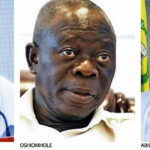
The precedent is shaping expectations for the 11th National Assembly. Adams Oshiomhole, the former two-term Governor of Edo State, now seeking re-election to the Senate, is widely believed within the National Assembly to be nursing ambitions for the Senate Presidency in 2027. His repeated clashes with Akpabio through 2026, including a widely reported floor confrontation in which Oshiomhole attempted to raise a point of order only to be firmly rebuffed by the Senate President, have been interpreted by multiple sources within the chamber as early skirmishes in that leadership contest.
The tension deepened after the Senate amended its Standing Orders to restrict eligibility for principal and presiding offices in the 11th National Assembly to ranking members with at least two consecutive terms, a change critics said was designed to narrow the field of contenders for the Senate Presidency. Oshiomhole publicly argued that Akpabio himself would not have qualified for his current office under the amended requirements, one of the most forceful public criticisms of the Senate President since the chamber’s inauguration.
Political observers within the National Assembly are anticipating the arrival of additional former governors, including Okowa and Uzodimma, alongside the return of several ranking senators. This is expected to make the contest for the Senate’s principal offices considerably more competitive, given that former governors traditionally exert outsized influence within the chamber because of their political experience, financial resources and established networks across party lines.
The productivity question
Other News
The growing concentration of former governors in the Senate has revived long standing concerns about legislative productivity, concerns that predate the 2027 election cycle but have gathered fresh urgency as the incoming Senate’s composition becomes clearer.
Senator Nkechi Nwogu, an APC chieftain, was blunt in her assessment of the trend, warning that the Senate was gradually turning into what she called a political burial ground for retiring governors.
Findings indeed showed that some of the 13 former governors in the 10th Senate had yet to sponsor a bill within the assembly’s first ten months. Another assessment of the 10th National Assembly’s overall output found that lawmakers had introduced 1,033 bills as of April 2026, of which only 106, or roughly 10 per cent, had completed the full legislative process, while the National Assembly had spent close to 58 per cent of its lifespan on recess since its inauguration in June 2023.
The criticism extends beyond bill sponsorship to plenary attendance and committee engagement. Public affairs commentator Emmanuel Okechukwu, writing on the phenomenon of legislative absenteeism, argued that many of the lawmakers most associated with poor attendance were former public office holders, whom he accused of treating the Senate as a retirement package rather than a working legislature.
Not every former public holder or former governor in the Senate fits this description, and defenders of the trend argue that legislative experience gained from years of executive administration can strengthen, rather than weaken, the quality of debate and oversight. Sponsors of individual appropriation bills, tax reform measures and constitutional amendments have, on occasions, come from the ranks of former governors, and their familiarity with the workings of the executive arm is often cited as an asset during budget scrutiny and oversight hearings. But the recurring pattern of poor bill sponsorship among some of the chamber’s most prominent former governors has kept the criticism alive, and the scale of the incoming cohort for 2027 suggests the debate is unlikely to subside once the new Senate is sworn in.
The 2022 communiqué of the National Conference of Former Deputy Governors Forum of Nigeria, issued at a gathering in Uyo, identified the personalisation of state power and weak democratic institutions among the structural factors undermining productivity in governance more broadly, a diagnosis that critics of the Senate’s composition say applies with particular force to a chamber increasingly staffed by former chief executives accustomed to wielding unilateral executive authority rather than negotiating consensus among equals on the floor of a legislature.
Key senators who will not be returning
Beyond the growing dominance of former governors, the final list also confirms the exit of several senators whose absence had been the subject of speculation since the conclusion of party primaries earlier in the year.
The most closely watched casualty is Senator Ned Nwoko, representing Delta North, who lost the APC ticket to former Delta State Governor Ifeanyi Okowa by a wide margin during the party’s May primaries. Nwoko’s absence from the final list confirms one of the biggest upsets of the primary season, and hands Okowa a direct route into the Senate four years after leaving Government House in Asaba.
Also missing is Danjuma Goje, the former Gombe State Governor and serving senator, who lost the APC ticket for Gombe Central to Mohammed Ahmed and does not appear on the final list, ending a Senate career that had included a stint as chairman of the Senate Committee on Appropriations. In Kogi East, Senator Jibrin Isah, popularly known as Echocho, lost the APC primary to Dr Erico Ameh
and will not be returning. In Edo South, Senator Neda Imasuen lost his ticket to a former member of the House of Representatives, Omoregie Ogbeide Ihama.
The most politically significant departure from the ruling party’s ranks, rather than from the Senate itself, is that of Ovie Omo-Agege, the former Deputy President of the Senate, who resigned from the APC after losing the party’s Delta Central primary to Senator Ede Dafinone and subsequently secured the ticket of the Nigeria Democratic Congress (NDC) for the same seat, meaning his Senate career might continue, but outside the ruling party.
The scale of change within the ruling party’s own ranks has been considerable. Party sources told Saturday Sun that more than 70 serving members of the National Assembly, comprising senators and members of the House of Representatives, failed to secure APC tickets during the primaries, a level of turnover that party insiders privately described as unusual for a governing party so close to a general election, when incumbents typically enjoy clear advantages in name recognition and access to campaign resources.
Senate President Akpabio was reported to have moved to reassure affected lawmakers in the aftermath of the primaries, offering what he described as congratulations in advance for those who might yet find their way back through the courts or party reconciliation processes, though the final INEC list suggests few of those appeals altered the outcome. Not all of the departures were the result of primary defeats alone. The APC’s National Working Committee subsequently dropped a small number of candidates who had emerged victorious in their primaries, following a report from the party’s Primary Election Appeal Committee.
Among those affected was Gabriel Suswam, the former Governor of Benue State, who had defected from the PDP to the APC in February 2026 specifically to pursue a Senate seat, only to be dropped by the party leadership after the appeal process and replaced with Emmanuel Memga Udende.
Also notable is the continued presence on the ballot of Senator Natasha Akpoti Uduaghan, the Kogi Central senator whose earlier clash with Senate leadership drew national attention. She appears on the final list as the PDP candidate for Kogi Central, setting up a direct contest against former governor Yahaya Bello, who is standing for the same seat on the APC platform, in what is likely to be one of the most closely watched senatorial races of the 2027 cycle.
What list means for quality of the next Assembly
The final list paints a picture of a National Assembly that will be simultaneously more experienced, but one described by critics as potentially less dynamic than the electorate might hope for. Long serving lawmakers such as Senator Ali Ndume of Borno West, first elected to the National Assembly in 2003, and human rights advocate turned senator Shehu Sani of Kaduna Central, both secured their spots on the final ballot, ensuring a measure of institutional memory within the chamber. Around 190 current members of the House of Representatives and 54 serving senators secured the APC’s nod to seek fresh mandates, suggesting that despite the scale of upheaval within the primaries, a substantial core of incumbents will still return.
For now, whether that combination, seasoned incumbents, a record number of former state executives, and a handful of high profile newcomers, produces a more effective Senate than its predecessor remains to be seen. What is already clear from the final list is that the chamber’s leadership contest, and by extension its overall direction for the next four years, will be shaped heavily by a cohort of former governors expected to compete vigorously for the Senate’s most powerful offices.
With the presidential and National Assembly elections now just four months away, scheduled for 16 January 2027, and governorship and state assembly elections following on 6 February 2027, the campaign season ahead will test whether voters share the concerns raised by critics within the National Assembly itself, or whether the familiar calculus of name recognition, financial resources and political networks once again favours the very governors whose Senate ambitions have drawn such pointed criticism from their own colleagues.