Follow Us on Google
By Steve Agbota, [email protected] 08033302331
Moving trucks out of Apapa Wharf was indeed a big issue for importers bringing their consignments through the Lagos ports some months ago.
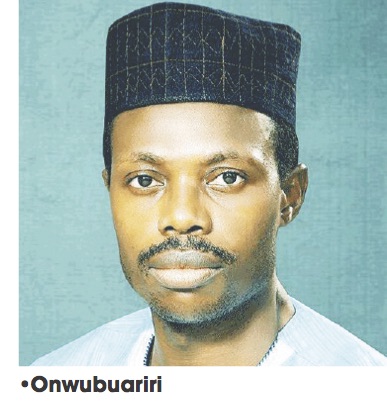
But today the narrative seems to be changing fast, as the Managing Director of Trucks Transit Parks Limited, Jama Onwubuariri, has boasted that such nightmarish experiences have ended for good.
In this interview with Daily Sun, Onwubuariri explains how TTP experiment had crashed the cost of moving trucks from between N150,000/N250,000 to between 10,000 and in some cases N5,300 to 3,000 depending on the location that you are coming from, the business you are doing and the processes or standard operating procedures that have been put in place. All these show clearly that there is more to the traffic management system that we have put in place, than just the ticketing fees.
In this zoom interview with Daily Sun, Onwubuariri highlighted some of the achievements and challenges associated with the Electronic call up system codenamed ETO and other things in the port.
Excerpts:
Recently, Council of Maritime Transport Unions &Associations (COMTUA) alleged that TTP is only focused on revenue generation, rather than actual traffic management for which it was constituted, how true is this?
It may be best to respond to that allegation, by saying that at the Truck Transit Park Limited, our original reason for coming into existence has nothing to do with money. The founders of the company saw a problem, which we regarded as being an embarrassing to us as Nigerians. We thought it sad that as a country with huge resources and intelligent people, something as simple as traffic could make us notorious, starting with here in Lagos. We went ahead to research how the issue of traffic can be solved with technology. We sought what people in other countries have done to solve the issue of traffic with particular reference to truck traffic. Our findings led us to curate a befitting local process, specifically tailored to our environment. That is how Eto came about.
Part of the attraction of Eto for government was that it would not cost the government a dime to put these solutions in place. We were determined to set up a working process and even pay the government. To them saying that we’re simply interested in revenue generation and not traffic management would by this fact be a complete falsehood.
In terms of what we have achieved that also contradicts that allegation. In the past one year and three months, we’ve been able to do just 150,000 short of 1,000,00 truck movements from one location to another. In the past it was the case that you either need to know someone or be willing to part with a ridiculously large sum of money to have your trucks moved from one location to the ports, the warehouses and other controlled location within Apapa. However, we have crashed that cost of between N150,000/N250,000 to between 10,000 and in some cases even N5,300 to 30,000 depending on the location that you are coming from, the particular business that you are going to do and the processes or standard operating procedures that have been put in place. All these show clearly that there is more to the traffic management system that we have put in place, than just the ticketing fees. Imagine the difference between paying N250,000 to paying N25,000 to N30,000.
In terms of actual impact on the traffic, before now you would see traffic stretching all the way to Yaba, Onipanu, Surulere of trucks that are heading into Apapa, that’s no longer the case, you would see just some little traffic close to the port. That speaks to the impact of the electronic call up system on the environment where we operate.
In terms of extortion which has been a bane of movement of trucks within Apapa and Tin Can, that has drastically reduced, people can now move into the ports without having to pay a dime and locations where people are inconvenienced and are required to part with money is no longer standard practice or sine qua non to access into the port or other controlled locations.
We’ve also been able to achieve a significant level of order in terms of being able to stay in your garage or office and be assured that your trucks can move from a certain point and get to the desired destination within a good time. Before, it used to take about two weeks for trucks to move from Mile 12 into Apapa. Now, it only takes about two days or maximum three days. Again, this shows the level of impact that the call up system has had. We have had to go out in the streets before kick-off and during implementation to ask the truck drivers themselves who feel the most impact of this how the gridlock affects them and we have documented the answers they gave us that some die on the steering due to exhaustion, Many can’t be with their families for months because they stay in the traffic, they experience theft of their batteries or vehicle kick starters. Sometimes the drivers are forced to sell their own diesel in order to survive because the owners of the cargo and the owners of the truck will not pay them again. We’ve gone back to the streets to interview them after we have put the solution in place of course with the active support of the NPA and the LASG, and they have told us that this is the best solution ever that they could think of in terms of traffic management.
We’ve spoken to the Apapa residents’ association, and they say that the price of their property is coming back to what it used to be because people can now move freely in and out of the axis. There were times in the past before we came onboard that emergency vehicles like ambulances and fire service trucks could not get to people who need help because of the gridlock but that’s no longer the case. We also spoke to the businesses within Apapa and they agree that Eto is the best solution yet to the gridlock. So there’s more to TTP than just altruistic interests.
Despite efforts by the call-up system to manage traffic, gridlock is still being experienced in areas like TinCan and First Gate. Are there plans to improve the situation?
Remember, it takes time to build. This project is a tripartite public- private arrangement with clear roles and responsibilities for each party. One thing that we have emphasized to our senior partners is that an extortion free environment is sine qua non to the success of the callup system. The individuals and officers who are deployed to provide traffic management and enforcement duties must be people who have integrity and who are enlightened on acceptable conduct. Some of these people insist on extorting and delay drivers needlessly thereby leading to a build-up of traffic along the roads. We continue to engage with the authorities on the need to give more incentives for good behaviour and to ensure that there is consequence management for those who refuse to comply.
When we rid the roads of this, we can feel the full impact of the call-up system. We have for instance suggested that there should be a manifest of officers on enforcement duties as well as a digital map of approved checkpoints and made available on the eto call-up system. In fact, we have a feature on the call-up system that can be used to achieve that. In addition to that, there should be a proper identification of officers deployed to these approved checkpoints, so you can easily identify who is involved with reported incidences, which can be verified with the publicly available digital manifest.
There’s also the issue of bad roads and ongoing road construction, which have a direct impact on traffic management. If these issues are tackled, we’ll gradually see the gains of the call-up system if the solution is sustained.
Maritime associations and the NPA recently called for unbundling of Eto to allow for competition. What is your reaction?
Again, let’s look at the facts. There is no system on earth designed by humans that is perfect. Even the biggest corporations continue to bug. I believe that the Eto has performed better than even some international apps since it was launched. Our engineering team is constantly researching ways to make the application better especially based on feedback from the field.
We also engage with the NPA twice a week to have meetings where we identify problems areas, proffer solutions, which we then implement quickly. So it’s best to identify areas of inefficiency and fix them rather than assert that the absence of competition is giving rise to inefficiency. If you listen to the comments about unbundling, they cannot point out a problem area, it’s often just vague comments. Majority of the calls for unbundling stem from personal interests.
How do you engage with and enlighten the truckers on the workings of the call-up system
We have a structure for engaging them. We have an advisory team that is made up of transporters who meet up us every week to identify issues relating to the interests of transporters. And these interactions have led us to come up with solutions that make room for efficiency. It’s an ongoing engagement. We recognize that some still struggle with digital literacy, so we have video guide and explainer videos to help them understand and come to speed on how to use the app.
We are also aware that some resort to using agents or middlemen to make booking on their behalf and that could be a source of frustration for them. So, we constantly work to identify these pain points or needs segment and then design solutions that can help them.
Recently, some truckers protested. They alleged that the electronic call-up system has given rise to illegal checkpoints and extortions, what are you doing to address this?
There have always been checkpoints. Before now however, these checkpoints used to be places where truckers used to pay and settle people heavily before trucks can be allowed to pass. Now, these have significantly reduced because all you need to access the ports is to make a booking on Eto not the settling of someone to get access into the ports. But to day, you need to pay anybody N100,000 before you access to the port. You might be delay but you will eventually get into the port.
We have an ongoing engagement with the NPA and LASG to streamline these checkpoints, identify the ones that are needed, get rid of the ones that are not needed and use the electronic manifest of enforcement team on duty to check any illegal activity and to allow ease of reporting anyone who acts in an unauthorized manner. We are hopeful that these controls will be implemented soon so that this issue is completely resolved.
Tell us about the challenges affecting the success of the e-call up system?
One issue is digital literacy. Some users are not conversant with how the technology works. We keep providing training to help most users to be able to do self-service.
There’s also the issue of adapting to a new system of doing things, some are yet to come to terms with it. There are some that a movement of truck has become a pot of soup for them and they are not happy about the ETO as they want to sabotage the system.
So, there were some opposition and resistance from some of the people. Extortion and human interfering is part of the challenges ETO is facing.
The willingness to move from a manual system to an electronic system is also a challenge.
You mentioned human interference, what are you doing to address it?
We are working on more digital solutions that would gradually eliminate the need for paper tickets or human interference. We are working towards a contactless access system which will also reduce the human interference. With digital solutions, we want to eliminate this. This requests a lot of stakeholders engagement and financial investments.
We have to also be conscious of our environment and the resistance that might follow this. We are doing everything to ensure that we are not taking our users too much by surprise and we will introduce the changes organically so that it doesn’t impact their business.
You recently launched the Tafiyah app, is it mandatory for port bound truckers
Tafiyah is a voluntary application. It’s like using a taxi app to move from one place to another. It’s not mandatory to use, you can decide to trek to your destination or call someone to pick you up.
Tafiyah is for the cargo owner who needs to move from point A to B. It is not port access app like Eto. It enables one to find a truck that matches the cargo that one needs to evacuate. All you need is your mobile phone to make a request and you get a fitting truck that is closest to you and that matches your business needs and it can be used anywhere in Nigeria.
Recently, you celebrated your anniversary, how have you been able to make truck traffic better in Apapa?
We’ve been able to organise trucks and their movements such that it is more structured. Trucks are scheduled for movement so that they are not all on the road at the same time this causing a reduction in traffic.
You also have roads that trucks are mandated to use so that passenger routes are free of traffic. The cost in moving cargo has also drastically reduced from about N1.5 million to 500,000 so that’s a significant reduction.
You also have shortened lead time for movement of trucks from one point to another. Instead of spending two weeks on the roads, trucks spend 2-3 days depending on where they’re coming from and where they’re going. We’ve also been able to help transporters to save money because instead of having to pay hundreds of thousands to access the ports, you simply book your ticket online via Eto.
We hope to scale and build on our successes, but these you’ll agree are significant achievement in a year.