Follow Us on Google
From Adanna Nnamani, Abuja
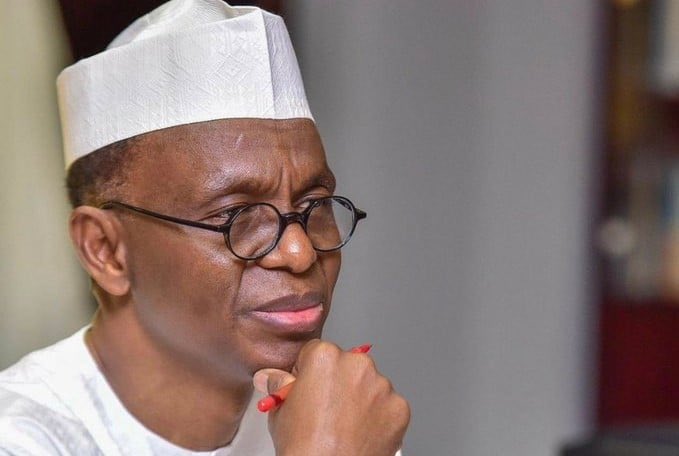
Not many figures in the country’s recent political history embody both state power and insurgent defiance like Nasir El-Rufai.
The former Kaduna State governor, who was once a central figure within the ruling elite now finds himself on a bumpy road characterised by political exclusion, open rebellion, party defection, and serious legal battle.
His journey since 2023 is a demonstration of the changing dynamics of power ahead of the 2027 general elections.
From insider to outsider
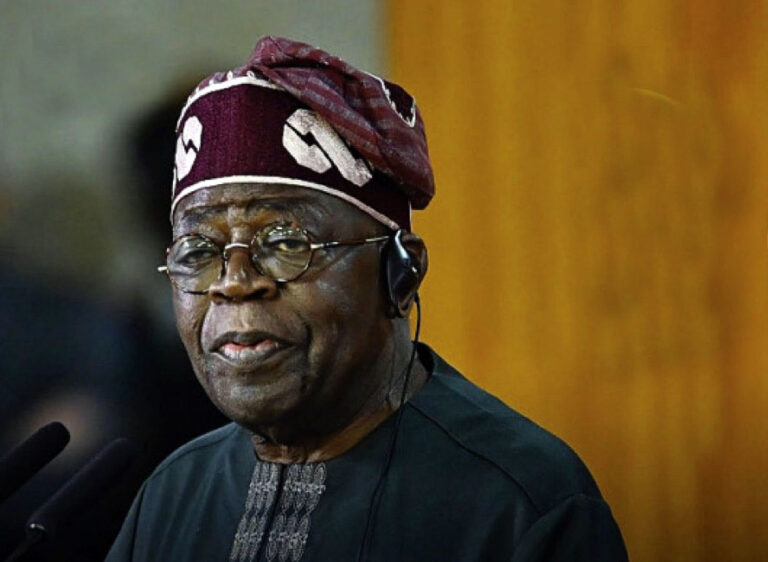
The first major rupture came when Bola Ahmed Tinubu nominated El-Rufai for a ministerial position. In a surprising turn, the Senate withheld his confirmation, citing security concerns.
While 45 others who were nominated with him were approved, Senate President Godswill Akpabio said his confirmation was withheld because the Senate was awaiting security clearance from agencies like the Department of State Services (DSS) and the Office of the National Security Adviser (NSA).
Thereafter, El-Rufai was replaced by Balarabe Abbas as a ministerial nominee from Kaduna State. The decision marked the first public sign that all was not well between El-Rufai and the new power configuration in Abuja.
For a former governor with deep national clout, the snub was widely interpreted as a calculated move, either to sideline a strong personality or to reflect deeper reservations within the system.
In the months that followed, El-Rufai re-emerged not as a quiet sidelined figure but as a vocal critic of the Tinubu administration.
He quickly became an opposing voice to the ruling party, often questioning governance direction, concentration of power, and the state of the economy.
What began as muted discontent evolved into sustained criticism, interpreted by allies of the administration as frustration over his exclusion, but by supporters as principled dissent. One thing was clear either way: the lines had been drawn.
Defection and political recalibration
El-Rufai’s eventual exit from the ruling APC formalised his break with the establishment. After an initial shift to the Social Democratic Party (SDP), he aligned with the African Democratic Congress (ADC), a platform increasingly seen as a rallying point for opposition forces.
It became clear that the former governor’s move was no longer just a personal decision, but part of a wider plan to build a strong coalition to challenge the ruling party in 2027.
For a politician with strong Northern roots, the defection was seen by many analysts as strategic and having the potential to shape alliances and voting patterns in a region key to deciding national elections.
The ICPC factor
The most consequential phase of El-Rufai’s current travails lies in his confrontation with the Independent Corrupt Practices and Other Related Offences Commission (ICPC).
Investigations, detention, and subsequent legal proceedings have placed him at the centre of a corruption case linked to his time in office. The development has introduced a new layer of complexity to his political narrative.
The ICPC in one of its statements had said: “The cases stem from a protracted investigation by the commission into the defendant’s tenure as Governor of Kaduna State between 2015 and 2023, bordering on allegations of abuse of office, fraud, and money laundering.
“Mallam El-Rufai was arrested by the commission on or about 18th February 2026.
Other News
Following the conclusion of investigations, the commission filed a 10-count charge against Mallam El-Rufai and Mr. Joel Adoga before Honourable Justice Rilwan Aikawa of the Federal High Court, Kaduna.
“The charges relate to alleged conversion and possession of proceeds of corruption, as well as money laundering offences contrary to the provisions of the Money Laundering (Prevention and Prohibition) Act, 2022, and other relevant laws.
“Specifically, the prosecution alleges, among others, that the defendant received the sum of N289,826,998.12 as severance allowance, significantly exceeding his lawful entitlement of N20,013,245, between 2020 and 2023.
“He is also alleged to have received the sum of $797,900, deposited into his domiciliary account with Guaranty Trust Bank, from various individuals, with knowledge that the funds were proceeds of unlawful activities.
“The commission further alleges that the defendant conspired with the second defendant, Mr. Joel Adoga, to disguise the origin of $10,000 in July 2019. Both defendants have pleaded not guilty to the charges.
“Similarly, the commission arraigned Mallam El-Rufai before the Kaduna State High Court on an amended 9-count charge on 13th April 2026. The charges border on abuse of office, fraud, intent to commit fraud, and conferment of undue advantage, contrary to the provisions of the ICPC Act, Advance Fee Fraud and Other Related Offences Act, Kaduna State Penal Code, and the Kaduna State Public Procurement Law.
“The commission reiterates its commitment to due process and the rule of law and assures the public that the prosecution of the case is being conducted diligently and in accordance with established legal procedures.”
While authorities claim his investigation was part of ongoing anti-corruption efforts, his supporters however, view it as a politically motivated attempt to weaken and silence a rising opposition figure.
Put together, El-Rufai’s journey shows a clear pattern of rejection, political estrangement, laud opposition, party defection, and legal confrontation.
Each phase builds on the last, suggesting that his current predicament is not an isolated event but the result of a deepening conflict within nation’s political elite.
Implications for 2027
As the next election cycle approaches, many believe that El-Rufai’s situation is likely to have far reaching impact beyond his personal fortunes.
First, his presence within the ADC strengthens ongoing efforts to forge a strong opposition coalition, while his influence in the North could help in shaping alliances and voter mobilisation.
Second, his legal battle introduces a powerful narrative contest. If he is seen as a victim of political targeting, it could boost anti-incumbency sentiment. But if it is viewed as a genuine accountability process, it may damage his credibility and that of the opposition.
Third, his defection shows growing divisions within the ruling party’s traditional support base, especially in Northern Nigeria, a region that often decides election results.
Finally, the growing role of anti-graft agencies in political disputes shows that court cases are becoming just as important as campaign speeches in elections.
An uncertain endgame
El-Rufai’s unfolding story sits between power, principle, and political survival. Whether he comes out stronger as a symbol of resistance or weakened by legal and political pressure is still unclear.
What is clear, however, is that his fall from the inner circle, and his ongoing fight to remain relevant, has already positioned him as a consequential figure in Nigeria’s march toward 2027.
In a political climate that is filled with changing alliances and conflicting narratives, his next actions and how his legal cases end, may affect both his legacy and future election outcomes