Follow Us on Google
By Taiwo Babatunde
In a world where industrial growth is celebrated, the invisible threats lurking in our water and air are often ignored—until they strike.
Globally, over 2 billion people consume water that is contaminated with feces, chemicals, or emerging pollutants such as pharmaceuticals and personal care products, according to the World Health Organization (WHO).
In the United States, about 10 billion gallons of untreated wastewater are discharged into the environment annually.
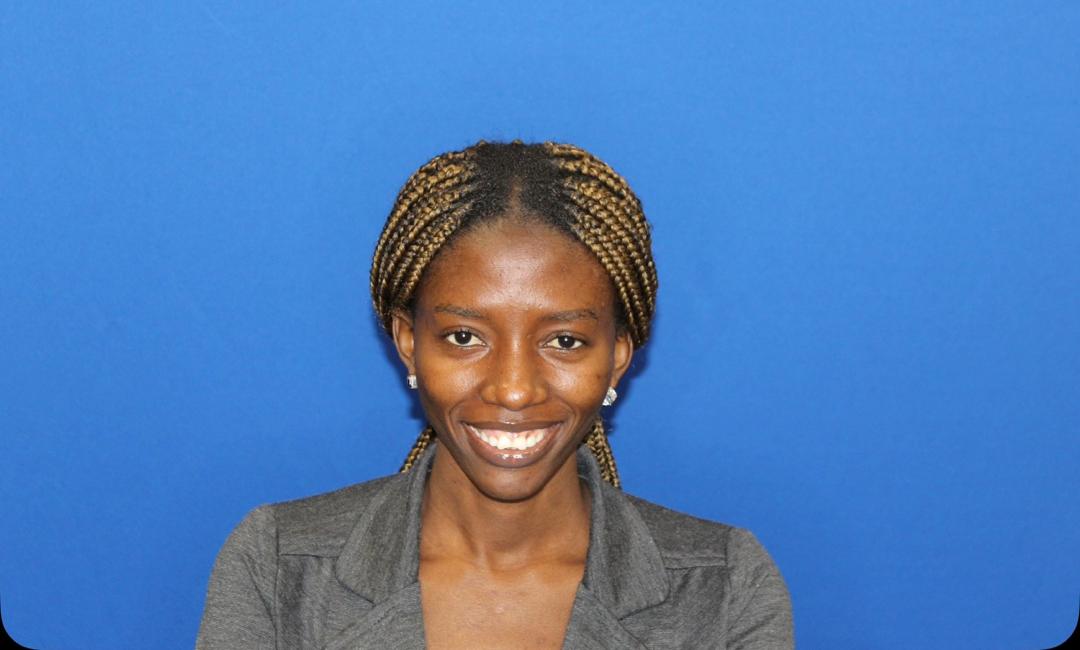
However, during a recent environmental science symposium held at the University of Kentucky, Deborah Anuoluwapo Adeyemi-Alabi’s presentation distinguished itself amidst numerous research presentations. Deborah’s work captivated the audience with its urgency, clarity, and call to action positioned at the nexus of water and air quality, raising a significant warning that the unseen elements in our air and water may be detrimental to our health.
Deborah’s recent publication in Water Process Engineering reveals a promising method using eco-friendly adsorption materials to remove amoxicillin, a widely used but environmentally persistent antibiotic, from wastewater.
“This isn’t just about clean water”, she explained in her symposium address. “It’s about disrupting the dangerous cycle of antibiotic resistance that can spread through our taps.”
Deborah cautioned, “We now know many contaminants survive conventional water treatment.” Deborah’s work tackles a growing issue in the United States where wastewater treatment facilities are not often built to eliminate newly discovered pollutants, including industrial chemicals and pharmaceuticals.
Through household drains and industrial discharge, these residues enter the water cycle and finally find their way into the human body, so influencing hormonal balance, immune system performance, and even fetal development.
“Advanced oxidation chemical analysis allows us to track these substances and develop pathways to neutralize them. Chemistry is our shield.” Her lab results simulate real-world water quality chemistry, providing crucial data for environmental scientists and public health officials. “Water contamination is a silent pandemic,” she said during the symposium. “And chemistry is the language we need to decode it.”
Environmental degradation is often framed in apocalyptic terms. But researchers like Deborah Adeyemi-Alabi remind us that solutions exist—anchored in science, driven by data, and powered by purpose. Her work is more than just research at a time when many communities around the globe lack guaranteed access to safe, clean water, it is a road map.
One that turns water pollution into an environmental justice problem deserving of attention and wastewater into a resource. She highlighted the role of policymakers in embracing research, such as hers, as a policy for a bright and sustainable clean water for society.
Beyond her technical brilliance, what made Deborah’s presentation unforgettable was her commitment to public engagement. As president of the Chemistry Graduate Student Association and a reviewer of scientific papers in her field, she believes that science belongs not just in journals but in the streets, schools, and policy chambers.
Her leadership extends across continents. From her work as a chemist at SGS Inspection Services, Nigeria, and Pacegate Limited, ensuring fuel quality standards, to her cutting-edge research in the U.S., she embodies a new generation of global scientists solving global problems.
Among her many accolades are the 2025 C.H.H. Griffith Outstanding Teaching Assistant Award and back-to-back People’s Choice Awards at the University of Kentucky’s GradTeach and 3-Minute Thesis (3MT) competitions. It is no wonder her voice carries weight, both in the laboratory and beyond.