Follow Us on Google
By Steve Agbota [email protected]
There are growing concerns over the poor rating of Nigeria’s maritime sector globally, despite being an import dependent nation.
Stakeholders finger corruption, weak capacity of indigenous players and decrepit infrastructure as the blights plaguing the sector and robbing it of the gains of global competitiveness.
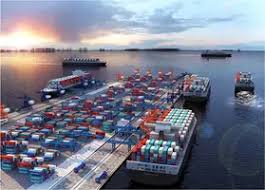
Global trade revolves around shipping with over 90 percent of goods transported by sea. This makes shipping a major stimulant of global economic growth, which has surged by 76 per cent over the past four decades. Currently, about 11 billion tons of goods traverse the world’s oceans annually.
As a nation with a coastline strategically located for maritime trade, Nigeria is missing out on a significant revenue stream due its limited shipping industry. Today, the global seaborne trade is a multibillion dollar industry. Majority of Nigerian cargo is transported by foreign shipping companies, hindering the country’s ability to capitalise on the multi billion dollar global seaborne trade.
This has been the situation for decades, since the demise of the first Nigerian National Shipping Line (NNSL) which has affected the country’s ocean economy negatively. For instance, Nigeria has never earned $1 freight since 1968 because it does not own vessels to lift its own crude oil.
The problem has persisted as for instance, no indigenous vessel is involved in conveying crude oil to Dangote refinery as all the vessels belong to foreigners.
In December last year, the Dangote Refinery received its first one million barrels of Agbami crude from Shell International Trading and Shipping Company Limited (STASCO).
This was followed a week later with another one million barrels shipment from the Nigerian National Petroleum Company Limited (NNPCL). To date, the refinery has received the six million barrels shipment it needed to kick-start production.
Notably, the oil tankers that conveyed the six million barrels crude were foreign ships. None belonged to a Nigerian shipping operator or the national oil company, NNPCL. The ones used by NNPCL in the shipment were all chattered vessels.
The non-involvement of domestic vessels in the lifting of Nigeria’s crude to Dangote Refinery means the country is losing freight cost amounting to millions of dollars to foreign shipping operators.
This also means that the nation’s insurance industry is also losing as the insurance premiums go to foreign insurers.
For years, Nigeria has lost huge foreign exchange due to unfavorable trade terms, which is Free On Board (FOB) instead of Cost Insurance and Freight (CIF). Experts said this has been the case for the past 45 years.
Speaking with Daily Sun, a lecturer in maritime studies, Charles Okorefe, said Nigeria has to change its international trade terms from the FOB basis and CIF arrangement.
He said Nigeria is selling its crude oil on FOB basis where the buyers have the leverage to nominate vessels to carry the crude.
“I have said this several times, that there is a problem with our international trade terms when you talk about the Free on Board arrangement (FOB) and the Cost Insurance and Freight (CIF) arrangement.
“When the vessels come and once our oil is pumped into the foreign crude oil vessels that are nominated by the buyer, once the plant of our crude oil terminal crosses the ship and pump inside, the Nigerian government goes to sleep. In other words, they just got paid for the value of the crude oil they exported. The trade value of the crude oil is lost and it has been so since 1968.
“Rather, if we are trading on CIF, it is the Nigerian government through its sellers that will nominate the vessels to carry the crude, until it is delivered at the destination refinery before it gets paid.
“But from what we learnt, they are scared of that scenario whereby Nigerians will charter vessels and disappear with the vessels midsea. That is what we were told in the year 2000 when we visited Abuja over these issues. So, that is the major problem.
“In the case of Dangote getting delivery of crude oil for his refinery, I don’t know the arrangement he has with the carrier of his products. If he engages in a CIF arrangement with them, that means it is the seller that would be responsible for carrying the products to Dangote refinery,” he said.
According to him, in general terms, Nigeria sells its crude oil on FOB arrangement and on the basis of that, Nigeria is not entitled to even $1 freight as a country.
He said imagine how many trillions of dollars Nigeria has lost by not trading CIF on her crude oil exports.
A London trained shipping and marine consultant, Samuel Olumide, said the blame should go to the government for its inability to change the unfavourable terms of trade governing the sale of the nation’s crude, a situaion he said is chiefly responsible for all the losses.
He said for more than 45 years, the sale of Nigeria’s crude oil has been on FOB terms, adding that under these terms, buyers of Nigeria’s crude reserve the right to nominate the ship that will carry their cargo to the market.
He said a lot needs to be done while urging the government to create an enabling environment for Nigeria to fully participate in the international seaborne trade.
The international shipping industry is responsible for the carriage of around 90 per cent of world trade.
He said there is need for Nigeria to change the narrative in order to reap the benefits of international seaborne trade.
He pointed out that Nigeria can take in huge foreign exchange from international seaborne trade through local participation in shipping trade and development of satisfied seafarers just like Philippines that generates $7 billion annually from her seafarers proceeds.
“Shipping is the life blood of the global economy. Without shipping, intercontinental trade, the bulk transport of raw materials, and the import/export of affordable food and manufactured goods would simply not be possible.
“Seaborne trade continues to expand, bringing benefits for consumers across the world through competitive freight costs. Thanks to the growing efficiency of shipping as a mode of transport and increased economic liberalisation, the prospects for the industry’s further growth continue to be strong.
“There are over 50,000 merchant ships trading internationally, transporting every kind of cargo. The world fleet is registered in over 150 nations, and manned by over a million seafarers of virtually every nationality.
“Nigeria has the potential and everything to be recognised among the comity of maritime nations. Government just needs to put its house in order by supporting local ship owners and fix infrastructure impeding international trade in the ports. Put one thing here and there and they are good to go,” he said.