Follow Us on Google

By Steve Agbota [email protected] 08033302331
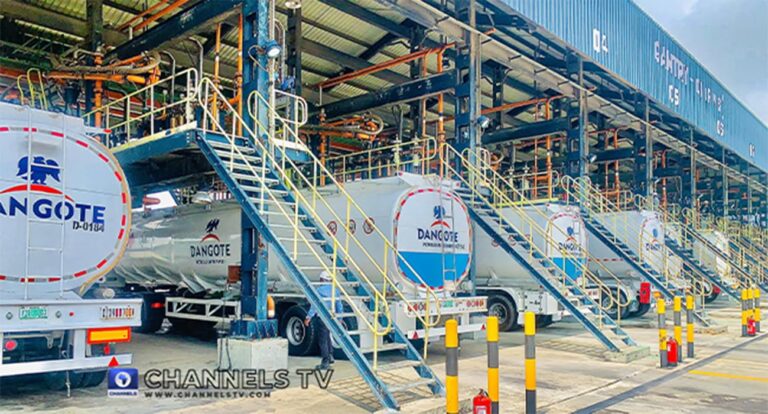
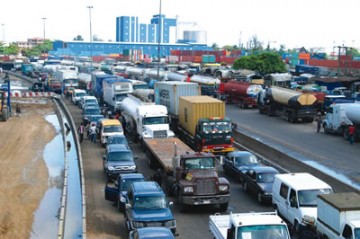
The Challenges of the gridlock in Apapa and Tin Can ports have lingered for long with severe implications on businesses, households and the economy.
However, delay in addressing these issues has further worsened the parlous state of the economy with businesses and consumers bearing the brunt.
In spite of series of interventions by government to resolve the Apapa gridlock and other underlying problems, which include bad roads, obsolete infrastructure, delays in cargo clearance, lack of automated cargo clearance system, which gave rise to the lingering racketeering, still persist.
Recently, to get rid of the gridlock, an automated vehicle call-up number was instituted, yet the problem remains. Every solutions have all failed to surmont the challenge.
Ironically, Federal Government’s effort to diversify the economy through non-oil export suffered a major setback recently as exporters lamented the pilfering of their wares due to the horrible Apapa gridlock.
For instance, if an exporters load a full container at their various warehouses, sometimes, on arriving the ports, they are going to lose between 10 to 60 per cent of the contents of the container. The reason is that the container is being pilfered before arriving the ports due to inability to access the port at the right time.
Exporters said the pilfering of export containers is on the rise and it has brought huge loses and financial burden on them. They put the blame on the delays caused by traffic jam on the port access roads, which prevent their goods to gain access to the port at the appropriate time.
Daily Sun learnt that it takes trucks an average of three weeks to get goods from the warehouses to access and exit the ports, which resulted in delays and rejection of most of the fragile exports at the international markets.
Agricultural and other fragile exports are said to be faring very badly as the time spent on the queue to get into the ports does a lot of damage to the freshness and market value of the products.
Owing to the gridlock, exporters could no longer meet their contractual obligations and their buyers overseas cancelled the contract both parties signed because of delays in products delivery. This situation has forced so many exporters to lay off some of their workers because they are struggling to pay salaries.
The situation which has negatively impacted movement of non-oil exports, hampered foreign exchange earnings, as the nation’s non-oil export sector is losing about $15 billion annually leading to the continued decline in repatriation of proceeds through Central Bank of Nigeria (CBN).
Confirming the development of the pilfering to Daily Sun, Managing Director, Universal Quest Nigeria, Mr. Sotonye Anga, said the burden imposed by the Apapa gridlock on exporters is too huge for them to bear alone.
“Most times, containers already stocked would leave our warehouses to the ports. On getting to the ports, you realised that a full container loaded has been pilfered, sometimes; you are going to lose between 10 to 60 per cent of the contents of the container.
“Whatever is the cause I don’t just understand. There is covert pilfering happening. For instance, if you put 25 tonnes of commodities of cashew and cocoa in a container, you would only realised by the time you reweight the container at the port, it is already short.
“In most cases, it would be short by 50 per cent and sometimes 30 per cent. The volume of the goods or the commodities you load into your containers before they leave your warehouse and what you get when it finally arrives the port, the disparity is much. So who bears the loss?” he lamented.
According to him, that is what exporters are facing and it affects across board, adding that all these losses are what individual exporter are forced to carry.
He stated that if something is not done, it will serve as disincentivizes to export and when people begin to get disincentivised, there would be no need to go into export, which mean that the nation’s foreign exchange expectations would heavily decline.
“How would the economy be sustained? How are we be able to diversify the economy from oil? So these issues have to be dealt with. It is only in Nigeria things like this are happening. And it was not so before now. If you load your containers, you ship, it get to the port, it is the same thing you load in your warehouse that you get in the port. “When it arrives the destination, it is the same thing you are going to get. But now, that is not the case. You have disparity. Disparity that you don’t just understand. This is loss and nobody is saying anything or doing anything about it. The exporters would quietly take the blame, which is a burden.
“I remember, most exporters will still take loan facilities from the bank at a cost, which is piling up. So why will you want to make these unnecessary loses. Look, every of these loses are unnecessary and it should not be allowed to continue. And this is why government needs to step in and step up so that this problem can be tackled once and for all,” he lamented.
Meanwhile, a sesame seed exporter, Julius Akpam said for so many years, Nigerian ports were synonymous with pilfering of containers. He said the pilfering usually carried out on the import containers within the terminals at the port by criminals called wharf rats.
“My brother, pilfering of export containers is a serious issue that needs to be looked at holistically. It was import containers we know that these criminals used to pilfer. On most occasions, they vandalised imported vehicles by removing side mirrors, brain-box, and others. But, of recent, they have shifted their focus on export containers. Something must be done fast because the issue is a big burden to us.
“It’s a huge damage on our character; a huge damage on integrity, a huge damage on nationality because it is about perfection and performance. If you are not able to perform, what business are you doing then? So these are the fallouts of the Apapa gridlock. Since the problems are not properly taking care of, the loses are huge.
He said the gridlock is contributing to unemployment because people that are previously gainfully employed in the non-oil export sector are losing their jobs, as exporters cannot continue to pay for services they are not enjoying.
According to him, exporters are being forced out of business, as the cost of taking goods out the warehouses to port is very high, cost of haulage is rising everyday and nobody is doing anything about it. He called on the Federal Government to fix the roads leading to the nation’s economy gateway to ease the gridlock around the port environments, adding that that the situation was affecting export delivery time in addition to hindering exporters’ ability to fulfill commitments on time.
President, Africa Association of Professional Freight Forwarders and Logistics of Nigeria (AFFLON), Otunba Frank Ogunojemite, said: “What we cannot ascertain, we have to collect enough of statistics on this to be able to determine if the machine is not good or not. Because if you have weight and the same weight have to reflect on your bill of laden over there. We need to be sure because we don’t need to look at it periphery.
“If this is happening is a serious issue. We have to investigate what is going on because it does not affect exporters cash, it is even going to affect the image of the country. The export reputation of Nigeria is not too good in abroad. So we need to look at it holistically. Most of Nigerian products cannot get to England because of our export branding system,” he said.