Follow Us on Google
As Africa races to close its enormous energy access gap while also pursuing cleaner energy pathways, one question increasingly dominates boardrooms, government circles and investment forums: Who will finance the continent’s energy future?
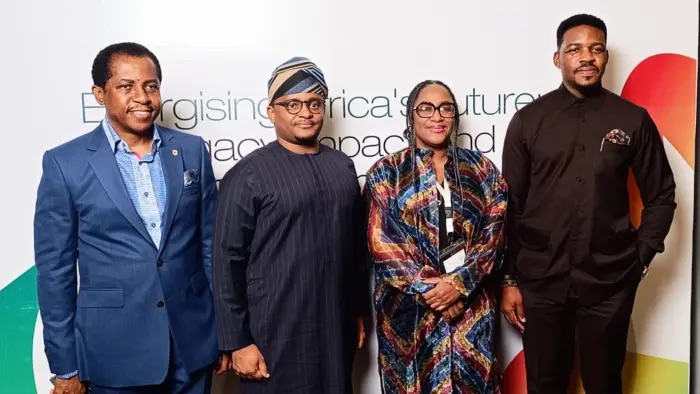
That question formed the central thrust of discussions at the third edition of Asharami Square, a Sahara Group thought leadership initiative which held last week in Lagos with the theme: “Energizing Africa’s Future: Legacy, Impact and Transformation”.
Experts from finance, regulation and academia argued that Africa’s energy ambitions will depend less on the availability of capital than on its ability to build investor confidence, strengthen governance and unlock domestic financial resources.
The discussion, which further delved into the topic “Who is Financing Africa’s Energy Future?”, featured a high-level panel which included: Kemi Awodein, Managing Director, Investment Banking at Chapel Hill Denham; Temitope George, Chief Executive Officer of the Lagos State Electricity Regulatory Commission (LASERC); and Prof. Abigail Ogwezzy-Ndisika, Director of the Institute of Continuing Education, University of Lagos and former Head, Department of Mass Communication, Unilag.
Collectively, they painted a picture of an African energy market sitting on vast pools of untapped capital but constrained by policy uncertainty, weak project preparation and poor communication between investors, governments and the public.
To set the tone of discussion for the panelists, Ejiro Gray, Director, Governance and Sustainability, Sahara Group, said there must be a fundamental rethinking of how Africa approaches energy transition, infrastructure financing and energy journalism, urging stakeholders to embrace solutions that reflect the continent’s realities while building the partnerships, institutions and investments required for long-term development.
She added that, the company’s Beyond XXX vision is rooted in looking ahead rather than dwelling on past accomplishments.
Gray noted that Africa’s energy future must be shaped by local realities and called for more balanced, evidence-based journalism capable of interrogating the complexities of energy transition, development and sustainability.
“Effective journalism should not only tell us what happened; it should help us understand why it matters, whose interests are affected and what perspectives are missing from the conversation.”
Capital exists but projects must earn investors’ confidence
Contrary to the widely held belief that Africa’s greatest challenge is the shortage of financing, Awodein argued that capital is available but the real issue, she said, is developing projects capable of attracting it.
She pointed to Nigeria’s recent banking recapitalisation exercise, through which banks raised about N4.6 trillion, roughly $3 billion largely from domestic investors, as evidence that local liquidity exists.
According to her, the next frontier is ensuring that African energy projects are structured well enough to tap into these domestic funds instead of relying overwhelmingly on foreign financing.
She explained that successful energy transactions are built around two competing objectives: enabling companies to raise sufficient capital while giving investors’ confidence that their money is protected and capable of delivering sustainable returns.
That confidence, she stressed, comes from rigorous governance, transparent risk management and credible financial disclosures.
Rather than seeing financing purely as a fundraising exercise, project developers must convince investors that every major risk has been identified, mitigated and transparently communicated.
Awodein noted that companies seeking investment should embrace independent financial ratings and detailed research, even if doing so exposes weaknesses.
“Investors buy credible stories backed by evidence, not promises,” was the central message of her intervention.
Using Lagos State’s bond programme as a practical example, Awodein explained how diversified financing has enabled the state to raise infrastructure funding consistently for nearly two decades.
She highlighted Lagos pioneering green bond issuance, the first by a subnational government in Africa as proof that sustainability-linked investments are gaining traction among institutional investors.
Those investors, she said, include pension funds, insurance companies, asset managers, high-net-worth individuals and other institutional investors seeking diversified portfolios. However, these investors are selective.
Large pension funds, which represent Nigeria’s biggest pool of long-term capital, invest only where governance standards, regulatory compliance and financial discipline are evident.
For Awodein, Lagos demonstrates that when governments combine transparency with innovative financial instruments, domestic investors are willing to finance infrastructure, including energy projects.
Investors want preparation not just proposals
From the regulatory perspective, LASERC Chief Executive Officer, Temitope George argued that many developers approach governments with ambitious power projects but little evidence that they are investment-ready.
She said one of the first questions regulators ask prospective investors is whether proper feasibility studies have been conducted.
According to her, ideas alone, she maintained, do not attract financing, preparation does.
She added that, without detailed technical studies, commercial assessments and realistic implementation plans, investors simply cannot evaluate risks. Equally important, George said, is trust.
The LASREC boss maintained that private investors want assurance that governments will honour agreements, regulators will remain consistent and policy frameworks will not shift midway through projects.
According to her, these are often the deciding factors between projects that secure financing and those that fail.
George identified regulatory clarity as perhaps the biggest opportunity to unlock new investment into Nigeria’s electricity sector.
She observed that while electricity decentralisation has empowered states to regulate generation, transmission and distribution within their jurisdictions, overlapping responsibilities between state regulators and national institutions have created uncertainty in some areas.
Resolving these overlaps, she argued, would significantly improve investor confidence.
Investors, she said, are far more likely to commit long-term capital where policies are stable, regulations are predictable and contractual obligations are respected.
Having worked both in government and the private sector, George noted that investors consistently seek one assurance above all else that contracts signed today will still be honoured tomorrow.
For that reason, she called on governments to prioritise policy consistency over frequent regulatory changes.
“Once investors understand the rules and trust the regulator, investment will follow,” she said.
Financing depends on transparency not just money
While the finance and regulatory experts focused on investment structures, Ogwezzy-Ndisika broadened the conversation.
She argued that discussions about financing Africa’s energy future cannot revolve solely around balance sheets and capital flows.
Institutional transparency, integrity and public trust, she said, are equally important forms of investment capital.
She posited that without confidence in institutions, deregulation alone cannot attract sustained financing.
She noted that quality journalism plays an essential role in strengthening that confidence by providing evidence-based reporting that holds institutions accountable while highlighting workable solutions.
According to her, journalists covering energy finance must move beyond press releases and official statements.
Instead, she said, they should combine documentary evidence with field investigations, interviews and data verification.
The truth survives triangulation, stressing that credible reporting requires multiple independent sources rather than reliance on government documents or corporate communications alone.
One of the strongest positions emerging from the discussion was the need for more investigative reporting focused on improving systems rather than merely exposing failures.
Ogwezzy-Ndisika challenged journalists to shift from event-driven reporting towards structural analysis that explains why policies succeed or fail.
She warned that lengthy reports often lose readers because they bury important findings beneath technical language.
Complex concepts such as electricity market deregulation, capital structures and energy financing, she argued, should be translated into language ordinary citizens can understand.
For journalists investigating the energy sector, she recommended combining financial disclosures with satellite imagery, field reporting, environmental testing, interviews and multimedia storytelling to produce evidence-based reports capable of influencing policy.
Drawing from examples of investigative reporting on environmental pollution linked to mining activities, she demonstrated how carefully researched stories had prompted regulatory reviews, environmental remediation and stronger oversight without undermining legitimate businesses.
Good journalism, she argued, should improve industries rather than simply criticise them.