Follow Us on Google
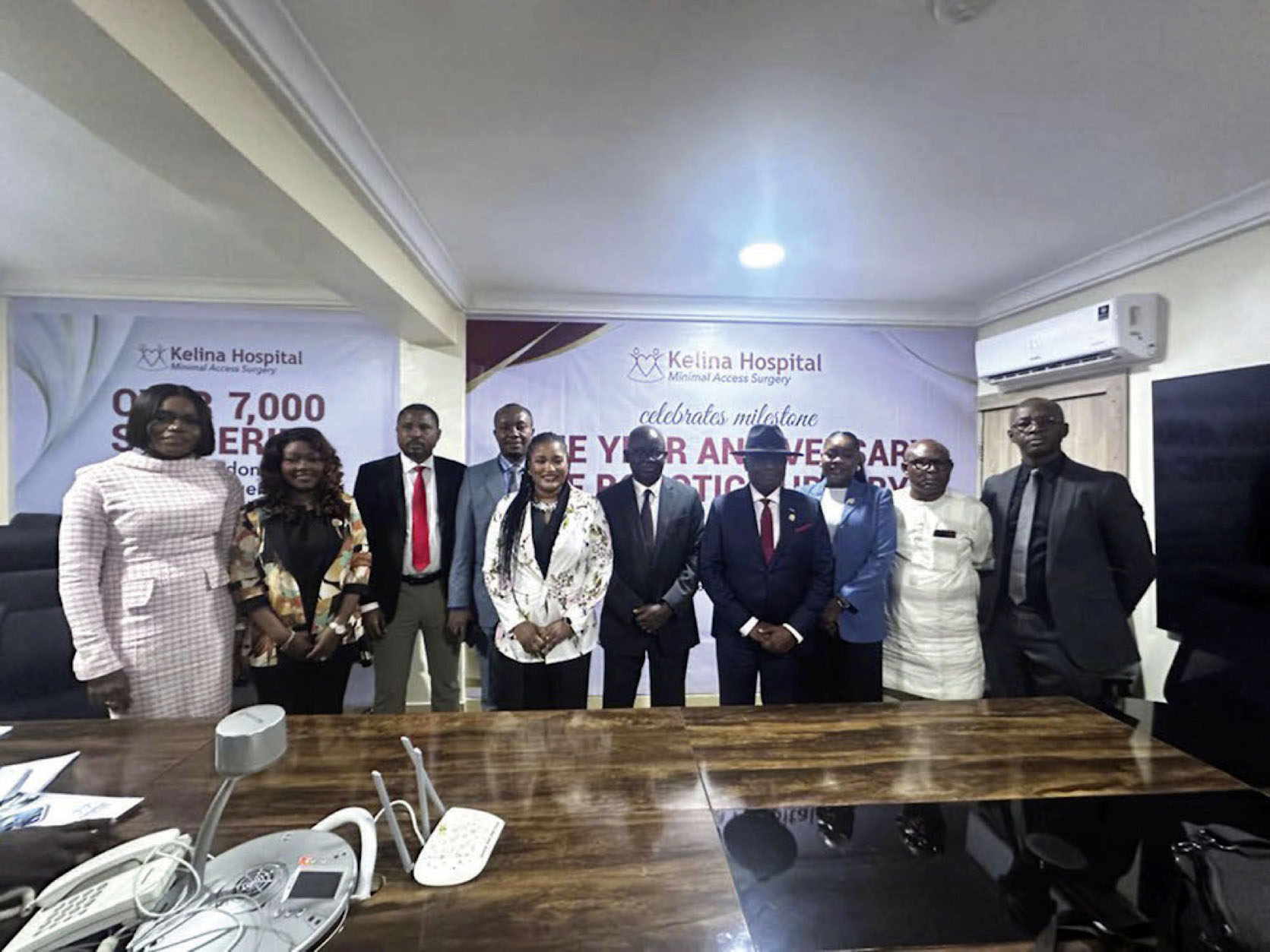
•Early treatment, advanced surgery offer remedy for kidney damage
By Doris Obinna
Frequent urination, blood in the urine and persistent urinary problems may signal underlying conditions that, if left untreated, can lead to kidney damage, kidney failure or cancer-related deaths.
For men, recognising prostate problems early and seeking medical assessment can make a critical difference. Similarly, detecting kidney stones and urinary obstructions before they cause lasting damage can help preserve kidney function and reduce complications.
Yet, fear of surgery, concerns about sexual function, treatment costs and limited access to specialised care continue to discourage some patients from seeking help until their conditions become severe.
These challenges underscore the importance of early diagnosis and appropriate treatment, alongside advances in minimally invasive surgery that can offer alternatives to conventional open operations.
Prostate cancer remains a major health concern in the country. A 2026 review published in the Nigerian Medical Journal cited estimates of 18,019 new cases and 11,443 deaths in Nigeria in 2022, identifying late diagnosis, treatment delays and financial barriers as persistent challenges in prostate cancer care.
Although early detection does not guarantee a cure, identifying disease before it advances can widen treatment options. Men concerned about their prostate health should discuss their individual risks and the benefits and limitations of prostate-specific antigen (PSA) testing with a qualified health professional.
Early intervention can protect vital organs
The importance of timely treatment is particularly evident when urinary problems threaten kidney function.
Chief Medical Director, Kelina Hospital, Abuja, Dr Kelechi Nedosa, said the hospital had treated a patient who developed cancer in his only remaining kidney after the other kidney had been removed about a decade earlier.
According to him, removing the entire remaining kidney would have left the patient dependent on dialysis. Instead, the surgical team performed a partial nephrectomy, removing the cancerous portion while preserving as much functioning tissue as possible.
The hospital said the patient remains alive, with his remaining kidney functioning without the need for dialysis.
Nedosa described the procedure as the first laparoscopic partial nephrectomy performed in Nigeria on a patient with a solitary kidney.
Another procedure, laparoscopic pyeloplasty, corrects an obstruction that prevents urine from draining properly from the kidney. If left untreated, such an obstruction can cause permanent damage.
The hospital said it performed the procedure in 2018, describing it as a milestone in its minimally invasive surgical practice.
For patients with large kidney stones, the hospital also performs percutaneous nephrolithotomy (PCNL), which allows stones to be removed through a small incision rather than conventional open surgery.
Consultant Anaesthetist and Critical Care Physician, Dr Vincent Obiwuru, said Kelina was the first hospital in Nigeria to perform PCNL in 2013 and subsequently introduced minimally invasive and tubeless variations of the procedure.
These techniques, he stated have expanded treatment options for patients who might otherwise require more extensive surgery. However, the choice of treatment depends on the condition, its severity and the patient’s overall health.
Robotic surgery expands treatment options
The hospital’s company secretary and head of corporate governance, Dr Doose Doo, said Kelina had developed a Nigerian-based team capable of performing robotic procedures without depending entirely on foreign specialists.
She said the hospital began regularly performing robot-assisted radical prostatectomy with its local team in June 2026. Kelina received Federal Government pioneer status for minimally invasive surgery in 2012, she added.
Also, Its Lagos Chief Medical Director, Dr Ibukun Adeyinka, said the hospital performed 212 prostate surgeries in 2025 using robotic, laparoscopic and laser techniques.
He added that the hospital had completed more than 50 robotic radical prostatectomy procedures within the first year of its robotic surgery programme, which began in September 2025.
Robotic radical prostatectomy involves removing the prostate gland to treat prostate cancer. The technology allows surgeons to manipulate specialised instruments while viewing the operating area in three dimensions.
President, Kelina Hospital, Dr Celsus Undie, said robotic surgery could offer improved visualisation, precision and reduced blood loss in suitable procedures.
However, he acknowledged that the equipment was expensive, specialist training was demanding and robotic surgery was not appropriate for every operation.
The hospital also reported performing Nigeria’s first robotic radical nephrectomy in 2025, involving the removal of a kidney affected by cancer.
Beyond the technology, Undie said the hospital wanted to strengthen local expertise so Nigerians could receive specialised treatment without necessarily travelling abroad.
He called for government support to help hospitals acquire modern equipment, train specialists and expand access to care. He also said the hospital had collaborated with non-governmental organisations that sponsor surgery for some patients.
However, for patients who cannot afford advanced surgery, cost remains a major barrier. Obiwuru said treatment at a centre abroad where he had received training previously cost approximately $15,000 to $20,000 per patient. He said providing appropriate treatment locally could help reduce overseas medical spending, although actual savings would depend on the procedure, hospital and associated travel expenses.
The hospital’s management argued that stronger support for healthcare facilities could help expand local treatment options. However, technological progress alone cannot deliver better outcomes. Early presentation, access to diagnostic services, qualified specialists, affordable treatment and continued monitoring remain essential.
Survivors’ experiences
For Joseph Ogar, the benefits of surgical intervention became personal in 2012, when frequent urination led to investigations that confirmed he needed prostate surgery.
At the time, he was in his forties and feared that the operation would leave him unable to maintain his sexual function.
“I told the doctor that I would rather die than lose that aspect of my life,” he recalled.
He eventually underwent laparoscopic radical prostatectomy at Kelina Hospital in Abuja.
Fourteen years later, Ogar says he is alive, married and has retained his sexual function. He has not needed medication for the condition since the operation and continues to attend regular check-ups.
He said the surgeon also maintained contact with him during his recovery, checking on his progress after the operation.
Another patient, Temilola Oke, travelled from Lagos to Abuja after being diagnosed with large kidney stones. During treatment, doctors discovered a congenital abnormality that required corrective surgery.
Initially reluctant because she feared a large abdominal scar, Oke eventually underwent laparoscopic pyeloplasty in 2018.
She said she was doing well and no longer took medication for the condition.
Their experiences underline the importance of seeking medical attention, understanding available treatment options and addressing fears that may delay care.
For Nigeria, the wider challenge is ensuring that such treatment options are accessible to more patients. Early diagnosis and appropriate care, supported by affordable healthcare and skilled medical professionals, could help prevent avoidable complications and give more Nigerians the chance to recover and return to their normal lives.