Follow Us on Google

If a doctor tells you that you have Hepatitis B infection, what will be your immediate reaction? “I am dead.” I thought they said hepatitis is incurable? But! But! Doc, I thought hepatitis infection comes with yellowish discolouration of the eyes that is jaundice.
Doc, I cannot have hepatitis because I have never had blood transfusion. Doc, nobody has given me an injection in the past two years. How can I have hepatitis?
Okay Doc, does that mean I am going to die? Doc, I thought they said you develop hepatitis when you have HIV/AIDS. Doc, does that mean my liver is bad, but Doctor I no longer drink alcohol. I took alcohol last in my youth some 20 years ago. Doc, how would I know when I am cured of this hepatitis. Four notebooks cannot contain all the questions I have collected over the years, I mean more than 40 years and still counting since I started medical practice.
If you have read me up to this point now, pause, and reflect. What do you know about hepatitis? Do you think it is a deadly disease? Do you think it is curable?
Do people who are diagnosed with hepatitis eventually die? If you have hepatitis, is it for life?
Three weeks ago a man was diagnosed with hepatitis. He Googled, and read a lot of things on hepatitis. According to him, people have told him variant things about hepatitis, that he has lost weight due to excessive worry.
The medical statement of fact is that hepatitis has risen over time due to drug abuse with unsterilised needles. Tuesday, last week, July 28, was observed as World Hepatitis Day, with the theme “Let’s Break it Down.”
According to the World Health Organisation (WHO), 287 million people were living with chronic hepatitis B or C in 2024. Only 45% of babies received the hepatitis B vaccine within 24 hours of birth in 2024. About 1.3 million people died of chronic hepatitis B and C in 2024.
As I have explained ad infinitum, hepatitis means inflammation of the liver. It is an infection of the liver. Hepatitis can cause scarring of the organ, liver failure and cancer. It can be fatal if it is not treated. It is spread when people come in contact with blood, open sore or body fluids of someone who has hepatitis B virus.
Hepatitis B infection is serious, but if you get the disease as an adult, it should not last a long time. Your body fights it off within a few months and you are immune for the rest of your life. That means you cannot get it again. But if you get it at birth, it is unlikely to go away.
As leading researchers in “Hepatitis B care,” doctors at Stanford University, USA, have a unique appreciation for the progression of hepatitis B. Accurately determining which form of hepatitis you have helps us select the best treatment.
You may have acute or chronic hepatitis B, depending on how long Hepatitis B Virus (HBV) has been in your blood.
You have acute hepatitis B from the time you are first infected until six months afterwards. Acute hepatitis rarely causes liver damage.
Chronic hepatitis B happens when HBV is still in your blood six months after your initial exposure. Only a small number of people end up with chronic hepatitis B. however, this is a serious condition and can lead to chronic liver damage (cirrhosis).
The hepatitis B virus is constructed of an outer capsule containing HbsAg (Hepatitis B surface antigen), an inner core containing HbcAg (HBV core antigen), and the HbcAg (hepatitis B antigen).
As the blood becomes exposed to HBV, the body mounts a cell-mediated immune response by sending cytotoxic T-cells and natural killer cells to the virus and releasing inflammatory cytokines.
The stronger the immune response is, the greater the chance of fighting the virus. Hepatitis B virus is passed from person-to-person through blood, semen or other body fluids. It does not spread by sneezing or coughing.
You may get hepatitis B if you have unprotected sex with someone who is infected. The virus can pass to you if the person’s blood, saliva, semen or vaginal secretions enter your body.
HBV easily spreads through needles and syringes contaminated with infected blood. Sharing intravenous drug paraphernalia puts you at high risk.
Hepatitis B is a concern for health care workers and anyone else who comes in contact with human blood.
Pregnant women infected with HBV can pass the virus to their babies during childbirth. However, the newborn can be vaccinated to avoid getting infected in almost all cases.
Talk to your Doctor about being tested for HBV if you are pregnant or want to become pregnant.
Certain groups are at particularly high risk of HBV infection. These include: health workers, men who have sex with other men, people who use IV drugs, people with multiple sex partners, people with kidney disease, people over the age of 60 will have diabetes and those traveling to countries with a high incidence of HBV infection.
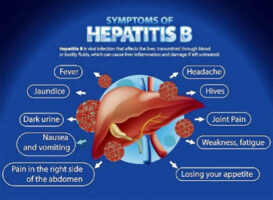
When you are first infected with Hepatitis B, the warning signs include, your skin or the whites of the eyes turn yellow, and your face turns brown or orange, light coloured poop, fever, fatigue that persists for weeks or months, stomach trouble like loss of appetite, nausea, and vomiting, then belly pain.
Symptoms may not show up until one to six months after you get infected with the virus. You might not feel anything. About a third of the people who have this disease do not feel anything. They only find out through a blood test.
People with hepatitis B can sometimes develop serious liver problems. These mostly affect people with untreated long term (chronic) infection.
Some of the main problems associated with HBV include: cirrhosis of the liver, which manifests as tiredness, weakness, loss of appetite, weight loss, feeling sick, very itchy skin, tiredness, pain or swelling in the tummy and swelling of the ankles. For liver cancer, the following symptoms may be observed: unexplained weight loss, loss of appetite, feeling very full after eating, even if the meal is small, feeling and being sick, yellow skin and jaundice of the eyes.
In what we call fulminate hepatitis B, the following could be observed: confusion, collapsing, fainting, swelling of the tummy which is caused by a buildup of fluid and severe jaundice.
Your doctor can usually diagnose hepatitis B with blood tests. Screening may be recommended for an individual who has come in contact with someone with HBV, travelled to a country where hepatitis B is common, been to jail, uses IV drugs, is pregnant, is homosexual or a person who has HIV.
To screen for hepatitis B, the doctor will perform a series of blood tests which include: hepatitis B surface antigen test, hepatitis B core antigen test, hepatitis B surface antibody test and liver function test (LFT).
Acute hepatitis B usually resolves on its own and does not require medical treatment. If very severe, symptoms such as vomiting or diarrhea are present; the affected person may require treatment to restore fluid and electrolytes.
There are no medications that can prevent acute hepatitis B from becoming chronic. If a person has chronic hepatitis B, they should consult a doctor who will determine whether medical treatment is appropriate.
Acute hepatitis B infection is not treated with antiviral medications. If an infected person is dehydrated from vomiting or diarrhea, a doctor may prescribe IV fluids to help them feel better. Medications may also be used to control these symptoms. People with mild symptoms can be cared for at home.
The degree of liver damage is related to the amount of active, replicating (multiplying) virus in the blood and liver.
Antiviral therapy is not appropriate for everyone with chronic HBV infection. It is reserved for people whose infection is most likely to progress to active hepatitis or cirrhosis of the liver.
There is no surgical therapy for hepatitis B. If liver damage is so severe that the liver starts to fail, a liver transplant may be recommended.
Always be medically guided.
Please follow me on twitter @-DRSUN