Follow Us on Google
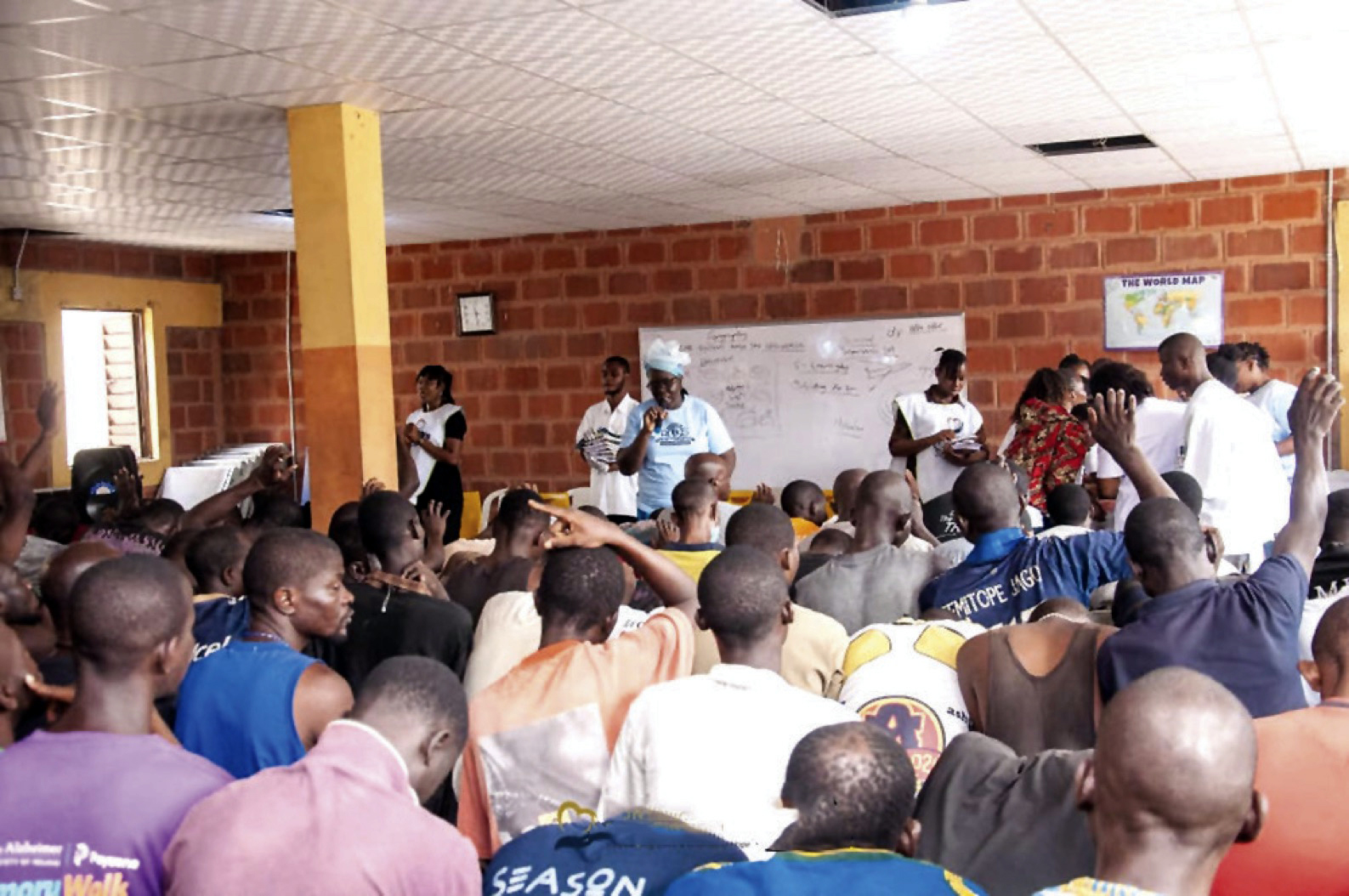
Over 200 Ikoyi Prison inmates savour groups’ love and care
Behind the high walls of Ikoyi Correctional Centre in Lagos State, where freedom is restricted and daily life is governed by routines unfamiliar to those outside, more than 200 inmates recently received something that can easily be taken for granted beyond the prison walls: access to medical care, professional attention and the reassurance that they have not been forgotten.
For the inmates, the intervention organised by the Ayo Charity Foundation, in partnership with Pastor Rachel Olupeju Soyele Memorial Foundation, was more than a medical outreach. It was a reminder that incarceration does not erase a person’s humanity.
The beneficiaries underwent medical screening, tests, general health checks and consultations with medical professionals. Legal practitioners were also on hand to offer advice on matters relating to the inmates’ cases, rights and possible legal concerns.
For several hours, the correctional facility became a meeting point between healthcare providers, legal professionals, humanitarian workers and inmates whose circumstances often make access to such services difficult.
The organisers said the intervention was designed to address immediate needs while also communicating a deeper message of compassion, dignity and hope.
For Ayo Olaifa, founder of the Ayo Charity Foundation, the philosophy behind the initiative is straightforward: people may be deprived of their freedom, but they should not be deprived of their dignity or hope.
Addressing the inmates, Olaifa said her organisation was committed to supporting vulnerable people through healthcare, education, empowerment and other interventions capable of improving lives.
“Our mission is to support the less privileged, empower vulnerable individuals, and inspire lives through acts of kindness, education, healthcare, and community development,” she said.
But Olaifa insisted that the outreach should not be measured merely by the number of medical consultations conducted or the assistance distributed. For her, the greater objective was to remind the inmates that they remain part of the larger human community.
“Every life has intrinsic value. We believe no one should be defined by their past, as each day offers a new chance to grow, change, and start anew,” she said.
That message appeared particularly significant within a correctional environment, where the identity of an inmate can easily become reduced to a case number, a sentence or an accusation.
Olaifa urged the beneficiaries not to surrender their hope, encouraging them to use their period of incarceration as a time for reflection, personal rebuilding and preparation for life after release.
“Today’s outreach goes beyond the gifts we bring; it carries a message that you are seen, valued and that hope for a better future remains alive,” she added.
While the medical intervention provided immediate relief to more than 200 inmates, officials at the facility used the occasion to draw attention to the wider challenges confronting correctional institutions.
Julius Ogueri, deputy controller of Corrections and officer in charge of Ikoyi Correctional Facility, described the intervention as timely, particularly given the demands placed on the facility and its resources.
Established in 1955 with an original capacity of about 800 inmates, Ikoyi Correctional Centre has, over the years, experienced periods of severe congestion.
Ogueri disclosed that the inmate population had at one point risen to about 3,690 but had subsequently fallen to approximately 2,833, following sanitation measures and other professional interventions.
Despite the reduction, the facility remains under considerable pressure.
Ogueri said government efforts alone could not adequately meet all the needs of inmates, stressing the importance of support from individuals, philanthropists and credible organisations.
“Government manages their health and feeding, but cannot do so alone,” he said.
According to him, the controller-general of corrections has encouraged officers in charge of correctional facilities to think beyond conventional approaches and engage credible organisations willing to complement government efforts.
Other News
The medical outreach, he said, demonstrated how such partnerships could make a meaningful difference to the welfare of inmates.
For Ogueri, however, occasional medical outreaches, valuable as they are, cannot substitute for a properly equipped and adequately staffed healthcare system within correctional facilities.
He called for the provision of a well-equipped hospital and the deployment of more qualified medical personnel to meet the healthcare needs of inmates.
Such investment, he said, would improve the quality and speed of healthcare available to people serving sentences as well as those awaiting the determination of their cases.
His appeal highlights a broader reality: healthcare does not stop at the prison gate. Inmates remain human beings who can fall ill, require medical examinations, need treatment and, in some cases, require specialist attention. Yet the closed nature of correctional facilities can make access to comprehensive healthcare more complicated.
This is why interventions that bring medical professionals directly into correctional centres can provide an important bridge between inmates and essential services.
The presence of legal professionals at the outreach also broadened the scope of the intervention.
For inmates awaiting trial or navigating legal processes, access to appropriate information about their cases and rights can be as important as medical attention.
The organisers’ decision to combine healthcare with legal support therefore reflected an understanding that the challenges confronting inmates extend beyond physical illness.
There are questions about legal status, family separation, mental and emotional wellbeing, rehabilitation, skills acquisition and eventual reintegration into society.
Addressing some of these challenges requires sustained institutional and community support. For Olaifa, this is where humanitarian intervention becomes particularly important.
The Ayo Charity Foundation and Pastor Rachel Olupeju Soyele Memorial Foundation have undertaken other community-focused initiatives aimed at supporting vulnerable people, with emphasis on healthcare, welfare and assistance to people facing difficult circumstances.
The Ikoyi outreach represents another expression of that philosophy, reaching people in places where vulnerability may be hidden behind institutional walls.
As the medical checks and consultations continued, the significance of the exercise went beyond stethoscopes, test results and legal advice.
“For those who live and work outside correctional facilities, healthcare can mean walking into a hospital, visiting a clinic or seeking medical advice when the need arises.
“For inmates, the reality can be different. Their access to services is shaped by institutional procedures, available resources and the demands of a correctional system caring for large numbers of people.
“That makes interventions such as the Ikoyi outreach particularly meaningful.
Ogueri expressed appreciation to the Ayo Charity Foundation and the Pastor Rachel Olupeju Soyele Memorial Foundation, while urging other non-governmental organisations, philanthropists and well-meaning Nigerians to support correctional institutions.”
His message was not simply a request for donations. It was a call for society to recognise that the responsibility for humane correction and rehabilitation cannot rest entirely on government.
A correctional system is ultimately expected to do more than confine people. It should also provide opportunities for rehabilitation, preserve dignity and prepare inmates for possible reintegration into society.
The more society invests in those objectives, the greater the possibility of turning incarceration into a period of transformation rather than merely punishment.
At Ikoyi, the foundations’ intervention offered a glimpse of what such compassion can achieve. For the more than 200 inmates who received medical attention, the day brought tests, consultations and professional advice.
But perhaps its most important offering could not be measured in numbers.
It was the simple reassurance that the walls around them had not made them invisible. They were seen, they were heard and they mattered.
And beyond the walls of Ikoyi Correctional Centre, there were still people willing to remind them that their humanity had not been taken away and that, whatever their past or present circumstances, the possibility of a better tomorrow remained.