Follow Us on Google

By Lukman Olabiyi
Two major health insurance industry associations, the Health and Managed Care Association of Nigeria (HMCAN) and the Association of Health Insurance Practitioners of Nigeria (AHIPN), have withheld their endorsement of the Lagos Private Health Plan (LPHP), insisting that its implementation must first secure the required approval of the National Health Insurance Authority (NHIA).
The associations also questioned an aggregate 13 per cent levy reportedly applicable to private-sector health insurance arrangements under the framework, warning that additional charges could increase employers’ healthcare costs and undermine efforts to expand access to affordable medical services.
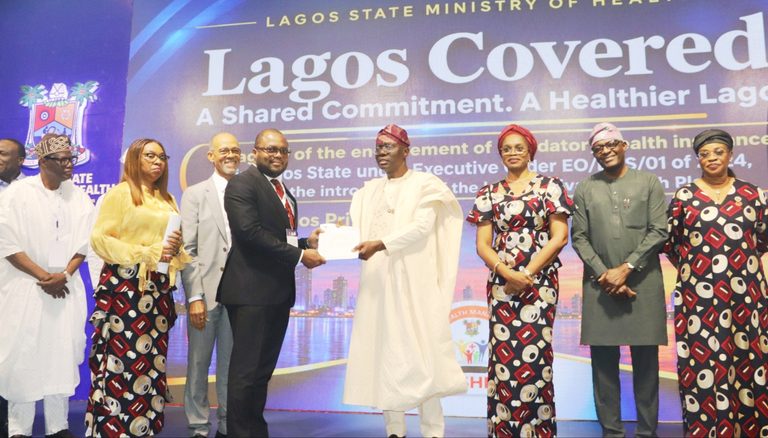
In a joint statement issued on Thursday and signed by their respective chairmen, Dr Abdulkadri Osumah and Dr Ben Okpalla, the associations said participation in the plan’s launch, consultations or expressions of interest by individual Health Maintenance Organisations (HMOs) should not be construed as collective industry endorsement.
They stressed that HMO accreditation was distinct from the regulatory approval required for a specific health insurance plan, urging the correction of reports suggesting that the industry had collectively endorsed the Lagos initiative.
The associations maintained that the plan should not be implemented until the necessary NHIA approval had been obtained in accordance with the NHIA Act 2022 and the agreed regulatory framework.
While expressing support for the Federal Government’s universal health coverage agenda and the objectives of the Lagos State Executive Order intended to give effect to the NHIA Act, they commended Governor Babajide Sanwo-Olu for his commitment to expanding access to healthcare.
However, they insisted that implementation must comply with the law and be affordable, transparent and properly coordinated among the relevant regulatory authorities.
According to the associations, a communiqué issued after discussions between the NHIA and the Lagos State Government on 28 and 29 October 2025 established the framework for implementing the plan.
They said the agreement recognised the NHIA as the sole statutory regulator, made HMO participation in the LPHP voluntary, preserved employers’ right to choose NHIA-approved health plans and required prior regulatory approval for all plans.
The communiqué, they added, also provided for nationally recognised compliance certificates to be issued by the NHIA in collaboration with state authorities.
“Lagos State could issue certificates on behalf of the NHIA bearing the logos of both institutions, while the NHIA and the Lagos State Health Management Agency (LASHMA), alongside other relevant authorities, should coordinate compliance and enforcement within their respective mandates,” the statement said.
Other News
The associations consequently called for the publication of the applicable NHIA approval documents to establish the plan’s regulatory status and provide clarity for employers, HMOs and other stakeholders.
They also demanded clarification of the reported 13 per cent levy, particularly its legal basis, method of calculation and constituent charges.
According to them, imposing the levy on existing insurance premiums and other statutory obligations could increase the financial burden on employers already paying for their workers’ healthcare.
They warned that the additional costs could make private health insurance less affordable, discourage employers from maintaining coverage and reduce the funds available for patient care.
The associations further faulted what they described as inadequate clarity surrounding the LPHP’s compliance requirements, calling for comprehensive guidelines detailing acceptable insurance coverage, minimum benefits, certification procedures and applicable sanctions.
Such guidelines, they said, should align with the presidential directive on universal health coverage and clearly explain the steps employers must take to comply.
They also insisted that existing NHIA-approved health insurance coverage should be recognised under the Lagos framework to prevent duplicate enrolment and unnecessary additional payments.
On the 31 December 2026 compliance deadline, HMCAN and AHIPN called for a review, arguing that employers should not be expected to meet requirements before complete guidelines and functional compliance systems are in place.
They said employers must be given adequate notice and a realistic transition period before enforcement measures and sanctions commence.
Warning that penalties introduced before the relevant rules and administrative processes were fully established could create uncertainty for employers, HMOs and healthcare providers, the associations expressed readiness to engage the Lagos State Government, LASHMA, the NHIA, the Nigeria Employers’ Consultative Association (NECA), healthcare providers, organised labour and other stakeholders to resolve the outstanding issues.