Follow Us on Google
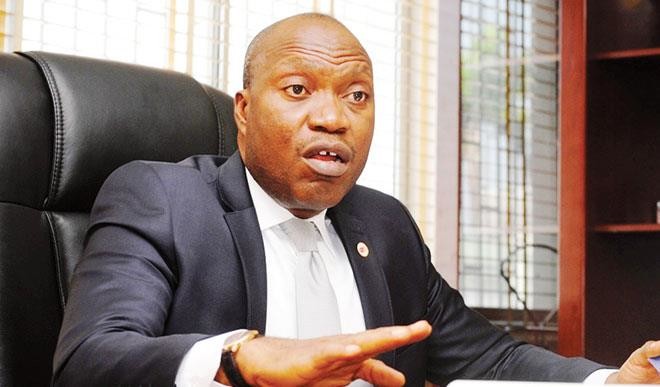
The Chief Executive Officer, Cowry Asset Management Limited, Johnson Chukwu has stated that a boost in crude oil production and enhanced tax collection system can potentially improve streams of revenue for the federal government.
This comes after data from the Central Bank of Nigeria’s (CBN) monthly economic report revealed the Federal Government’s fiscal deficit experienced a marked expansion, rising to N824.8 billion in April 2024 from N823.9 billion in the preceding month, representing a 0.11% month-on-month increase, placing the deficit almost N60 billion above the budgeted figure.
The expansion in the deficit is largely attributed to a decline in government revenue from oil receipts during the period, coupled with an increase in expenditure.
Provisional data reveals that the Federal Government’s retained revenue, at N419.91 billion, decreased by 0.55% compared to March 2024 and fell significantly short of the monthly benchmark by 74.29%.
On the expenditure side, the total outlay amounted to N1.24 trillion, which, although 0.12% lower than the previous month, was still 48.10% below the projected spending of N2.39 trillion.
Chukwu noted that the decline in expenditure was mainly due to a reduction in capital outlay during the review period.
He pointed out that on a closer examination reveals that recurrent expenditure accounted for 84.5% of total spending, capital expenditure for 6.30%, and transfer payments constituted 9.2%.
The 2024 approved budget is based on a total expenditure of N28.78 trillion and a revenue projection of N19.60 trillion, sourced from both oil and non-oil revenues.
This budget includes provisions for Debt Service and Sinking Fund payments of N8.27 trillion, Recurrent (Non-Debt) Expenditure of N8.77 trillion, and Capital Expenditure of N10 trillion, excluding the recently passed supplementary budget.
Presently, the fiscal deficit stands at N9.18 trillion, which represents approximately 50% of the Federal Government’s expected revenue and 3.88% of the projected Gross Domestic Product (GDP). The data from the Central Bank of Nigeria as of Q1 2024 indicates a reduction in the Federal Government’s fiscal deficit to N2.8 trillion, compared to N3.3 trillion in Q4 2023 and N4.0 trillion in Q1 2023.
This reduction is attributed to a combination of improved revenue performance and reduced government spending during the quarter. The quarterly report by the apex bank for the first three months of 2024 shows that the Federal Government’s retained revenue increased by 5% quarter-on-quarter and by 34% year-on-year, reaching approximately N1.8 trillion in Q1 2024.
This represents the highest revenue received by the Federal Government since Q3 2023 and was bolstered by improved receipts from oil sources and exchange rate gains resulting from the depreciation of the Naira.
Chukwu emphasized that the persistent fiscal deficit is a result of weak revenue collection and rising expenditures.
He said, “Given this scenario, we believe that the government can enhance its revenue performance through increased crude oil production, a more efficient tax revenue system, and by mobilising the public to capture more individuals and corporations within the nation’s tax net.
Furthermore, we foresee a positive improvement in the Federal Government’s revenue, considering plans to tax 70% of banks’ windfall profits from 2023, which resulted from the government’s foreign exchange revaluation. This measure could potentially strengthen the Federal Government’s revenues significantly”.