Follow Us on Google
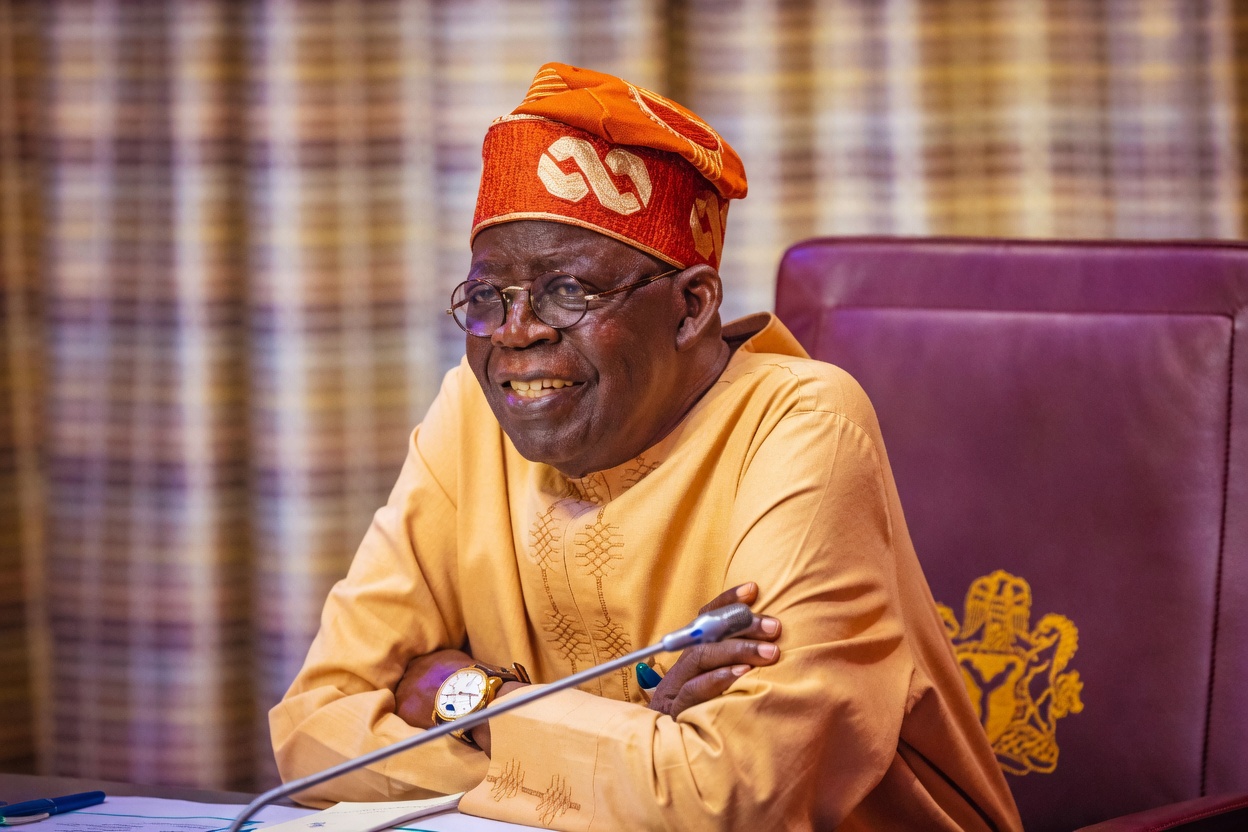
The Grassroots Mobilization Initiative (GMI) has called on Nigerian universities and political leaders to study the political trajectory of President Bola Ahmed Tinubu as a model for nation-building, leadership and governance.
In a statement issued by its National Coordinator, Samaila Musa, the group described Tinubu’s political style as a blend of strategic resilience, coalition-building, fiscal innovation and long-term planning, which should be examined by students of political science and leadership studies.
GMI described the President as one of the most influential and controversial figures in contemporary Nigerian politics, stressing that his rise from a corporate accountant and pro-democracy activist to Nigeria’s 16th President remains “a masterclass in political engineering and long-term networking.”
The group urged the academic community and political elite to emulate what it called the strategic depth that has defined Tinubu’s political career over the past three decades.
According to Musa, “To understand where Nigeria is going, we must understand the man who spent thirty years mapping the route. We are calling on our universities to move beyond theory and analyze the practical mechanics of how Tinubu built power, maintained a regional stronghold, and eventually captured the center through the most successful opposition merger in African history.”
The organization highlighted Tinubu’s involvement in the June 12 struggle and his role in the National Democratic Coalition, saying his political journey shows that leadership requires sacrifice, resilience and courage.
Other News
GMI also pointed to Tinubu’s tenure as Governor of Lagos, where it said he transformed the state’s economy through aggressive internally generated revenue reforms despite challenges with federal allocations.
The group noted that Tinubu’s recruitment of technocrats such as Babatunde Fashola and Yemi Osinbajo demonstrated the importance of building strong governance structures and political continuity.
On national politics, GMI described the 2013 merger of the ACN, CPC and ANPP which produced the All Progressives Congress as a defining moment in Nigeria’s democratic history, noting that it marked the first time an opposition coalition defeated an incumbent government.
The group said Tinubu’s “Emi Lokan” philosophy reflects political reciprocity and long-term investment in alliances, while his administration’s reforms, including fuel subsidy removal and exchange rate unification, show the political will required to address structural economic problems.
GMI further called on universities to incorporate Tinubu’s political journey into political science curricula, especially his ability to remain politically relevant for over 30 years in Nigeria’s volatile political environment.
“True opposition is built on superior strategy and patient alliance-building, not on destabilizing the nation. It is time for all political actors to learn that power is a product of deliberate engineering, not accidental noise,” the statement added.