Follow Us on Google
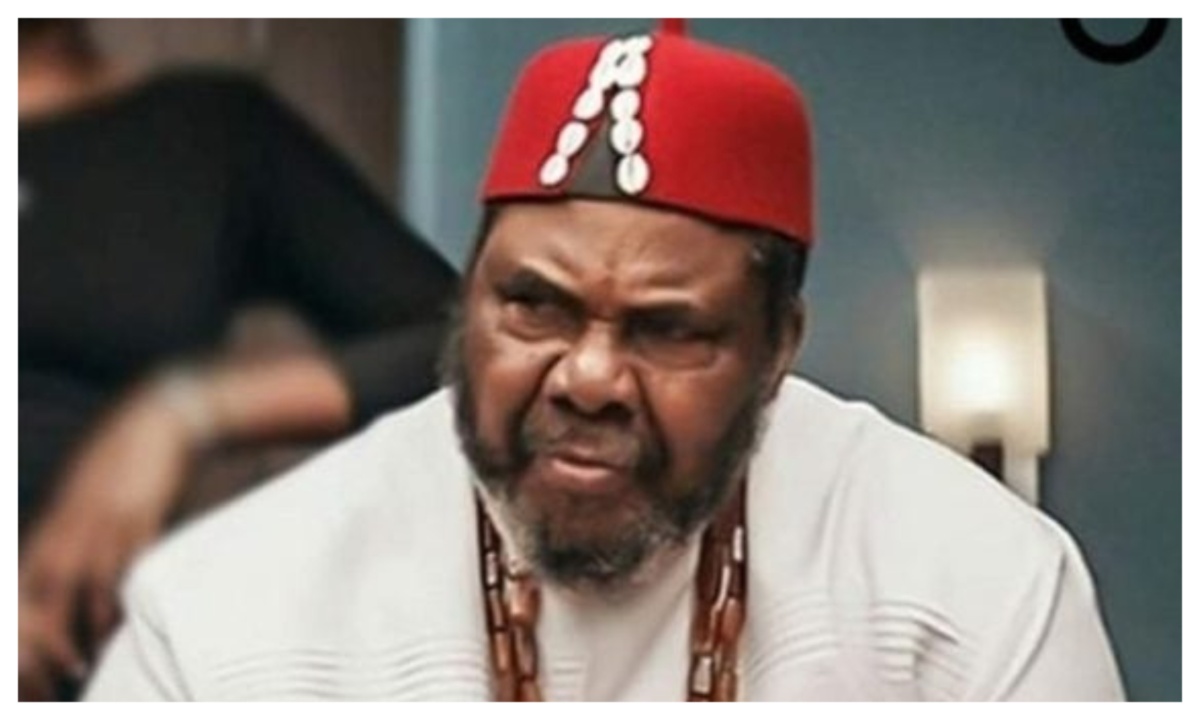
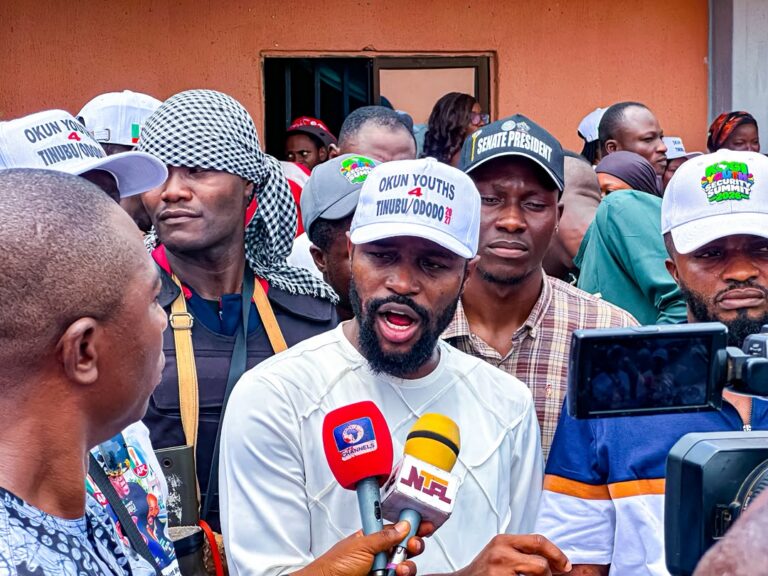
A civil society organisation, the CRA27 Advocacy Network, has challenged claims made by veteran Nollywood actor and elder statesman Pete Edochie that former Minister of Transportation, Rotimi Amaechi, “cut off the South East from the railway system,” insisting that historical records show the eastern rail corridor was revived during Amaechi’s tenure.
In a statement titled “Setting the Record Straight on the Eastern Railway,” the group’s representative, Ifeanyi Obasi, said the allegation contained in a widely circulated video had gained attention largely because of Edochie’s stature and influence in national discourse.
The statement read: “In a widely circulated video late last week, veteran actor and elder statesman Chief Pete Edochie alleged that former Minister of Transportation Rotimi Amaechi ‘cut off the South East from the railway system’. The remark has attracted understandable public attention, given Chief Edochie’s stature and the weight his voice carries in national discourse.”
Obasi, however, maintained that the claim did not accurately reflect the documented history of railway development in Nigeria’s eastern corridor.
“However, the statement does not reflect the factual history of Nigeria’s eastern railway corridor,” he said.
According to the group, by the time Amaechi assumed office as Minister of Transportation in November 2015, the railway line linking Port Harcourt to Maiduguri had already been in a state of severe deterioration after decades of neglect.
Obasi explained: “When Rotimi Amaechi assumed office as Minister of Transportation in November 2015, the eastern railway line linking Port Harcourt to Maiduguri had been largely moribund for decades. Large portions of the narrow-gauge track had deteriorated after years of neglect.”
He added that the situation across the corridor had been dire, with rail activity virtually non-existent in many areas.
“In many places trains had not run for a generation, stations were abandoned, and sections of the line were overgrown. The first priority of the Ministry of Transportation at the time was therefore not expansion, but revival.”
The group stated that one of the earliest steps taken by the government under Amaechi was the rehabilitation of the Port Harcourt–Aba section of the eastern narrow-gauge railway line.
Obasi said: “Within months of taking office, the Nigerian Railway Corporation rehabilitated the Port Harcourt–Aba section of the eastern narrow-gauge line and returned it to service.”
He further explained that the restoration of train operations between the two cities marked the revival of rail transport in the region.
“Passenger train operations between Port Harcourt and Aba officially resumed on March 15, 2016, reconnecting two of the most important commercial centres in the South South and South East.”
According to him, the development brought life back to a corridor that had been dormant for several years.
“That step alone restored rail activity to a corridor that had been dormant for years,” he said.
Beyond the initial rehabilitation, the group noted that the Federal Government also approved a major reconstruction effort for the wider eastern narrow-gauge corridor stretching from Port Harcourt through Aba, Umuahia, Enugu and Makurdi before terminating in Maiduguri.
Obasi said: “During Amaechi’s tenure, the Federal Executive Council approved approximately $3 billion in 2020 for the reconstruction and rehabilitation of this existing narrow-gauge network, allowing work to begin on restoring freight and passenger capacity across the corridor.”
He added that the ministry simultaneously pursued a more ambitious long-term project aimed at modernising rail transport in the region through the construction of a standard-gauge railway line.
“At the same time, the Ministry pursued a second and more ambitious project: the construction of a modern standard-gauge railway running parallel to the eastern narrow-gauge line,” Obasi stated.
He explained that the proposed modern rail line would traverse several major cities across the South East before extending into northern Nigeria.
“This proposed standard-gauge corridor was designed to run from Port Harcourt through Aba, Owerri, Umuahia, Enugu, Abakaliki and Awka before continuing northwards toward Makurdi, Jos, Bauchi, Gombe and Maiduguri.”
According to him, the scale of the project made it one of the most significant railway infrastructure proposals in Nigeria’s history.
“Estimated to cost roughly $11–$12 billion, it represented one of the largest railway modernisation projects ever proposed in Nigeria.”
The group further stated that federal approval for the project had already been secured during Amaechi’s time in office, while negotiations with international partners were underway to secure financing.
Obasi said: “During Amaechi’s tenure, federal approval was secured for this eastern standard-gauge corridor and negotiations began with international partners to arrange the financing required for its construction.”
He explained that many observers often confuse the rehabilitation of the existing narrow-gauge network with the proposed standard-gauge project, even though both initiatives were designed to complement each other.
“These two efforts are often misunderstood,” he noted.
“The first involved reconstructing and rehabilitating the existing narrow-gauge railway in order to restore immediate train operations. The second involved building a completely new standard-gauge railway designed to modernise the eastern transport corridor over the long term.”
Obasi emphasised that both projects clearly included the South East as a central component of Nigeria’s national railway development plan.
He also pointed out that progress on the projects was slowed by the global disruption caused by the COVID-19 pandemic.
“Progress on reconstruction and financing negotiations continued until the global disruption caused by the COVID-19 pandemic in 2020, which slowed infrastructure financing and delayed major construction projects worldwide, including railway programmes in Nigeria.”
According to the group, the sequence of events surrounding the eastern railway corridor remains clearly documented.
“When Amaechi assumed office in 2015, the eastern railway line was largely inactive. Within months, train services returned to the Port Harcourt–Aba corridor.”
He added: “Federal approval was secured for the multi-billion-dollar reconstruction of the existing narrow-gauge line, while a parallel standard-gauge railway passing through major South East cities was advanced toward financing and construction.”
The CRA27 Advocacy Network therefore insisted that the claim that the region was cut off from the railway system does not align with the available historical record.
“Seen in that context, the suggestion that the South East was ‘cut off’ from Nigeria’s railway system does not align with the historical record.”
Obasi concluded that available records instead show that the eastern railway corridor, which had been abandoned for decades, was revived and placed on a path toward modernisation.
“The record shows instead that a railway corridor abandoned for decades was revived and placed on the path toward full modernisation.”
He added that public debate on infrastructure development remains important but should be grounded in verified information.
“Public debate about infrastructure is important and welcome. But such discussions are best served when they are grounded in verifiable facts,” he said.