Follow Us on Google
From Okwe, Obi, Abuja
The Bëtá Nigeria has staged a campaign for quality education for all citizens, in a bid to reduce the reduce illiteracy.
The initiative which was launched recently and funded by the government of the United Kingdom brought together civil society organizations and artistes, to drive home the point of quality education.
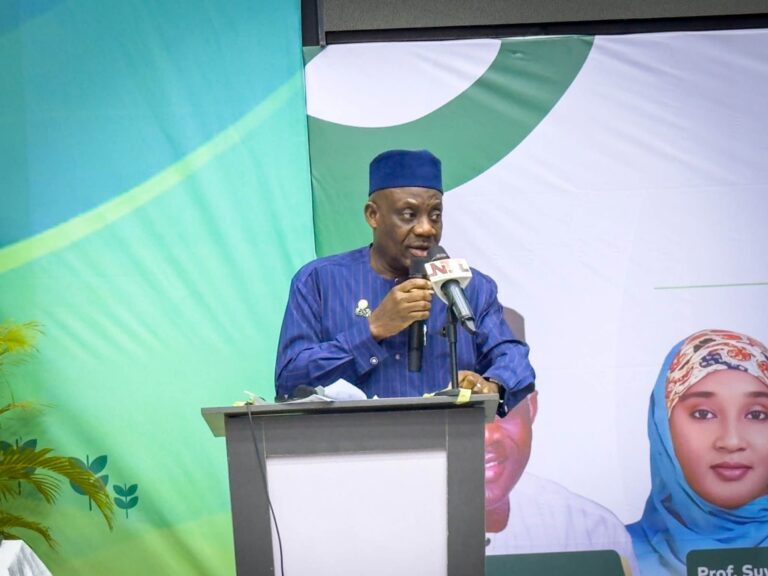
The Federal Lead of Bëtá Nigeria campaign, Abdulsalam Badamasi, told journalists and stakeholders recently in Abuja that the campaign’s primary focus lies in expanding the conversation on education.
He said: “We are expanding the conversation around the framing of education, bringing in new voices. In the process of bringing in new voices, we are calling on politicians, service providers, partners, and parents to come together to increase their level of commitment and investment in education.
“We believe that once this increased level of commitment to education is realized, many problems and issues in education can be resolved.
“We have identified about twenty-three items in the performance bond. We are focusing on about six or seven of them, including public-private sector partnerships, expanded dialogue with citizens, and engagement in research and innovation in the education sector. Beta,Nigeria is a very inclusive campaign.
“There are lots of persons with disabilities involved in this program, and they have been given voices. We are not just looking at gender; we are also looking at increasing the voices of other disadvantaged groups, such as persons with disabilities and those dealing with mental health issues.
“Our dynamic, youthful population is full of potential,” emphasised the group’s declaration developed during the roundtables, “but the crisis in our education system means millions face a bleak future. When all of Nigeria’s children are going to school, staying in school and learning more, we will build a more resilient, more secure, more prosperous country.”
Also, a Former Special Adviser to the President Muhammadu Buhari on Social Investment Programme, Maryam Uwais, said: “Advocacy is important because many issues regarding education relate to behavioral change.
“People need to change their approach towards convincing parents, communities, religious or faith-based leaders into engaging with the value of formal education. So, I think this is a very good effort. Nothing is too much to get all our children back into school.
“The fact that we have people from various sectors in our economy, private sectors, civil society, development partners, and of course, that we need in this sector, but this is primarily about advocacy and every other could. I think the approach to engage with these issues is critical.
“For instance, when we give the impression that Islamic education is not education, it is going to alienate the people who want to bring their children into education. So, we need to find the words, the sensitivities, the culture.
“We need to bring it into our own advocacy and campaign to engage with them and make them understand that it is just a different kind of education that is critical for the children to grow and thrive in today’s world. Today’s context is such that we must hand the numeracy and the alphabets.
On her part, Disability Rights Advocate, Ability Plus Initiative, Janet Talbat, called on the organisers to convey her demand of including sign language in the nation’s basic education curriculum to the Minister of education to enable the deaf and those who can speak to communicate with ease.
“As a deaf person I went to a primary school without sign language Teachers and today I have children who are going to school (without sign language Teachers); we cannot communicate effectively because they are not being taught sign language. Please when you meet the Minister tell to include sign language in our educational curriculum.”