Follow Us on Google
From Fred Ezeh, Abuja
Global Peace Foundation Nigeria (GPFN), has strengthened its relationship with traditional, community and religious leaders in the Federal Capital Territory (FCT), to champion the cause of peace, unity, security and tolerance in FCT and even beyond.
The religious and community leaders said they were concerned with the growing insecurity in FCT, hence they offered realistic suggestions on how to tackle the challenges which, according to them, is threatening the peace and socioeconomic growth and development in FCT.
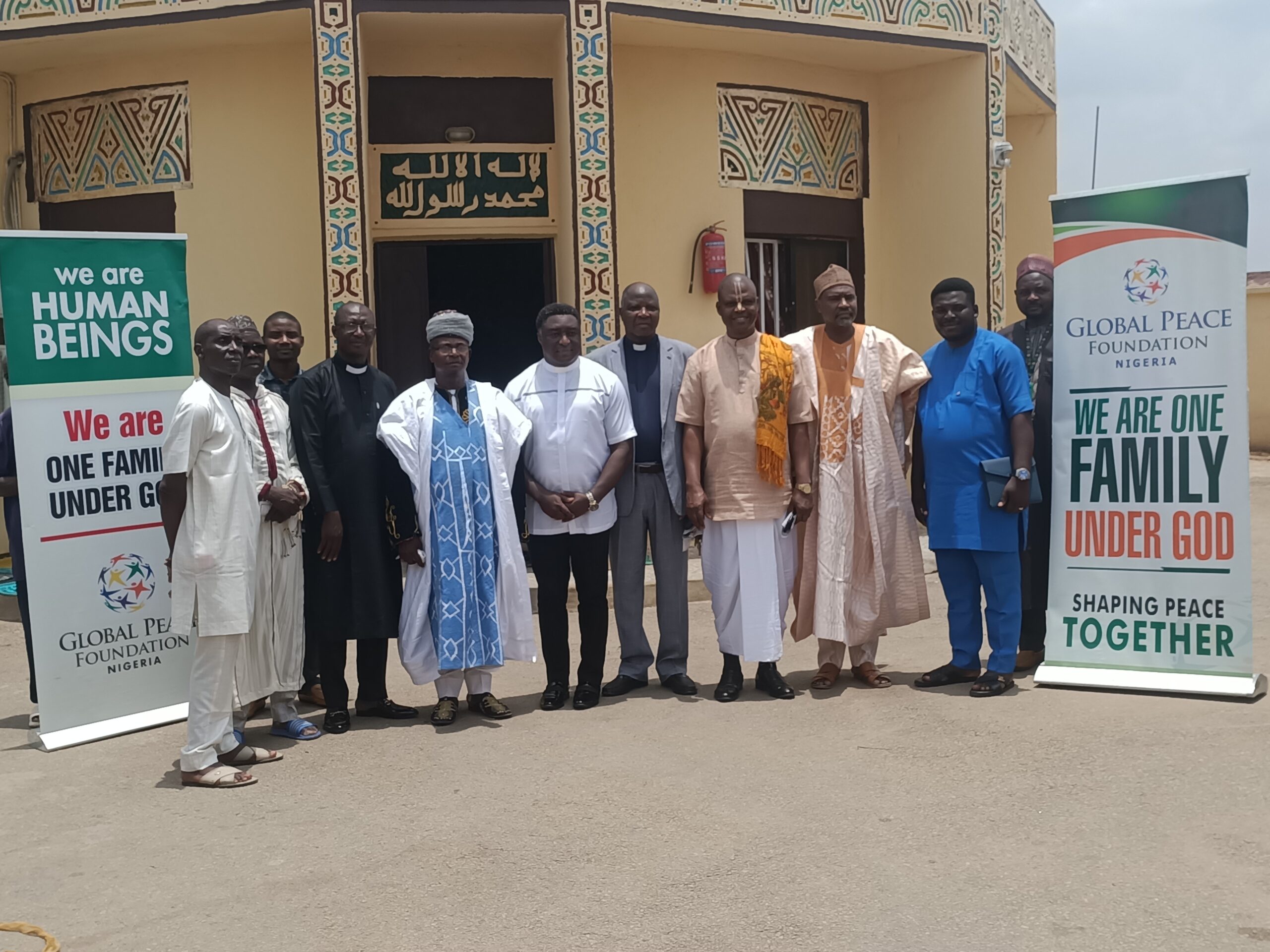
The stakeholders, at a Summit for the religious and community leaders on theme, “Interfaith Dialogue for Peace: Uniting Traditional and Religious Leaders in Supporting Security in Abuja and Environs held at the Palace of Sa’peyi of Garki (Chief of Garki), HRH (Dr) Usman Nga Kupi, in Abuja, on Thursday, agreed on collective effort to educate and enlighten the people, particularly at the grassroots, on the importance of peaceful co-existence putting behind differences in religion, tribe, political affiliations and others.
The objective of the Summit which was facilitated by Global Peace Foundation Nigeria (GPFN) was to provide a platform to unite traditional and religious leaders to address the prevailing insecurity in Abuja through dialogue, collaboration, and strategic planning.
GPFN Country Director, Rev John Hayab, in his welcome address, noted that, by bringing together leaders from diverse backgrounds, opportunity is provided to develop comprehensive strategies that could leverage the collective wisdom and influence of both religious and traditional institutions.
He said the Summit represented a critical opportunity to harness the collective wisdom, influence, and resources of the traditional and religious leaders in addressing the security challenges facing Abuja and beyond.
“By fostering dialogue, collaboration, and strategic planning, we would contribute to lasting peace and stability in the FCT. We, unarguably, desire enhanced understanding and appreciation of the roles that traditional and religious leaders play in promoting peace and security.
“In addition to that, we expect concrete action plans and initiatives to address the root causes of insecurity in Abuja; strengthen collaboration and partnerships among religious and traditional institutions for sustainable peace-building efforts; and also increase community awareness and engagement in peace-building activities.”
Rev Hayab said that opportunity was also provided for the participants to network and build relationships, thus fostering trust and collaboration across religious and cultural divides. “The networking aspect was crucial for establishing ongoing partnerships and initiatives beyond the Summit.
“However, through the facilitated group discussions and brainstorming sessions, participants collectively developed actionable strategies to contribute to pacifying the situation in Abuja. These strategies included community engagement programmes, conflict resolution initiatives, advocacy efforts, and other interventions tailored to the local context.”
He advocated the involvement of the police and other security agencies in the activities of GPFN so they could have the opportunity to harvest first hand information from the community and religious leaders that could be helpful in responding to growing insecurity in FCT and beyond.
Rev. Fr. Carnice Chinyeaka Enyiaka, GPF International Program Development Specialist; Regional Representative for Africa, in his remarks, highlighted the role the Foundation has played over the years in over 20 countries in promoting peace, women and children rights, among several others.
He maintained that Global Peace Foundation is deeply committed in the peace and security of Nigeria, and had also recognized the critical role of traditional and community leaders in achieving the desired peace.
He noted that Abuja, being the capital city of Nigeria, has experienced unprecedented insecurity issues in recent times, and the surge in tension and instability poses a significant threat to the safety and well-being of the residents, hence the urgent need for collective engagement and action to maintain peace and unity in the City.
Imam Fuad Adeyemi, the National Chief Imam, Al-habibiyyah Islamic Society, appreciated the efforts of GPFN in uniting Nigerians over the years, leveraging the traditional, community and religious leaders who command massive loyalty and followership across the country.
He maintained that achieving peace is far cheaper than war if the right things are done. “Government can help the community and religious leaders achieve stable peace in the society if they could do the right thing.
“If they can spend little percentage of what they budget on fighting insecurity to peace building, there would be relative peace in Nigeria. If they could provide job and wealth for the people, there would be less crime, and they would be happy for that.”
Meanwhile, the Chief of Garki who was represented by Alhassan Dangana, District Head of Mabushi, appreciated the collective effort to promote peace and unity among the people, and assured them that their suggestions are well noted, and actions would be taken on them as quickly as possible.