Follow Us on Google

From Juliana Taiwo-Obalonye, Abuja
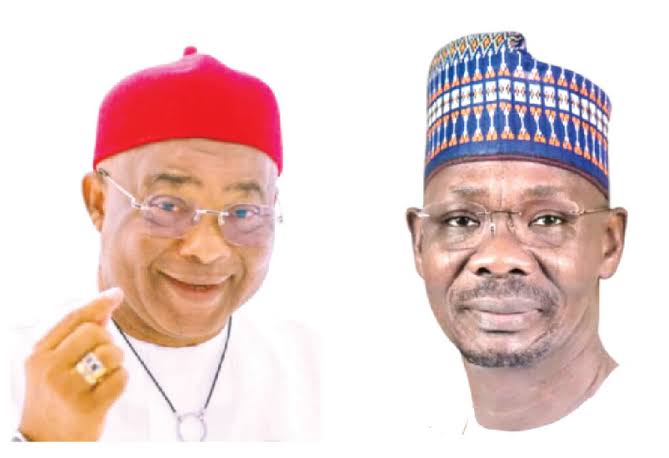
Imo State Governor, Hope Uzodimma, and his Nasarawa State counterpart, Abdullahi Sule, have warned against imposing development projects and policies on citizens without their input, insisting that governments must involve communities in identifying their needs, setting priorities and determining how public resources are deployed.
The governors said winning and sustaining public trust remained one of the greatest challenges of leadership, particularly when governments introduced difficult economic policies that imposed hardship on citizens, stressing that transparency, effective communication and inclusive decision-making were essential to securing public confidence.
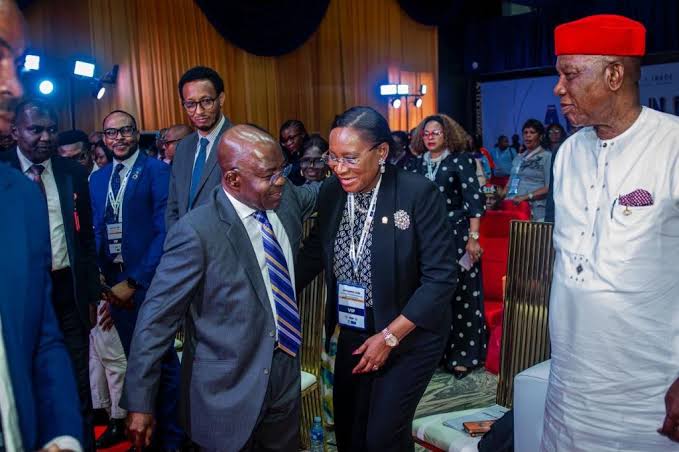
Speaking at the 2026 World Public Relations Forum (WPRF) in Abuja, the governors also defended President Bola Tinubu’s removal of petrol subsidy and foreign exchange reforms, arguing that although the policies had increased economic pressure on households, they had provided state governments with additional resources to undertake development projects.
While Uzodimma described subsidy removal as a difficult but necessary decision taken in Nigeria’s overall interest, Sule disclosed that the increased allocations accruing to Nasarawa State following the reforms had made it possible for his administration to commit resources to the proposed world’s first University of Public Relations and Leadership.
The governors spoke during a high-level panel on “Responsible Governance and Communication: Building Trust through Community Engagement, Stakeholder Relations and Inclusive Impact,” where they maintained that public trust could not be secured through government pronouncements alone but must be earned through citizens’ participation and measurable improvements in their living conditions.
Uzodimma said his administration had adopted a governance model that involved stakeholders from the conception of policies and projects through planning, implementation and evaluation, rather than presenting communities with decisions already taken on their behalf.
According to him, citizens, including women, young people, persons with disabilities, students, traditional rulers, security agencies and political stakeholders, must be given opportunities to contribute to decisions affecting their lives.
He explained that his administration established an agency for persons with disabilities to ensure that their concerns were accommodated in government programmes, stressing that meaningful participation required citizens to see how their suggestions translated into concrete projects.
“The toughest thing on leadership is winning the trust of the people and keeping the trust, especially when you want to accept a decision that will hurt people first,” Uzodimma said.
Citing the removal of petrol subsidy, the governor acknowledged that the policy had imposed financial difficulties on many households but argued that it had also increased resources available to the 36 states and the Federal Capital Territory for infrastructure and socioeconomic development.
He maintained that difficult reforms could only achieve their intended objectives when governments explained their necessity, recognised the concerns of affected groups and demonstrated that the sacrifices demanded of citizens would produce tangible benefits.
Illustrating the dilemma confronting policymakers, Uzodimma said the introduction of affordable government buses could reduce transportation costs for workers, traders and students but might adversely affect commercial transport operators whose livelihoods depended on existing arrangements.
He argued that responsible leadership required governments to balance such competing interests, engage those likely to be affected and communicate alternative opportunities available to them.
The governor said his administration had institutionalised public engagement through quarterly stakeholders’ meetings introduced in June 2020, less than six months after he assumed office, providing platforms for citizens to question government officials, criticise policies and demand explanations on matters affecting their communities.
He disclosed that the state had also introduced a radio town hall programme involving more than 20 stations across the South-East, through which residents and Nigerians in the diaspora could interact directly with government officials and receive responses to their concerns.
Uzodimma added that an elders’ council had been established to advise the government and provide insights into the expectations and grievances of communities, while an agency for persons with disabilities ensured that vulnerable groups were not excluded from decision-making.
According to him, the engagement platforms had enabled his administration to identify problems early, address grievances and strengthen public confidence, particularly in an era when misinformation could spread rapidly through social media and influence public perceptions of government.
He listed his administration’s interventions to include digital skills training for more than 75,000 young people, programmes which he said had created over 85,000 jobs and learning opportunities, and the One Kindred One Business initiative, under which more than 600 businesses had been registered by the end of 2025.
The governor said the Federal Government was adopting the business initiative for national application, describing it as an example of how community-based participation could stimulate economic activities and create opportunities at the grassroots.
“For us in Imo, the voice that matters most is the voice of our people. We engage with them, we communicate, we listen to the feedback they share with us. We work with that feedback and they see through our delivery that we have been listening,” he said.
Uzodimma also challenged public relations practitioners to encourage genuine dialogue between governments and citizens rather than concentrate exclusively on projecting government achievements.
Other News
“If you tell a government to listen to its people, help make sure that the people also listen to government,” he said.
Corroborating the need for participatory governance, Sule said development planning in Nasarawa State was driven by consultations with communities to identify gaps and establish priorities in infrastructure, education, youth development and other critical sectors.
He maintained that citizens should not be treated merely as recipients of government projects but as active participants in determining what should be provided and how such interventions should be implemented.
“They are part of the planning. They are part of the design,” Sule said, stressing that involving communities from the outset helped governments avoid spending scarce resources on projects that failed to address the people’s immediate needs.
The Nasarawa governor said transparency and honesty were indispensable to public confidence, adding that citizens should be able to assess government performance by comparing their circumstances and the level of development over time.
Turning to the economic reforms of the Tinubu administration, Sule said the removal of petrol subsidy and unification of foreign exchange rates had significantly improved the financial capacity of state governments, making it possible for Nasarawa to undertake projects that would previously have been beyond its resources.
He cited the proposed University of Public Relations and Leadership, an initiative of the Global Alliance for Public Relations and Communication Management, as one of the projects made possible by the additional resources available to his administration.
According to him, the institution would have remained an aspiration if Nasarawa had continued receiving monthly allocations of between N4 billion and N5 billion, as was the case before the reforms.
“If not for the removal of subsidy by President Bola Ahmed Tinubu, if not for the unification and the floating of the naira, if it was a period when Nasarawa State was just receiving somewhere around N4 billion to N5 billion a month, it would remain a dream for Nasarawa State.”
Sule explained that the proposed institution would be a specialised centre for research, learning and leadership development rather than a conventional university devoted primarily to undergraduate education.
He said Nasarawa emerged as the preferred location despite initial expectations that the university would be established in Abuja or another major Nigerian city, citing the state’s proximity to the Federal Capital Territory, availability of land, natural resources and investment potential.
Highlighting the state’s economic prospects, the governor identified commercially viable deposits of lithium, titanium, barite, lead, zinc and tin, alongside agricultural and industrial investments, including what he described as Africa’s largest medium-density fibreboard processing plant, with a daily capacity of 6,000 metric tonnes.
He said the combination of land, natural resources, human capital and security made Nasarawa suitable for the institution, which he hoped would eventually attract international scholars, researchers and public relations professionals.
Drawing comparisons with Harvard University in the United States, Sule said the proposed university should aspire to build an international reputation through sustained investment in research, leadership development and academic excellence.
He welcomed delegates from 126 countries attending the forum and urged them to return to Nigeria when the institution became operational.
Earlier, the panel moderator, Shreya Krishnan, Managing Director of AnitaB.org India and Chair of the Policy Advocacy Committee of UNESCO’s Women for Ethical AI in South Asia, challenged the governors to demonstrate how their administrations translated public communication into responsible decisions and measurable improvements in citizens’ lives.
“Public trust is shaped by more than what governments say. It is built by what citizens experience.”
Krishnan maintained that citizens judged governments not merely by the frequency of official announcements but by whether their concerns were heard, decisions explained, public services improved and neglected communities reached.
She stressed that effective public relations could not compensate for poor governance, warning that public confidence could neither be manufactured through publicity campaigns nor sustained without accountability and tangible results.
According to her, responsible communication must be reflected in how governments listen, make decisions, engage stakeholders and deliver outcomes that citizens can see and experience.
She concluded that public trust was built through consistent action rather than isolated announcements, stressing that governments must demonstrate through their policies, projects and service delivery that citizens’ voices genuinely mattered.