Follow Us on Google
By Okwe Obi, Abuja
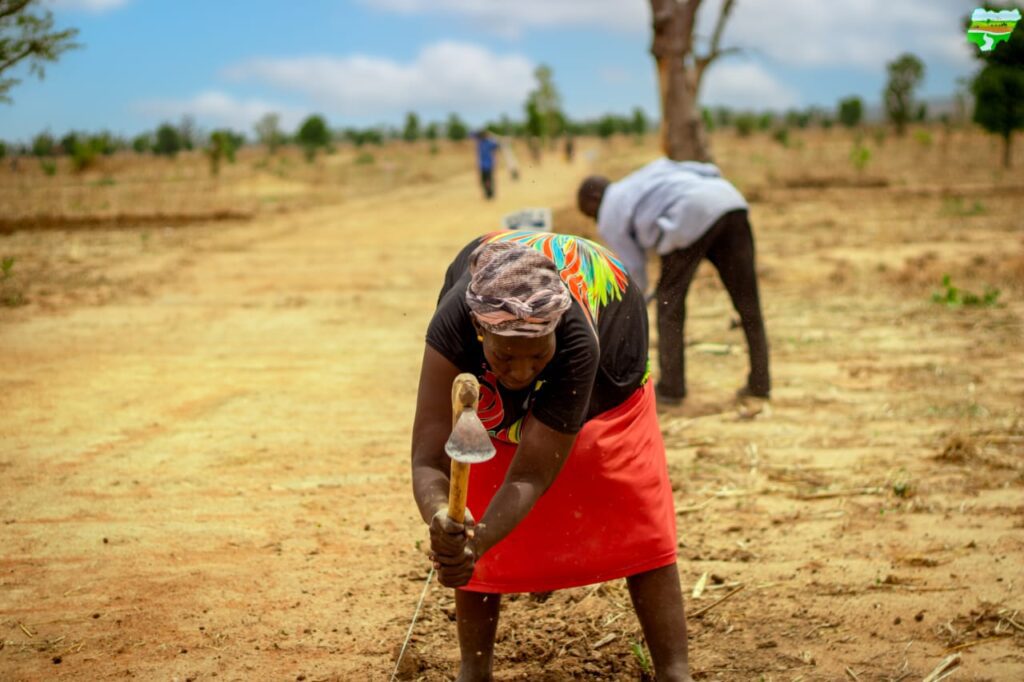
The federal government, through the National Agricultural Development Fund (NADF), has flagged off a N1.5 billion pilot initiative to cultivate 1,500 hectares of farmland, directly empowering 1,500 smallholder farmers under the first phase of the National Agricultural Development Programme (NADP-1).
The programme, launched in partnership with Flour Mills of Nigeria (FMN) and NOVA Merchant Bank, was formally unveiled at a press briefing in Abuja to mark the maiden disbursement under NADF’s on-lending facility.
Speaking at the event, the Executive Secretary of NADF, Mohammed Ibrahim, described the initiative as a strategic milestone in advancing inclusive agricultural financing and revitalising Nigeria’s food production systems.
According to him, the scheme is aligned with the presidency’s economic reforms, particularly its emphasis on food security and market development.
“This programme demonstrates that smallholder farmers can be engaged in a profitable and sustainable way,” Ibrahim said. “Through aggregation, value chain partnerships, and strategic financing, we can transform agriculture into a viable engine for national development.”
Ibrahim further noted that the pilot project aims to strengthen critical value chains and increase productivity across selected crops by ensuring farmers gain access to essential inputs, mechanisation services, and markets.
Representing FMN Agro, Sadiq Usman, the Managing Director, underlined the central role of productive agriculture in industrial transformation. Drawing attention to the importance of maize cultivation in Kaduna State, which will serve as the launchpad for the programme, Usman stressed the interconnectedness between farming and agro-processing.
“A factory without a farm is scrap metal, and a farm without a factory is just wheat,” he quipped. “Kaduna produces 20% of Nigeria’s maize and is home to highly productive farmers. It’s a perfect ground for demonstrating how better seeds, nutrition, and agronomy practices can boost yields.”
He said the initiative aligns with FMN’s goal of building resilient supply chains and enhancing profitability for farmers, noting that the partnership goes beyond input distribution to encompass the entire production-to-market cycle.
Other News
On the financial side, the Group Head of Corporate Banking at NOVA Merchant Bank, Uzoma Ayonmike, expressed confidence in the impact of the programme on Nigeria’s broader economic growth.
“Agriculture is a cornerstone of national growth. We are proud to be the first financial institution to disburse under the NADF pilot phase,” he stated. “This partnership is not just a transaction. It is a step toward food security, economic inclusion, and sustainable national progress.”
His colleague, Esosa Igbineweka, who heads the Value Chain Banking unit at NOVA, explained the bank’s rigorous due diligence in selecting FMN Agro as the programme’s lead implementation partner.
“NADF cannot lend directly to farmers, so we ensure any intermediary meets strict risk and performance criteria,” Igbineweka said. “FMN Agro has proven capacity and a strong record in engaging smallholder farmers.”
Providing further insight into the long-term vision of the programme, Olalekan Alabi, speaking on behalf of NADF’s investment division, said the goal is to scale the initiative from 1,500 farmers to 10,000 before the end of the current wet season.
“This isn’t just a one-time project. It’s the beginning of a long-term drive to improve food security through sustained investment in smallholder farmers,” Alabi remarked.
He listed maize, cassava, rice, soybean, and sorghum as the primary crops targeted for intervention due to their strategic importance in Nigeria’s food and manufacturing ecosystems.
Alabi added that the programme also incorporates support for mechanisation, access to quality inputs, and structured market linkages, making it a comprehensive approach to tackling persistent bottlenecks in Nigeria’s agricultural landscape.
The initial rollout in Kaduna State will focus on maize, a critical crop for both food and livestock feed production. FMN, which is Nigeria’s largest buyer of maize, sorghum, soybean, and wheat, views the programme as central to securing a stable supply of raw materials and improving productivity across the value chain.
With this collaborative model, the Federal Government, private sector, and financial institutions are betting on a new era of agriculture—one that empowers farmers, strengthens rural economies, and contributes to national food sovereignty.