Follow Us on Google
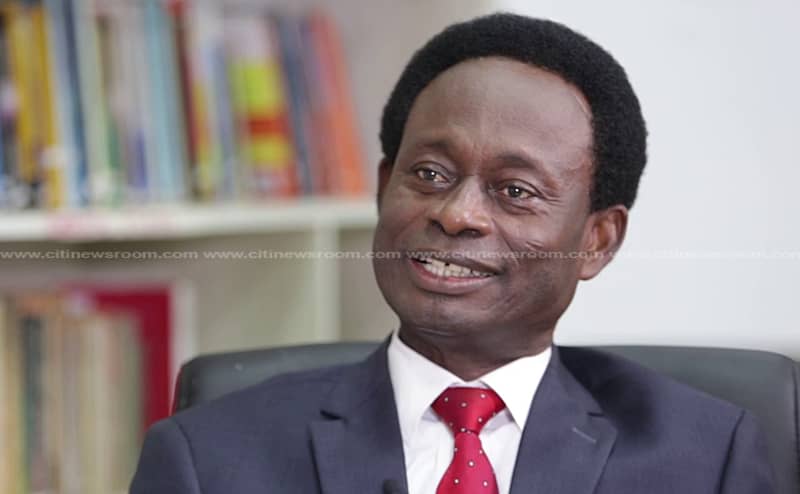
Foremost Ghanaian Pentecostal leader and respected cleric, Apostle Professor Opoku Onyinah, has called on various governments on the African continent to use legal instruments to curb religious abuses and excesses which have become a very disturbing trend across many communities in the region.
The renowned Christian leader gave this piece of advice while featuring as a guest at the last edition of the Toyin Falola Interview Series held on Sunday and streamed on various social media platforms, television and online radio platforms.
Apostle Professor Opoku Onyinah is the immediate past chairman of the Church of Pentecost, the largest Pentecostal denomination in Ghana, with branches in over 150 countries; he is a former president of Ghana Pentecostal and Charismatic Council; he is the president of the Bible Society of Ghana; he is the chairman of the Board of Directors, National Cathedral of Ghana.
The panel—chaired by the eminent scholar, Professor Toyin Falola— had very prominent academics in Christianity and African theology which included Nimi Wariboko, Professor of Social Ethics; Abimbola Adelakun, Associate Professor, Department of African and African Diaspora Studies, University of Texas at Austin; and Karen Lauterbach, Associate Professor and Director at the Centre of African Studies, University of Copenhagen.
Speaking at the interaction with the theme on ‘Pentecostalism in Africa’, Professor Onyinah noted that while Pentecostalism believes in miracles, pastoral abuses are however not condoned. According to him, “We believe in miracles as Pentecostals. We don’t believe in pushing people when performing miracles or deliverances. Sometimes you can speak. We also don’t like the tendency where people force or put others on fasting. Some say that ‘before you can receive what God wants to give to you, you have to fast a certain number of days.’ These things can be considered as abuse because sometimes some people can even tell you that ‘we want dry fasting; don’t drink water for three days.’ We don’t encourage such things. If pastors are pushing you beyond your limits, you should know that they are looking for something else. When Jesus was talking about fasting and prayer, he was not talking about the victim who needed to fast but the pastor or ‘deliverer’ as the case may be. The pastor or evangelist needs to prepare himself to cast out the demon. When it comes to exorcism, it is the exorcist who fasts and prays, not the one who is already afflicted by the demon. However this does not mean that you cannot recommend to people to fast. You cannot tell people that unless they fast, God won’t hear them.
“When it comes to the excesses of pastors or religious leaders, God has given us commonsense. If you realize that someone is pushing you beyond commonsense, you should know. Every Christian should know the Bible; perhaps our quest for miracles blinds us. Once you appear to be reasonable, they will say that you don’t believe in the power of God. We must educate our people and teach them to understand the position and identity of a Christian. With the Ghana Pentecostal and Charismatic Council, we cannot force certain things on the government. Our governments too have to come in. Governments can use their instruments to curb religious excesses and abuses. We have challenges as religious leaders too. It is also an abuse when they use the name of God or the Holy Spirit to perpetuate certain unlawful acts. When it came to the council at Jerusalem, the apostles and elders gathered together but here you will see many Pentecostal leaders claiming that they are above everything.”
Responding to Professor Falola’s enquiry on the possibility of adopting the Rwandan model of ensuring certain measures of regulation in religious activities, Professor Onyinah told the gathering that “When the Rwandan model was introduced for people to have diplomas before establishing churches, I visited our churches in Rwanda. One of our local churches was closed down. When I got there, they had done what the government had asked them to do. The church building was on a sloppy hill; I told them that the government was right that the church location was dangerous for children. The government wanted that to be addressed; it was the issue of safety. You cannot do the job of a pastor without learning. Unfortunately, the issue of Christian ministry has become so easy that many take advantage of it without having any knowledge or training about the ministry. It is so bad that now when someone says they have the power of God, the church is registered. Sometimes you have to put some guide. Without perimeters, things may go overboard. We must look at our own situation and see how we can bring some regulations in order for pastors or many others not to go overboard. There is however the fear that if government is allowed to regulate churches, it would persecute Christians. However, regulation is necessary. We all must humble ourselves to allow the national regulatory to assist in this regard. Ecumenical bodies within the system can be brought in to assist what is going on.”
Professor Wariboko however expressed worry that in Nigeria, churches have repeatedly rejected government intervention or regulation. To this, Professor Onyinah noted that “The belief that if we teach Christians the right thing Pentecostalism will die is not true. As a Pentecostal when I began to talk about these things, people didn’t believe that they would work. I was a typical Pentecostal pastor when I started; I was 22 years old and I got in without training. My people saw the hand of God upon my life and the executives recommended that I go for training. That helped. After my training, I went for further training and people were skeptical as they kept saying that I would lose my spirituality. When I came out, I wanted to disabuse the belief that while asking for offering in church, you have to sway people with gimmicks in order for them to give. I tried to discourage our pastors from all those practices; it was after that that money started coming in more than before. We had excess of fund and we started releasing money to our local assemblies. Those who know Ghana know that we have a place called Pentecost Convention Centre; we have accommodation that can host 3,000 people; we have a place to seat 5,000 people. Yet we never raised offering for it. It was the prudent use of the regular tithes and offerings that we received. If we teach them the right thing for them to understand, the Lord will honour His word. After that, true miracles will take place, because you wouldn’t need to coerce people to do all sort of things. It is our lack of faith that makes us adopt mechanical ways of manipulating people to bring money for healing and all sorts. You can encourage people to fast, not coerce them.”
The interview was streamed across various social media platforms with a viewership of over 3 million.
Governments can use legal instruments to curb religious abuses, excesses in Africa—Onyinah, Ghana’s foremost Pentecostal leader
10 February 2024 12:38 am WAT
 By
The Sun
By
The Sun
Stay connected with The Sun Newspaper
Get breaking news, exclusive stories, and live updates delivered straight to your phone. Join thousands of readers already following us on Whatsapp Channel and Telegram.
Stay connected with The Sun Newspaper
Get breaking news, exclusive stories, and live updates delivered straight to your phone. Join thousands of readers already following us on Whatsapp Channel and Telegram.
Latest News

La Liga: Courtois says no favourites in El Clásico showdown
23rd October 2026

One dies, three rescued as two-storey building collapses in Lagos
23rd October 2026
States get 85% of Nigeria’s resources, FG takes 15% – Oyedele
23rd October 2026
2027: Workers 13th-month pay should earn APC votes – Oborevwori
23rd October 2026
Related News