Follow Us on Google

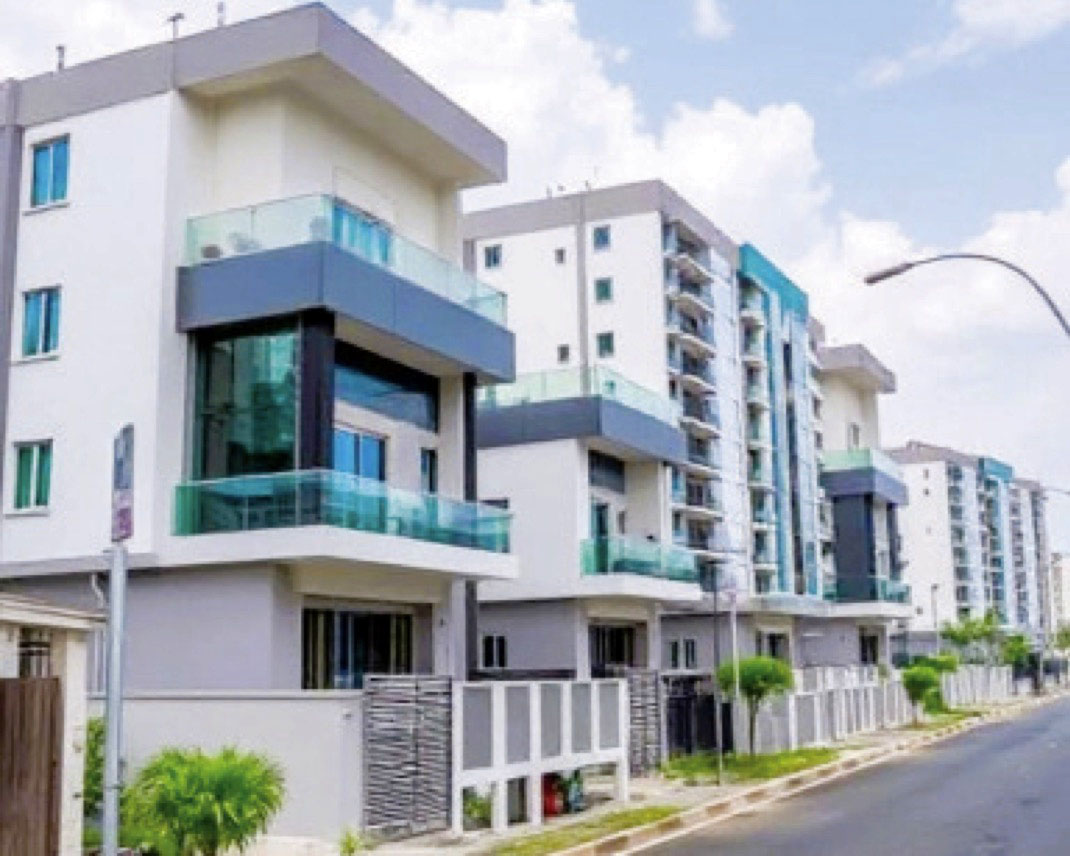
For many Nigerians living in major cities like Lagos, Abuja, Enugu, Port Harcourt and the likes, finding decent accommodation at an affordable rent is almost impossible.
What was once a search for a comfortable home has turned into a financial battle.
This has forced some households to make painful choices, including moving away from urban centres to rural communities where accommodation is relatively cheaper but comes with its own challenges like poor social infrastructure and insecurity.
From Lagos to other major cities across the country, rising rents are putting enormous pressure on workers, small business owners and low-income earners. For some, a significant portion of their monthly income now goes into securing accommodation, leaving very little to meet other basic needs such as food, transportation, healthcare and education.
Stakeholders in the built environment say the development reflects a deeper housing crisis that has persisted because of inadequate government support, high construction costs, poor infrastructure and limited access to affordable housing finance.
They argue that unless governments at all levels take practical steps to reduce the cost of delivering houses and expand the supply of affordable accommodation, more Nigerians will be pushed out of urban centres.
Speaking on the challenges facing the housing sector, Managing Director of Light Residents Ltd, Mr Reginald Muoneke, blamed government policies and the poor provision of basic infrastructure for making housing development unnecessarily expensive.
He said private developers were making efforts to provide accommodation for Nigerians but were often confronted with obstacles arising from the aspects of property development that require government intervention.
According to him, the inability of developers to access affordable financing and the burden of providing basic infrastructure at new housing sites are among the factors pushing property prices and rents beyond the reach of ordinary citizens.
Muoneke observed that developers who borrow from financial institutions often face difficult conditions, making it particularly challenging for small and medium-sized operators to secure the funds required to deliver affordable housing.
He questioned how private developers could provide electricity, roads, drainage systems and other essential facilities, while also keeping property prices low enough for ordinary Nigerians and making reasonable profits.
“How can a private developer provide the infrastructure, provide the electricity, and do the drainages and still make the properties affordable to the public and still make the profits? If the developer must make profits, the cost of the houses must be high above what the poor salary earners can afford,” he said.
He explained that government investment in infrastructure would significantly reduce the financial burden on developers and, by extension, the cost of housing for prospective tenants and homeowners.
“Provision of infrastructure at new sites always helps to reduce the cost of housing for the citizens. So my advice to governments is to provide infrastructure, electricity, water and other social amenities to ease life for the citizens,” Muoneke added.
Also speaking on the situation, Executive Director of the Housing Development Advocacy Network (HDAN), Mr Festus Adebayo, called on federal and state governments to give greater attention to affordable housing finance, access to serviced land, rental housing development and critical infrastructure.
He said these interventions were necessary to bring down the cost of housing delivery and make decent accommodation more accessible to Nigerians, particularly low- and middle-income earners.
Adebayo maintained that the performance of the property market should not be judged only by rising property values, increased investment or the profits recorded by developers, but by the number of citizens who could afford decent and secure accommodation.
“The success of Nigeria’s property market should not be measured merely by rising property values, increased real estate investments or the profitability of developers, but by the number of Nigerians who can afford decent and secure accommodation,” he said.
Other News
He called for deliberate government policies to encourage the construction of affordable homes, reduce building costs, expand access to long-term mortgage financing and attract more private sector investment into housing delivery.
According to him, the growing difference between property prices and household incomes has become one of the biggest challenges confronting the housing sector.
He noted that although demand for accommodation continues to rise alongside population growth and urbanisation, millions of Nigerians remain unable to purchase homes because property prices, mortgage conditions and rental obligations are beyond their financial capacity.
The HDAN executive director urged governments to move beyond announcements of housing projects and introduce measurable programmes capable of delivering homes that ordinary Nigerians can afford.
He stressed that expanding housing supply without addressing the purchasing power of prospective occupants would do little to resolve the accommodation crisis.
Meanwhile, property developer in Ayobo, Chief Obiora Okeke, said the high cost of building materials and other construction expenses continued to make affordable housing delivery difficult, despite signs of moderation in inflation.
He explained that the cost of cement, reinforcement steel, roofing materials, transportation, energy, labour and construction financing remained major concerns for developers.
According to him, a decline in the inflation rate does not necessarily translate into cheaper building materials or a reduction in the overall cost of constructing houses.
Okeke warned that the accumulated effect of rising construction expenses could force some developers to reconsider their building plans and adopt measures to remain in business.
He predicted that developers might begin reducing the sizes of houses, adopting alternative construction technologies, reviewing architectural designs and building projects in phases to manage costs.
Such adjustments, he suggested, could become necessary as developers struggle to balance the need to make profits with the growing demand for affordable accommodation.
However, stakeholders believe that placing the responsibility of providing affordable housing entirely on private developers will not solve the problem.
They argue that the government must play a more active role by making land available at reasonable costs, providing roads, electricity, water and drainage systems, and creating financing arrangements that allow developers to borrow at affordable rates.
They also want greater attention given to rental housing, rather than concentrating government housing interventions mainly on homeownership.
For millions of Nigerians who cannot afford to buy houses, access to decent rental accommodation remains an immediate concern.
Without these interventions, the pressure of rising rents is likely to continue reshaping where Nigerians live and work, with more households considering rural communities and distant settlements as their only realistic escape from the high cost of urban accommodation.
Ultimately, stakeholders say, the true measure of progress in Nigeria’s housing sector should be whether ordinary citizens can find decent homes without sacrificing a disproportionate share of their earnings.