Follow Us on Google
By Chibuike Okafor
The year 2023 is gone, and never to be remembered in the present. It is gone, gone with the numerous worries it brought. It is gone leaving many people wishing it never was.
For many, the year will be remembered in negative terms. It will be remembered as one marked by series of daunting challenges, which the generality of the people had to deal with.
Sunday Sun learnt that very many Nigerian businesses had to lay off their staff in the out-gone year. It was a year of hardship, not only for the people, but for corporate concerns.
For corporate organisations, for instance, 2023 was one some went on to reduce their working hours to accommodate the transportation concerns of many of their members of staff. Many small-scale and even big companies had to fold up, and even leave the country. And right now, the labour market is brimming with once employed persons; they no longer have jobs because they have been laid off.
A once construction company staff who simply identified himself as Joe lamented that he presently doesn’t have a job because his organisation, based in Lagos asked him to go last December. He was not the only one. More than 200 staffers were shown the exit door because there were no contracts for the company to execute unlike in the time past.
“That was terrible for me last year. Over the past 15 years, I have been working for ….
“But last December, they asked a good many of us to go. No fewer than 200 persons were discharged in the Lagos area alone as the company claimed it had no jobs to do so as sustain the staff.
“I’m wondering what this 2024 is going to bring. Only time will tell. We hold unto God, trusting in his mercy and sustenance,” he waxed philosophical with full of hope.
Earlier, the Manufacturers Association of Nigeria had informed that many factories were closing down and might continue to do so due to the high cost of diesel, which had more than doubled. MAN then warned of job losses and a decline in production that would cause hardship for workers and businesses.
This reporter learnt that last year cooking gas price rose to the skies. One 12.5kg of cooking gas which sold below N10,000 across Lagos depending on the area of purchase, rose to a staggering N12,500 at the dawn of October 2023. November figures showed a further uptick, with the estimated average price rising to N13,190, reflecting an increase of N690 from October.
The increase in cost was attributed to a corresponding increase in the cost of crude oil in the international market and the depreciation of the naira.
Last year was one the generality of Nigerians witnessed an unprecedented cash scarcity, which is still being experienced in the New Year.
In the days leading to the elections, the Central Bank of Nigeria (CBN) had to redesign the N1,000, N500 and N200 notes. This brought a scarcity of the currency never seen in the history of the country. Nigerians were compelled to buy the local currency at unbelievable amounts. For instance, to purchase N5,000 in some instance, one needed to part with N2,000. This ushered in unprecedented hardship as the naira became very scarce.
At that time, the volume of transaction that was able to go was cashless. More and more people were unable to purchase food for their families. Near anarchy ruled the land.
It was also a year of elections. In the course of the electioneering, there were causalities. People lost their lives; some were maimed while attempting to either cast their ballots or while following political candidates of their choice.
Following the emergence of President Bola Ahmed Tinubu, subsidy on PMS also known as fuel was lifted. This in itself ushered in its own challenges. Inflation, hardship descended.
According to the National Bureau of Statistics (NBS), the average price of petrol in Nigeria increased by over 210 per cent, ranging from N550- N750 depending on the region one was, up from an average price of N200.
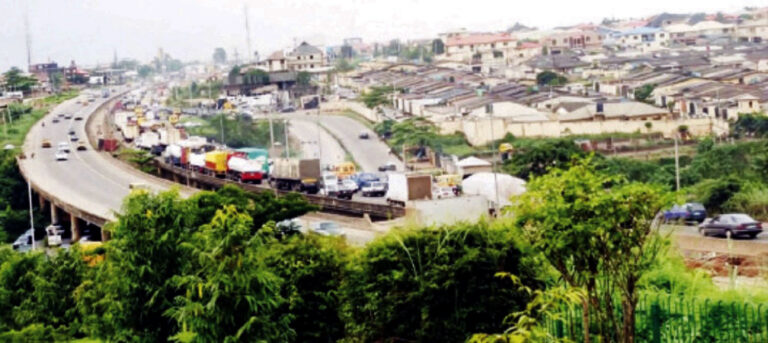
The massive increase in pump price significantly had its impact on the cost of living. Low-income citizens faced more significant financial strains. They could no longer meet their basic food needs. A regime of abysmal increase in transportation costs mounted.
Between June and October last year, the prices of diesel and aviation fuel increased astronomically.
Right now, transport fares on some routes have risen as high as 100 per cent. A one-way bus ticket on a sprinter bus from Lagos to Abuja rose to N35,000 up from N15,000. Bus ticket for a journey from Lagos to Owerri went up to N30,000 up from N15,000.
There were also increases in air transport cost. A round trip from Lagos to Abuja depending on the airline and time rose as high as N300,000, the same for transport from Lagos to Owerri and Port Harcourt.
Till now, many airlines have had to either cancel their flights or increase ticket prices due to the high cost of aviation fuel.
The emerging challenges were made possible by the floating of the naira and the collapse of the naira official and black market exchange windows. The dollar exchange rate in the parallel market moved from N736 in January to above N1,000 in October 2023. In the official market, it is trading above N800 for one dollar and N1,250 at the parallel market. Imports are now more expensive, and prices of good are rising due to this.
Right now, following the said challenges, very many people are unable to afford basic necessities of life. Inflation is said to be on the increase; the cost of basic goods and services has gone up beyond the reach of many.
Beginning from last year, the healthcare began experiencing significant challenges. The cost of drugs had risen so badly that many people can no longer afford them. The prices of some popular brands have more than tripled. This is following the exchange rate of the naira to the dollar and other foreign currencies.
Many people are now resorting to either self medication or alternative medicine for cure. Those who cannot afford either of them are left languishing.
It was a year the Nigerian Labour Congress (NLC), Trade Union Congress of Nigeria (TUC), and doctors in Nigerian public hospitals, among many other unions, severally embarked on indefinite strikes. They were grievances, including demands for a pay rise after the removal of a subsidy on petrol. This, in turn, caused job losses, inflation and decreased productivity.
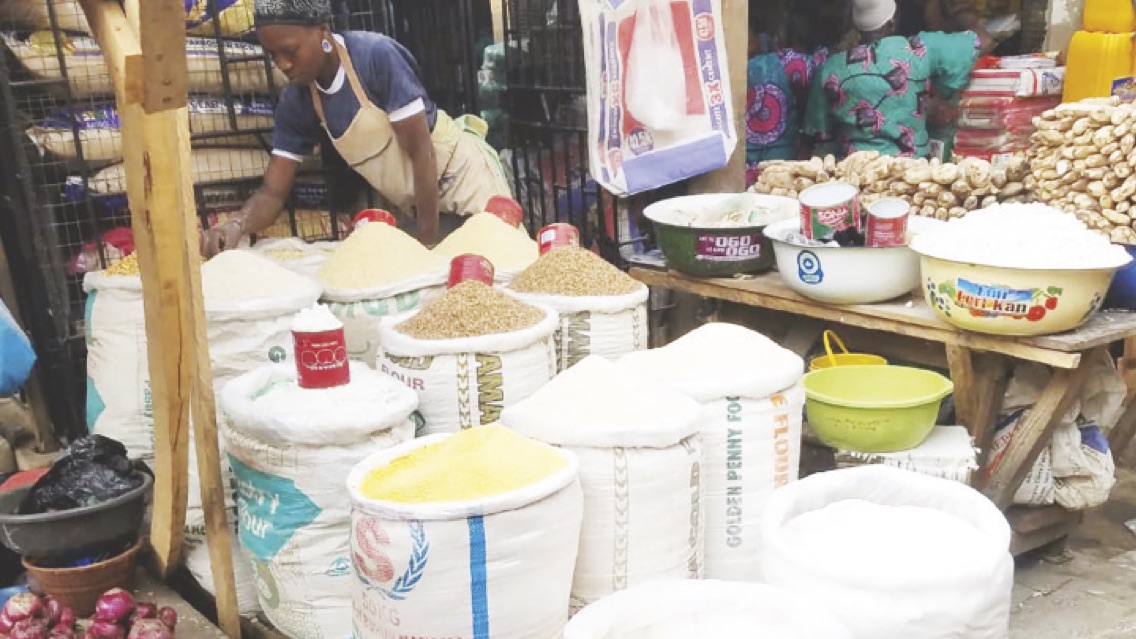
The food prices since last year have been a challenge to every Nigerian household. Major staple food prices, including bread, have since skyrocketed. For instance, a bag of rice which sold for N28,500 in April, last Christmas sold between N58,000 and N60,000; a keg of vegetable oil that sold for N32,000 around the same period, was selling for N42,000.
Cassava flakes (Garri) which used to cost N18,000 per bag, now goes for N28,000.
The NBS’s latest consumer price index report showed that the average annual food inflation rate for the 12 months ending in November 2023 over the previous 12-month average was 27.09 per cent. It said this was the highest inflation level report in over 18 years.
To understand clearly how tough the year was for Nigerians, the NBS report showed that the primary reasons for rising food inflation were increases in bread and cereals, oil and fat, potatoes, yam and other tubers, fish, fruit, meat, vegetables and coffee, tea and cocoa.
Between June and October this year, the prices of diesel and aviation fuel increased.
Last year alone witnessed high proportion of violence across the country. Everywhere one turned, there were clear incidences of kidnapping for ransom, robbery, cult-related clashes, murders perpetrated by yahoo plus youths and ritualists, herders killings, banditry activities, among other crimes.
An intelligence report had it that at least 430 civilians were killed last year, while over N5 billion was demanded from 3,620 persons in 582 kidnap-related cases.
Some persons blamed the spate of insecurity partly on rising food prices, as many farmers were said to be afraid to return to their fields.
Following the spate of violence experienced last year, Nigeria was reported missing from the 2023 Africa’s Most Peaceful Nations list, according to the 2023 Global Peace Index (GPI). However, in spite of the challenges, the generality of the citizens remained hopeful that the New Year will be better.