Follow Us on Google
From Abdulrazaq Mungadi, Gombe
With the fear of herders and criminals looming over their farms, farmers in Gombe State have resorted to spiritual help to protect their crops and ensure a successful harvest.

Due to the heightened risk of attacks, many farmers have opted for special prayers, while others sleep in their farms or employ labourers to guard their crops. The menace has also forced many farmers to an early harvest, leading to a potential decrease in crop yields for several farmers in the state.
The situation has caused great concern for the farming community and the state government, who are now working to find solutions to the issue.
Herders are nomadic people who often move from one place to another with their cattle in search of green pastures for their animals to graze. Over time, the activities of herders have been a major threat and challenges for farmers in Gombe and other states of the federation, resulting in conflicts and clashes.
The face-offs have led to the destruction of several farmlands, loss of lives and displacement of many people. Apart from the destruction of farm produce and loss of lives that had been reported in the past, some herders still graze on crops, roaming with their cattle, which was widely experienced during the 2023 wet season farming across Gombe State. According to some farmers, this has led to a decrease in the quality and quantity of their farm produce.
Apart from the menace of herders being faced by farmers, the recent phenomenon of criminals who sneak to harvest and steal farm produce has added to the pains of farmers in Gombe State. As a result, the farmers are being compelled to rush and harvest their crops before the usual time to prevent them from being stolen.
The development has left several farmers whose crops are not mature and due for harvest to devise means of protecting their produce while the crops finalize the process of maturity and drying up before harvest.
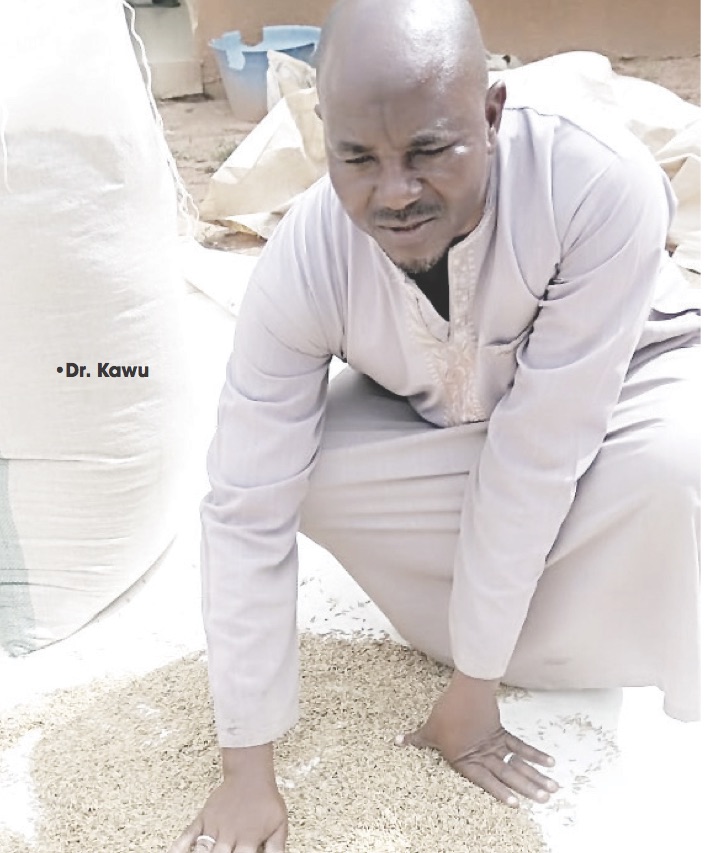
Dr. Ibrahim Ahmed Kawu, a lecturer with the Department of Soil Science at the Faculty of Agriculture at Federal University Kashere (FUK), who is one of the farmers recently affected by the activities of herders in Gombe, told Daily Sun in an interview that the menace has been recurring.
He said: “I have a farm along Gombe/Kumo road (Gombe-Yola road), which I cultivated this year (2023). I first planted millet on three hectares of farmland earlier in the season and herders went in and destroyed it all just when the crop started growing.
“I later planted 10 measures of beans seeds. The herders also destroyed the beans completely, except for a portion of the farm where I planted maize”.
“After struggling with the herders whom I could not catch, I was able to succeed and got a bumper harvest from the maize, but I had to harvest and take it home before the normal time due to the fear of the criminals. I had to harvest my maize and rice in the middle of September, instead of the end of October that most farmers in the area normally harvest and take their produce home for storage.
“After taking the maize home, I have been spreading it out in the sun every day so it will dry up, unlike when we leave it to dry up properly and easily without stress on the farm, which is also the traditional and normal farming practice.”
He further explained that the rampant act of criminals going after crops and other farm produce is a new thing to most farmers and that the deed is slowly becoming a menace in the state, forcing farmers to start harvesting their crops before they are ripe.
“So many farmers have been forced to harvest their produce before the desired time and that is bad. It is preferable to leave farm produce to lose its moisture content in the farm because it cuts cost and prevents insect infestations,” he said.
Explaining that several farmers have lost their entire crops to criminals, leaving them with huge losses, he said that produce harvested before completely losing its moisture and drying up tends to depreciate in quantity and even quality, which will in turn reduce income for the farmer.
“A farmer who harvested, let’s say 20 bags of maze or millet before the normal time, might end up having 18 or 17 bags after two months or so because by the time the produce dries up and completely loses its moisture contents, it will reduce in quantity,” the lecturer said.
Musa Abdullahi Chiroma, another farmer in Yamaltu/Deba LGA of Gombe State, revealed that the act of destruction or theft of farm produce by herders and criminals was a source of concern in their area, stating that it posed great danger to food security in the state. He explained that several farmers had shifted from cultivating food crops like maize, rice, beans and millet, opting for sesame, bambara nuts, cotton and other cash crops to avoid the risk of falling into the hands of herders.
However, Chiroma explained that even if the farmers are successful in avoiding the type of crops that attract herders, they still have to employ other means of protecting their produce, especially when they get close and due for harvest. He said that farmers who don’t have storage facilities and space to spread the produce harvested before the usual time are being forced to employ some security guards to protect their crops on the farms.
“Some farmers employ as many as five people to guard their farms day and night. We pay up to N2,000 to each person employed, that is N1,000 during the day and another N1,000 for those that stay for the night,” Chiroma explained, adding that other farmers gather to recite Qur’an and make some sacrifices in their farms for protection.
While calling on the government and other stakeholders to urgently find a solution to the menace and ensure that farmers and their farms are protected and allowed to reap the full benefits of their hard work, Malam Ridwan Ibrahim, another farmer in Akko village of Akko LGA, stated that the activities of herders and criminals negatively contributed to the output of the 2023 wet season farming.
He said: “We cannot just pretend that everything is okay when our farmers who produce food for us are left with a lot of challenges. After struggling to get fertilizer and other inputs, now we will be talking about herders and the people going to steal these farm produce. I think the government and all stakeholders need to stand up and remedy these issues, if we plan to feed ourselves as a state and nation.”
However, responding to the situation of herders and farmers in the state, Gov. Muhammadu Inuwa Yahaya enacted a law suspending cattle movement and migration within or throughout the state during the harvest period. The suspension, which is usually between October and January of every year, is to allow farmers in the state to harvest their farm produce without the fear of herders who mostly begin their migration during the harvest period.
As part of the efforts to tackle the lingering issue of herders-farmers clashes, Yahaya also recently visited the national headquarters of the Nigeria Security and Civil Defence Corps (NSCDC) in Abuja, where he met with the Commandant General, Dr. Ahmed Abubakar Audi. During the meeting, the governor brought to the fore the herders and farmers’ challenges being experienced in Gombe State.
According to a statement issued by Ismaila Uba Misilli, director-general of press affairs, Government House, Gombe, Yahaya sought enhanced collaboration between the state and security agencies, especially the NSCDC, in addressing pressing security issues, particularly in the agrarian region.
Misilli explained that the governor requested the presence of more agro-rangers of the NSCDC during the harvest period in the state. He said: “Restricting herder movements during this crucial period has been a successful strategy and, therefore, sought the support of the NSCDC to further reinforce these efforts.”
However, Misilli stated that, while the strategy has proven to be effective, the governor acknowledged that enforcing compliance with the law has been a challenge, hence the need to strengthen collaboration with the NSCDC and other relevant outfits. According to him, the governor explained that the presence of the agro-rangers would not only help secure the farming communities but also contribute to food security across the region.
“Unfortunately, it is the farmer-herder clashes that culminated into banditry and kidnapping we are witnessing in our country today,” the governor said.