Follow Us on Google

From Abdulrazaq Mungadi, Gombe
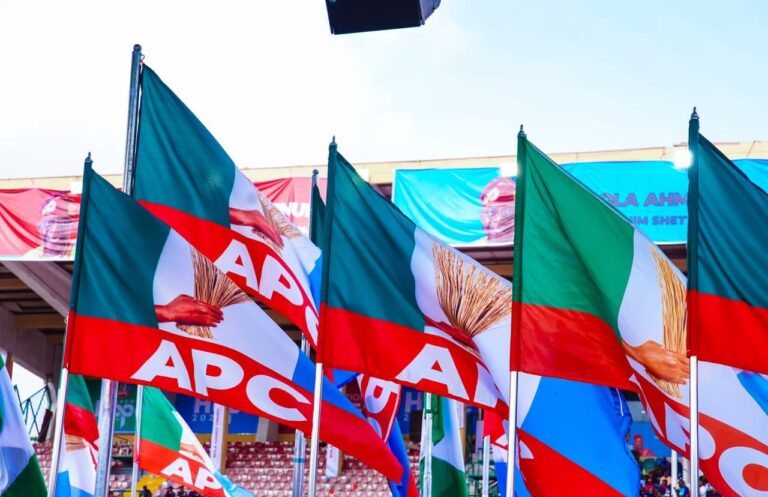
In Gombe State, the ongoing All Progressives Congress (APC) membership revalidation exercise has quietly morphed from a routine party housekeeping process into a high-stakes political litmus test ahead of the 2027 gubernatorial race.
What was designed as an administrative update has instead become a visible arena for power projection, elite positioning, and grassroots strength assessment, with three political heavyweights: former Minister of Communications and Digital Economy, Prof. Isa Ali Pantami; Chairman of the Nigerian Exchange Group, Alhaji Umaru Kwairanga; and APC chieftain, Alhaji Jamilu Isyaku Gwamna taking the centre stage.
Across wards of Local Government Area in Gombe, the state capital, the optics have been unmistakable. Crowds, coordinated mobilisation, strategic messaging, and media presence have turned revalidation points into political theatres, with the signal becoming clear that 2027 has entered the boardroom. Similarly, the streets, and the subconscious of APC stakeholders are gradually catching the political bug as well.
Prof. Pantami’s appearance at the revalidation exercise was more than symbolic. It was a calculated brand activation. Long perceived as a technocrat with a formidable national profile, Pantami used the exercise to re-anchor himself within the party’s grassroots ecosystem.
Supporters framed his turnout as proof of political relevance beyond Abuja, leveraging his federal pedigree to project credibility, competence, and continuity. The crowd dynamics around his revalidation were not accidental; they reflected a well-oiled mobilisation machine intent on translating intellectual capital into political capital, an APC chieftain noted. Just as others argued that Pantami is not just a policy heavyweight; he is a political force with reach.
For a state where the APC’s success hinges on harmonising elite influence with grassroots acceptance, political observers believe that Pantami’s showing no doubt positioned him as a potential consensus bridge, should the party prioritise competence branding and national alignment in 2027.
Speaking during a courtesy visit to the state party secretariat shortly before moving to his Pantami ward of Gombe LGA to revalidate his membership of the party, Prof. Pantami stated that he was a founding member of the APC and publicly claims credit for over 215 federal projects and interventions during his tenure as minister.
Alhaji Umaru Kwairanga, on the other hand, deployed a different playbook. His revalidation outing underscored organisational depth and elite loyalty. Known for his deep party roots and long-standing role within APC structures, Kwairanga’s strength lies in institutional memory and network consolidation.
The turnout at his revalidation point reflected disciplined mobilisation rather than spontaneous spectacle, reinforcing his image as a stabiliser with command over party machinery. Kwairanga’s message was strategic and corporate, according him, structure matters, loyalty and experience should count and pay.
In a contest likely to test the APC’s internal cohesion, his demonstration of order and control appealed to some party elders wary of experimentation. It was less about noise and more about leverage, an implicit reminder that winning primaries requires more than popularity; it requires structure, a source within the camp volunteered.
Other News
Alhaji Gwamna’s participation added another layer to the unfolding chessboard. With a background in grassroot support and a reputation as a political organiser, Gwamna approached the revalidation exercise as a ground game. His camp emphasised ward-level engagement, community leaders, and quiet consolidation.
The optics here were deliberately understated but effective, signalling a candidate comfortable with retail politics and local sentiment.
For Gwamna, the exercise was about relevance reaffirmation. In a field crowded by big names with deep pockets, his strategy suggested a belief that the APC base ultimately rewards familiarity, accessibility, and sustained engagement. His revalidation moment reinforced the narrative of a grassroots-first contender who understands the mechanics of local politics.
Collectively, these parallel demonstrations have reshaped the APC’s internal dynamics. The revalidation exercise has become a soft primary, an unofficial scorecard of visibility, loyalty, and mobilisation capacity. Party stakeholders are watching closely, not just counting faces, but assessing momentum, discipline, and narrative control.
Meanwhile, Governor Inuwa Yahaya’s shadow looms large over this evolving contest. As the party leader in the state, his succession calculus will be decisive. The governor’s silence has been strategic, allowing aspirants to test their market value without formal endorsement.
For now, the revalidation exercise could offer him valuable data of who can mobilise, who can maintain party unity, and who aligns with his legacy and governance philosophy.
According to some political observers, the broader implication of the whole scenario is that APC’s 2027 ticket will not be an accident. It will be the outcome of measured trade-offs between popularity and structure, federal influence and local acceptance, ambition and cohesion. The revalidation exercise appears to have given rise to these variables in real time.
They further noted that while all these are going on, the opposition parties are watching from the sidelines, but the real contest is internal. APC’s challenge is not just winning 2027, but managing ambition without fragmentation. History has shown that internal misalignment, not opposition strength, poses the greatest threat to incumbency.
As the revalidation exercise winds down, one thing is certain; the race has begun. Pantami, Kwairanga, and Gwamna have all drawn first blood not with policy documents or formal declarations, but with crowd counts, optics, and organisational muscle.
In Gombe’s evolving political marketplace, perception is currency, and each contender has invested heavily.