Follow Us on Google

From Abdulrazaq Mungadi, Gombe
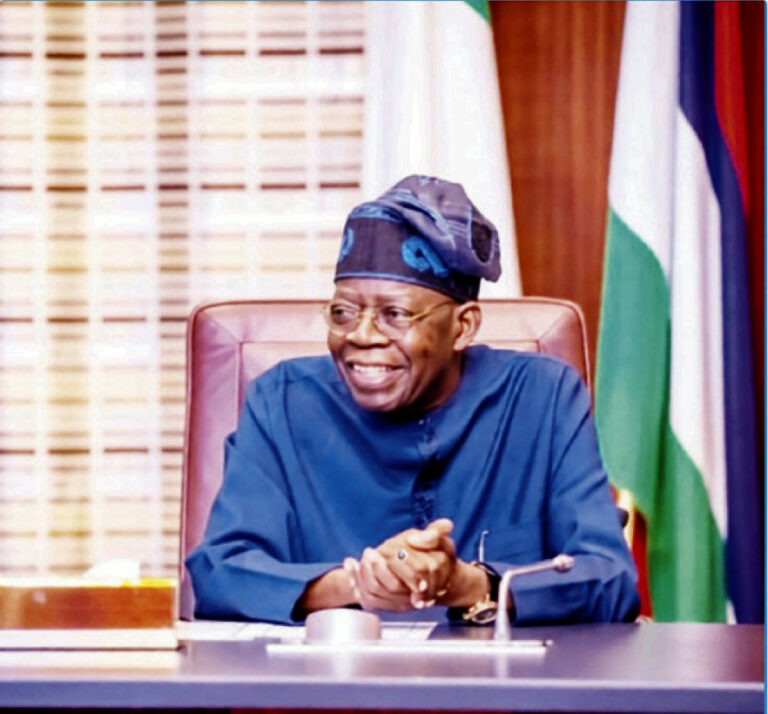
As the countdown to the 2027 general election gathers momentum, one issue has begun to dominate political calculations across Gombe State: succession. Not campaign posters, not party primaries, not even defections, but the deliberate, strategic silence of the incumbent governor, Muhammadu Inuwa Yahaya, on who succeeds him.
Daily Sun however gathered that the 2027 governorship in Gombe will not just test party machinery or political alliances, it will test the principle of justice. For instance, in the southern part of the state, where politics has always been both peculiar and pivotal, the intrigues are visible. From whispered alliances to subtle defections, the pieces on the chessboard are really moving.
Yet, amid the noise and manoeuvrings, one voice is calling for order, fairness, and a return to principles. That voice belongs to John Lazarus Yoriyo, a former deputy governor of Gombe State and now a prominent leader in the African Democratic Congress (ADC). For Yoriyo, the critical challenge is not just who takes power in 2027, it is whether Gombe South can fix itself, enforce internal justice, and bargain from a position of unity.
“Politics, democracy, is for the majority, for what the people want, not for what an individual wants, no matter his position or wealth,” Yoriyo said in an exclusive interview with Daily Sun.
He further said that “In Gombe South, we have always built our politics on justice and fair play. But what happened in 2023 missed that calculation. We must go back to the drawing board”.
Since the return to democracy in 1999, Gombe State has operated a delicate balance among its three zones, North, Central, and South. Gombe North and Central have often produced governors and held sway in critical state institutions, while Gombe South has been compensated with deputy governorship and legislative seats.
This arrangement, though informal, has been respected enough to prevent open conflict. In fact, since 1999, the deputy governorship has consistently been zoned to Gombe South. Alongside this, the south has also produced senators and federal lawmakers, ensuring visibility at both state and national levels.
However, according to Yoriyo, the fragile equilibrium was upended in 2023. “The calculation of justice was missed,” he lamented.
The People’s Democratic Party (PDP), historically strong in the south, failed to distribute positions fairly. Traditionally, each of the four local governments in the zone, Billiri, Balanga, Kaltungo, and Shongom had a share of the key positions which include, one deputy governor, one senator, and two House of Representatives seats. This unwritten formula ensured that no LGA felt marginalised.
“Normally, we share positions fairly,” Yoriyo recalled stating that in 2023, party leaders ignored the tradition. “Selfish interests prevailed, and it landed us where we are. The deputy governorship that was supposed to be in Billiri didn’t materialise, because the gubernatorial candidate of the Peoples Democratic Party (PDP) could not win the election. Today, Billiri has virtually no representation in any significant political capacity”.
The fallout was predictable. Disenchanted voters withheld support, voter turnout dipped, and PDP lost the momentum it once commanded. For Yoriyo, the lesson is clear, “injustice within breeds failure without”.
Billiri’s grievances are loudest. Having lost out on the deputy governorship slot in 2023, the LGA feels shortchanged. With no major political officeholder today, the town’s elites are pressing harder for fairness.
For Gombe South therefore, the path forward is clear but difficult: fix itself, share positions equitably, and bargain from the position of strength. However, in the high-stakes game of Gombe politics, one truth remains constant, and that is the fact that those who miscalculate justice often miscalculate victory.
Regardless, the deliberate, strategic silence of the incumbent governor, Muhammadu Inuwa Yahaya, on who succeeds him, Daily Sun’s investigations reveal, appears to be generating concern.
Speaking during his latest quarterly live media chat, the governor was characteristically measured, offering neither reassurance nor closure to an increasingly curious political class. His words were brief, but their implications were expansive.
“We are looking at the list of those who have shown interest in contesting and succeeding me, and I know that more people will come forward in due course. In the end, I believe God will guide us in choosing a worthy successor when the time comes,” he said.
In Gombe’s political ecosystem, that statement landed not as a casual remark, but as a signal, carefully calibrated, deeply consequential, and loaded with meanings.
In political leadership, pundits assert, silence is often misread as indecision. But in reality, it can be the most potent instrument of control. Governor Yahaya’s refusal to anoint a successor at this stage is not a vacuum; it is a holding position that keeps the field fluid, loyalists disciplined, and rivals guessing, investigations further reveal.
By asserting that he is “still looking at the list,” the governor reinforces a critical fact: the race is not yet settled, and no aspirant currently enjoys formal endorsement. This single sentence effectively neutralises premature power blocs, discourages entitlement politics, and preserves his authority as the ultimate arbiter of the ruling party’s future direction in the state.
In a political environment where early endorsements often fracture parties and trigger internal sabotage, Inuwa Yahaya’s approach appears to reflect institutional caution and long-term risk management.
Power of incumbency in Gombe politics
Other News
Governor Yahaya is not a lame duck, sources around him declare. They claim he remains the most influential political figure in Gombe State, controlling not only the levers of government but also the moral authority of incumbency built on electoral legitimacy and administrative continuity.
“Over the years, his leadership style has been defined by methodical governance rather than flamboyant populism. Infrastructure development, civil service reforms, healthcare investments, and relative political stability have shaped his public record. That performance capital gives his eventual endorsement, whenever it comes, a significant weight.
In practical terms, whoever carries the governor’s blessing will not merely inherit a political structure; they will inherit credibility, access, and momentum. That is precisely why aspirants are circling, recalibrating, and waiting,” one of the sources told Daily Sun.
Managing ambition without igniting crisis
Succession politics, pundits say, is often where incumbents lose control of their legacy. Poor timing, perceived bias, or rushed endorsements could turn protégés into liabilities and allies into adversaries. Inuwa Yahaya appears acutely aware of this risk.
By publicly acknowledging that multiple individuals are interested, he appears to validate ambition without validating any single aspirant. This, it was gathered, keeps aspirants invested in party unity, discourages premature rebellion, and reduces the likelihood of parallel structures emerging ahead of the APC governorship primaries.
More importantly, it sends a message that succession will be based on evaluation, not noise. In a political culture where loudness is often mistaken for viability, this posture subtly re-centres competence, loyalty, and electability as the key metrics.
The media chat as a governance Tool
The context of the statement is as important as the content. The governor did not make this remark at a rally, party meeting, or closed-door consultation. He made it during a live media chat, an open, accountable platform.
This choice, Political Communication specialists say, reinforces his image as a leader who engages the public directly while remaining guarded about strategic decisions. It also ensures that his words are on record, uniform, and not filtered through partisan intermediaries.
In effect, the governor used the media to set boundaries: the conversation on succession is legitimate, but the decision timeline belongs to him.
2027: A contest already in motion
Despite the governor’s caution, political movement has already begun beneath the surface. Consultations are ongoing. Alignments are forming quietly. Power brokers are taking positions. The ruling party’s internal dynamics are being stress-tested.
What Inuwa Yahaya’s statement does is freeze escalation. It slows the race without stopping it. It keeps the competition internal rather than explosive, controlled rather than chaotic.
For opposition parties, the silence presents both opportunity and frustration. Opportunity, because uncertainty can breed cracks. Frustration, because without a declared successor, it is difficult to define a clear adversary or narrative.
Legacy before loyalty
At the heart of this moment is a larger question: what kind of legacy does Governor Inuwa Yahaya intend to leave? By postponing a succession announcement, he positions himself not as a political godfather in haste, but as a steward conscious of history. His language suggests that the decision will be framed as continuity of governance rather than mere transfer of power.
The implication is clear: loyalty alone will not suffice. The eventual successor must be able to protect policy gains, sustain stability, and win a competitive election in a politically alert state.
When the time comes
The phrase “when time comes” is doing heavy lifting. It implies process, patience, and timing. It suggests that succession is not an event, but a sequence, consultation, assessment, consensus, and execution. For now, the governor has chosen to remain the axis around which all ambitions rotate. In doing so, he maintains relevance, authority, and leverage deep into his final term.
In Gombe State politics, this is not delay. It is design. And until that time comes, the silence will continue to speak louder than any endorsement.