Follow Us on Google
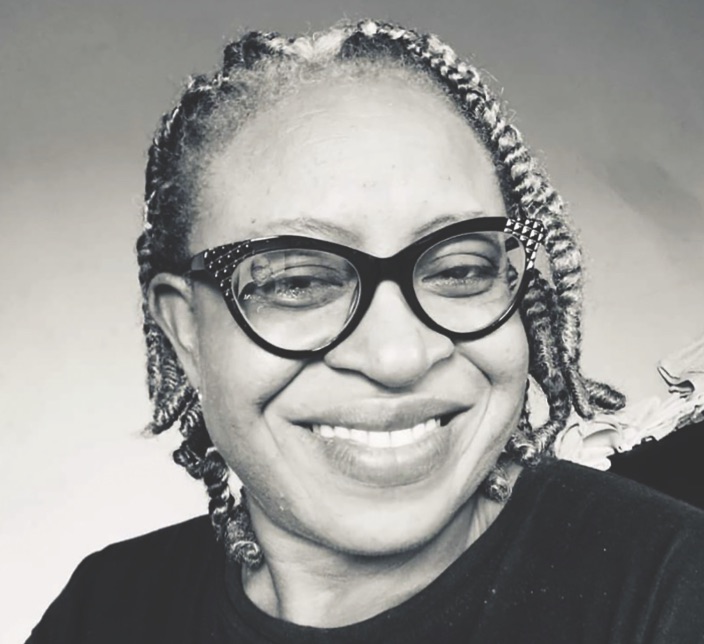
By Bianca Iboma-Emefu
Getting competent and committed skilled labourers, especially men, in the face of get- rich -quick attitude has become a big challenge in the Nigerian labour sector. This is worse when you are dealing with the not-so-educated ones. The erosion of work ethics and dedication affects every layer of project delivery. Whether you are looking for an artisan to fix a tap or a supervisor to oversee a site, reliability is now a rarity. So, one realizes that it is not the issue of people not being employed but they are simply employable.
This assertion was made recently by Mrs. Mauryn Osazuwa, Project Manager, GSR 360 Ltd South-South region, during a workshop on project management in Lagos, recently. She hopes that raising awareness about the dignity of labour while motivating workforce is imperative for optimal productivity.
In this interview with Daily Sun, Mrs. Osazuwa, spoke on she left her banking job after several years and changing to an entirely different career
Mauryn Osazuwa talks about the challenges of career swap, her new job, the shift in that subsector with the COVID pandemic and why women should strive to be defined by their impact and not by their gender
What sparked up your interest in project management, particularly in the construction industry?
My professional journey didn’t start in construction or oil and gas. It began in the banking hall, helping people manage their money and guiding them towards smarter financial decisions. I spent nearly seven years in the banking sector, and though I loved serving people, I often felt constrained. The industry’s slow pace of technological advancement meant that even simple operations could become frustrating. Over time, the routine took it’s toll on me. It became boring that needed to ventilate. I longed for creativity, purpose, and something that challenged me differently. So, I took a leap.
How challenging was this career swap for you?
Leaving banking with no guaranteed alternative felt like jumping into the unknown, but that decision became one of the most defining choices of my life. I ventured into advertising for two years, a bold transition that awakened new parts of me. And then, as life often does, another opportunity came, and I found myself in the Health, Safety, and Environment (HSE) field within the oil and gas sector.
This shift was not only technical and high-stakes but also culturally challenging. Working in a male-dominated industry could have been intimidating, but I chose to focus on competence rather than comparison. I pursued certifications, built my confidence, and showed up every day to prove my capability; not to others, but to myself.
Eventually, I transitioned into project management, a field where I have worked across construction and oil and gas for the past six years. Each project, whether large-scale or community-based, has tested me, stretched me, and rewarded me in equal measure.
Can you give an insight into your role as a site project manager?
Project management is more than charts and checklists. It is where analysis meets action. Every decision you make has consequences, and that responsibility has deepened my strategic thinking over the years. Unlike materials, human behavior is dynamic. Managing diverse personalities in an environment (Nigeria) where law enforcement is often weak is no small task. But through patience, empathy, and strong interpersonal relationships, I have found ways to lead teams through challenges and toward success.
How do you manage and motivate your team, especially in high-pressure situations?
Pressure is a constant. There are deliverables to meet, budgets to stay within, and milestones to hit. During these high-stakes moments, teamwork becomes everything. I don’t just manage tasks; I manage people. I make it a point to understand each team member’s strengths and challenges. I celebrate small wins, uplift others when morale dips, share credit generously, and take responsibility when things go wrong. These values, I believe, are the glue that holds a high-performing team together.
How do you approach the planning and execution of a new project?
One of the most rewarding experiences in my career was leading a refinery and gas station project that required round-the-clock supervision. But the projects closest to my heart are those that impact communities directly — schools, roads, health centers. These seemingly small projects hold generational value and leave behind a visible legacy.
In my experience, planning is the foundation of every successful project. It creates the roadmap. But planning alone doesn’t guarantee success. Execution is where the magic (and messiness) happens. Execution brings your plans into contact with real-world variables, including people’s attitudes, weather conditions, logistics, and unexpected change. It demands flexibility, problem-solving, and real-time decision-making. Each one brings a new purpose and human element that demands a fresh mindset. While I apply lessons learned from the past, I stay open to adapting strategies to fit present realities. This willingness to evolve has made me a stronger communicator, a better collaborator, and a more intuitive problem-solver.
Other News
How has technology enhanced this sub sector of project management?
Just like in any other sector, technology has brought in a lot of new dimensions that one would ordinarily not be able to do. Managing multiple sites in different locations has become more efficient and less costly. Project management software has streamlined our operations from tracking milestones to assigning individual tasks. What once seemed impossible due to geographical constraints is now entirely feasible. We now measure productivity in real-time and enhance collaboration across borders.
Poor quality or abandoned projects are something we can relate to in Nigeria and recently has gotten to its climax, but with the enforcement of proper project supervision either through the financial system- Advance Bank Guarantee (APG) and Bonds there’s hope for the future that the industry standards will improve tremendously.
From your view, how did COVID-19 pandemic affect project management practices in the construction sub sector?
The COVID-19 pandemic further accelerated innovation. It changed not just “how we work, but how we think”. The crisis forced many of us to embrace smarter, more agile approaches to leadership, supervision, and delivery. While it brought its share of challenges, it also reshaped the future of work for the better.
How challenging is it in this career space to manage not so educated skilled labourers, especially men in the face of the modern get- rich -quick attitude of today’s youths?
Beyond planning and performance, I have learned that mental health and social instability are often invisible variables in project success. In Nigeria, economic uncertainty, societal pressure, and daily stressors take a toll on workers. These issues manifest in the workplace affecting productivity, motivation, and interpersonal relationships. As leaders, we must not ignore these realities. Creating psychologically safe spaces and offering emotional support is as important as managing timelines and budgets. Another challenge is the erosion of work ethic due to a rising “get-rich-quick” mentality. What we face now isn’t just unemployment. It is employability. Competent and committed workers are becoming harder to find, and it affects every layer of project delivery. Whether you’re looking for an artisan to fix a tap or a supervisor to oversee a site, reliability has become rare. That’s why I believe we must raise awareness about the dignity of labor and invest in up-skilling our workforce.
What is your experience as a woman in a predominantly male industry and do you think the industry is becoming more inclusive?
In conversations around gender sensitivity, I always ask to be seen first as a human being. Labels create limits, but performance and professionalism open doors. Many still haven’t realized that life itself is inclusive — not by design, but by nature. I have seen women break boundaries in fields once thought inaccessible. And I have also experienced the resistance and assumptions that come with working in a male-dominated industry.
Still, I don’t lead as a woman but as a professional. Yet, I recognize the unique strengths women often bring to the table — attention to detail, emotional intelligence, multitasking — all of which are crucial in project management.
I am optimistic about more women entering this space, particularly as new certifications in engineering and environmental sciences make it easier to build a career path outside traditional roles.
As a change maker, I have met a few young women in the field and always encourage them to show up intentionally. Having a certificate is one thing; using it to make a difference is another. Women should not define themselves by gender but by impact. I remind them that their work — their projects — can change lives, improve infrastructure, empower communities, and light up their corner of the world.
You don’t have to be a doctor to save lives. A well-executed project can do that, too. Every role matters. We, in GSR 360 Ltd (Global System Resources 360 Ltd) as a friendly partner, our project, is our pride.
When we stop chasing rigid ambitions and instead embrace life’s unfolding possibilities, we tap into a far more powerful force: purpose. I don’t measure success by titles or timelines but by growth. And as I look ahead five or ten years, my greatest hope is that through collective commitment and professionalism, we will elevate industry standards and restore dignity of the labour force.
What advice would you give to young women aspiring to enter the field of project management?
The most important lesson I have learnt is that possibility is not a privilege. It is a perspective. When you show up open-minded, committed, and ready to grow, you will find doors where others see walls. My journey has taught me that every career switch, every project challenge, and every sleepless night contributed to a bigger story; one of resilience, evolution, and impact.
Whether you are just starting out or reinventing yourself like I did, never underestimate your ability to make a difference. Your profession is more than a job; it’s a vocation. It is a call to light candles in your corner and help illuminate the world. You can make the change you desire