Follow Us on Google

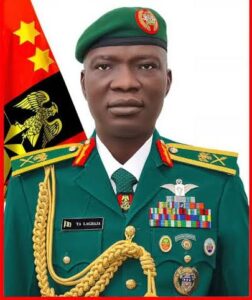
IN the unfolding political drama surrounding the recent death of Nigeria’s Chief of Army Staff, Lt. Gen. Taoreed Lagbaja, we are witnessing a disturbing trend: the politicisation of grief, where, rather than respect for the departed and sensitivity towards the bereaved family, some political actors have chosen to turn mourning into a spectacle. Indeed, the aftermath of Governor Ademola Adeleke’s condolence visit to the widow of Lt. Gen. Lagbaja has spiraled into what seems less like genuine sympathy and more like a performance staged for political gain. Members of the APC Osun State Chapter have accused the governor of callously transitioning from the solemnity of the condolence visit to engaging in celebratory festivities in Abuja, accompanied by fanfare, music, and dance. To the APC, Adeleke’s conduct was a glaring instance of “crocodile tears,” underscoring a perceived lack of empathy, decency, and respect for the deceased.
This incident invites us to confront uncomfortable questions: Have we allowed politics to erode the boundaries of human decency? Can our leaders not allow the deceased to rest in peace, or the bereaved to mourn without being dragged into a public spectacle? It seems we are witnessing a desensitisation, where the line between a condolence visit and a political performance has blurred. This accusation and counter-accusation style not only distracts from the real grief of the family but also erodes the collective sanctity of loss in our society.
While Gov. Adeleke’s actions may indeed come across as insensitive to some, it is also clear that using this incident to score political points further exacerbates the inhumanity of the situation. Some politicians often seem more intent on weaponising moments of tragedy than on expressing genuine empathy. Grief, in a compassionate society, should be devoid of such political manoeuvering, with attention focused on comforting those directly affected. Yet, here we find both parties twisting the occasion for political leverage.
There is a time for politics, but moments of tragedy should inspire unity, not division. Both the ruling party and opposition leaders have a responsibility to lead by example. If our leaders cannot uphold simple decency, then they risk normalising a society where empathy and respect are seen as dispensable. Our cultural values demand that we accord respect to the dead and extend compassion to their families. The “politics of mourning” that has been cast in this saga does nothing but deepen the divide and dishonour the essence of public service.
We urge politicians, regardless of party affiliation, to remember that tragedies are not political theater. Instead of rushing to find fault with how condolences are paid or how grief is expressed, they should, for once, focus on the dignity of the grieving process itself. The family of Lt. Gen. Lagbaja deserves the respect and peace necessary to mourn their loss. Politicians should be reminded that their actions are under constant scrutiny, and the public will take notice if empathy becomes nothing more than a strategic move on their political chessboards.
In times of sorrow, we must call upon our better selves. Public figures especially should remember that their words and actions resonate far beyond the corridors of power. They should set a precedent of restraint and empathy, focusing on what unites us in grief, rather than what divides us for political gain. The departed deserve their peace; the bereaved deserve their dignity. It’s time for politicians to draw a line, prioritizing humanity over theatrics, and compassion over campaigning.
In a typical society such as ours, politics is expected to step back when nature strikes and compels humans to observe a solemn moment of grief and mourning. In our society, death is a sacred rite, a profound transition that demands solemnity and reverence. Traditionally, it is a time when communities rally around the bereaved, offering comfort, compassion, and unity in the face of profound loss. Yet, recent political dramas in Osun State suggest that even the sanctity of death is not immune to the grasping hands of politicking. When mourning is marred by accusations, counteraccusations, and political machinations, we are forced to ask ourselves: have we forgotten the very essence of our humanity?
In Africa, death is not just an end. It is a rite of passage, one marked by elaborate customs meant to honour the departed and support the bereaved. Funerals are opportunities to mourn and celebrate life, and in most African traditions, they are carried out with the utmost respect. The dead are not mere figures to be used for social or political gain; they are honoured members of our communities whose passing demands silence, respect, and deep reflection. By disregarding this reverence, we risk not only disrespecting our cultural heritage but also losing our moral compass as a society.
Governor Adeleke’s condolence visit and subsequent actions have been transformed into a political spectacle, with parties and leaders seizing the opportunity to undermine each other. But grief, particularly in our African context, is sacred. We risk dehumanising ourselves when we turn such sensitive occasions into battlegrounds for political point-scoring. Rather than being a mere performance, mourning is a deeply personal experience, one that deserves respect, not scrutiny. Allowing politics to encroach upon the solemnity of grief distorts our values. If political figures cannot set aside their ambitions in times of tragedy, what example are they setting for the rest of society? Politics should never be so consuming that it blinds us to the universal need for compassion. If we allow this trend to continue, we may reach a point where no moment, no matter how sacred, is free from the contamination of political rivalry.
African traditions offer powerful frameworks for navigating loss and grief. Political leaders must respect these traditions, understanding that grief is not a time for division but for unity. The late Lt. Gen. Lagbaja’s family, like any other bereaved family, deserves the peace to mourn without their private grief being politicized for public entertainment or gain. This is not a question of party lines but a matter of respect, compassion, and human decency. Leaders are urged to refrain from using the dead as tools in their political arsenals. Instead, they should exhibit the maturity to step back, allowing the sanctity of mourning to unfold without interference. It is time for us to return to the values that define us as Africans: respect for the dead, empathy for the grieving, and unity in times of loss. In the face of death, all rivalries should cease, if only for a moment, as we come together to honor life and its passing. Politicians have the power to shape society’s behaviour, and by choosing to handle grief with respect, they can inspire others to do the same.
There is no gainsaying the fact that Governor Ademola Adeleke of Osun State is known as much for his lively spirit as he is for his political career. To some, his penchant for dancing may seem unbefitting of his office, particularly in solemn moments; however, it is a defining part of his character and personal expression. Those who criticize him for dancing miss an essential truth: for Adeleke, dancing is not just an act but an embodiment of his zest for life, a natural extension of his personality. The “dancing governor,” as he is often called, has become emblematic of a leader who brings humanity and warmth into the often-stoic world of politics. In African culture, dancing is a celebration of life itself, a means of connection, expression, and, at times, even healing. For Adeleke, dancing is perhaps a form of staying grounded, a reminder of the joy and resilience that our communities value deeply. Critics may argue that dancing is unbecoming of a governor, especially in challenging times or after solemn events. But to deny Adeleke this outlet is to ask him to suppress what makes him relatable, approachable, and human. His joy in movement reminds us that political office does not erase one’s personality. Perhaps, the day Adeleke stops dancing will be the day that human pulse, which connects him so vividly to the people of Osun, has stopped beating.
It is essential to acknowledge that leaders express themselves in various ways. Gov. Adeleke’s dance is a reflection of his identity. Rather than condemning this expression, perhaps we should consider what it signifies, a celebration of life, an outpouring of genuine emotion, and a connection to his roots. For some, leadership should be all gravity and restraint. For others, like His Excellency, Gov. Adeleke, it includes a balance that allows for light-hearted expression even in serious times. In Nigeria’s often polarized political landscape, Adeleke’s dancing should be seen as a reminder of the humanity within leadership. Let us appreciate our leaders in their authenticity. Surely, Gov. Adeleke’s dancing may not fit every mould, but it is his unique way of connecting with the people he serves. And so, we say, let him dance on, for as long as he does, we know his heart is still beating in rhythm with the people of Osun.
If Osun State chapter of APC thinks otherwise, perhaps then, it should advert its mind to a more crucial task, the critical challenge of regaining the trust of an electorate that overwhelmingly voted for Gov Adeleke, rejecting former Governor Adegboyega Oyetola despite the APC’s stronghold in the state. For the APC, this moment demands introspection, vision, and a fresh approach that speaks directly to the hearts of Osun’s people. If they hope to sway public opinion in their favour come the next election, their mission must go beyond rhetoric and reactive politics. It is time for the APC to focus on the issues that truly resonate with Osun’s citizens rather than distracting itself with Governor Adeleke’s ‘dancing streak’ or, worse, with exploiting the solemnity of loss for political gains. Governor Adeleke’s victory was not merely a function of his charisma or his famed love for dancing. It was a response to Osun citizens’ desire for change, their yearning for governance that is vibrant, responsive, and representative of their hopes and aspirations. In dismissing Adeleke as merely a ‘dancing governor,’ the Osun APC risks ignoring the legitimate concerns and interests that brought him to office.
To win back the electorate, the APC must re-evaluate its priorities and offer a clear, tangible political framework that directly addresses the state’s pressing needs. What plans do they have for Osun’s economy, for job creation, for improving infrastructure, for healthcare, and education? The electorate deserves to see concrete proposals from the APC, plans that go beyond criticism and embody a genuine commitment to uplift the lives of the people. This is not a time for political theatre but for deliberate, thoughtful action. By focusing on genuine community needs, the APC has an opportunity to set itself apart as a mature and forward-thinking opposition ready to earn the electorate’s support in the next election. Ultimately, if the APC hopes to reestablish itself as a viable choice for Osun’s people, it must take a cue from the electorate’s rejection of past governance and present a vision that truly resonates. As we approach the next electoral cycle, let the APC put forward solutions that matter to the people of Osun, setting aside distractions and focusing on delivering a blueprint for growth and development. All the same, it is needless to remind our ebullient ‘dancing governor’ that he would need more than ‘Michael Jackson’s dancing streaks’ to successfully dance his way through his possible second term bid as real governance denominated in practical terms beckons! The time to roll up the sleeves and work was yesterday. However, today is not too late to do a catch-up of whatever (if any) were lost to ‘dancing’.
For now, our political actors on both sides of the divide are hereby implored to let the bereaved families mourn in peace, respecting the timeless rituals and values that define African society. The dead should not serve as fodder for political theatre. Instead, they deserve the dignity of solemn remembrance, a right that transcends politics and belongs to every individual. We must not let the sacredness of death be a casualty in the struggle for power. Let us reclaim our humanity and ensure that the sanctity of grief remains untarnished.
In solemn reflection, we join President Bola Tinubu and indeed the Nigerian state in bidding farewell to a true patriot, Lt. Gen. Taoreed Lagbaja, whose departure has left a profound void in the hearts of his family, the Nigerian Army, and all who knew him. A man of courage and dedication, his life exemplified the spirit of service and sacrifice that so few are willing to bear, and his passing is a loss felt across the nation. Lt. Gen. Lagbaja was not an ordinary soldier. The late COAS was a leader who embodied the resilience and commitment essential to safeguarding Nigeria’s peace and stability. Throughout his military career, he held a steadfast commitment to the values of honour, integrity, and duty. His unwavering dedication to Nigeria’s security and unity left an indelible mark on the lives of countless Nigerians. His legacy will live on in the hearts of those he served and in the annals of the nation’s history.
As the remains of late General Lagbaja are being committed to mother earth, it is important to celebrate his life and the ideals he stood for. This is a moment not only to grieve only but also to recognize the courage and valour of those who put themselves in harm’s way to protect us. Lt. Gen. Lagbaja’s life is a testament to these values, and as we remember him, we are called upon to honour and support those who continue his mission in service to our country, Nigeria. We pray that his soul finds eternal rest in the Lord’s bosom. May his family find comfort in knowing that he is remembered with respect, gratitude, and love. Let us collectively hold close to our hearts, the lessons of his life and the sacrifices he made, embracing a legacy that calls for a united, peaceful, and secure Nigeria. Rest in peace, Lt. Gen. Taoreed Lagbaja. May your journey be gentle, peaceful, and rewarding, and may you find the peace and reward you so richly deserve. Fare the well, the people’s General.
• Agbedo writes from University of Nigeria, Nsukka.