Follow Us on Google
• Abuja residents lament
From Charity Nwakaudu, Abuja
Despite a slight reduction in the price of Liquefied Petroleum Gas (LPG), many residents of the Federal Capital Territory (FCT) are yet to return to its use, opting instead for charcoal, firewood and electric stoves as worsening economic hardship continues to squeeze household incomes.
Residents told Daily Sun that although cooking gas prices have dropped slightly, the product remains beyond the reach of many low-income families. They lamented that the growing shift to alternative cooking fuels has also driven up the prices of charcoal and firewood, further compounding their hardship.
Madam Agnes Koko, a private school teacher in Jabi, said the reduction in gas prices has brought little relief to ordinary Nigerians: “Yes, the price of cooking gas has dropped from about N2,000 to N1,700 per kilogram, but it is still not easy for ordinary Nigerians. Even at that price, many of us don’t believe we are getting the quantity we pay for. Sometimes, it feels as if the cylinders are not properly filled.”
She stopped refilling her 12kg cylinder because of the cost and switched to a 3kg cylinder. But even that now costs about N5,100 to refill and hardly lasts a week: “Government needs to do more because the reduction is not enough. At N1,700 per kilogram, cooking gas is still too expensive for many families.
“Even charcoal worth N500 may not be enough to cook a pot of food. Some of my friends have gone back to using firewood, but I can’t do that. These days, you see many women hawking firewood in the markets. It shows that people are returning to firewood and charcoal because cooking gas has become too expensive.”
A mother of three, Florence Aki, lives in Kubwa, said: “The price of gas has dropped to about N1,600 per kilogram, depending on where you buy it. We thank God because a few weeks ago the increase was almost unbearable. But many of us have still not returned to using gas because it is too expensive.
She noted that many families now depend on firewood and charcoal, but those alternatives have also become expensive.
“A small quantity of charcoal now sells for about N500, and it only lasts for one cooking. Transportation is costly, food is expensive, and after managing to buy food, cooking it becomes another challenge.
Other News
“Before now, we relied on electricity whenever there was power supply, but in my area, we hardly have light anymore, so that option is gone too. If nothing changes, many of us may be forced to leave Abuja because life has become very difficult.”
Madam Chiamaka, a resident of Tipper Garage, Dutsen Alhaji, said: “I can’t remember the last time I used gas. I have totally retired to using charcoal because it is more economical for me. It is not easy waking up early every morning to light the charcoal, warm water and cook before the children leave for school. Sometimes the charcoal takes a long time to catch fire, especially if you buy poor-quality charcoal.”
Claimed families now reserve gas for reheating food while relying on charcoal for major cooking: “We are really suffering. After struggling through the day, businesswomen like us still come home to face the stress of cooking with charcoal. I pray the government will do something to take this hardship off us.”
For Justina Ebute, a mother of five living in Maitama, the soaring cost of cooking gas has turned everyday living into a struggle: “My husband is a civil servant and we have five children. We used to warm water every morning and cook with gas. Today, that has become a luxury.”
She said her family now spends more than N5,000 weekly on gas alone, making it difficult to meet other household expenses: “When you add transportation, school expenses, electricity and feeding, you begin to wonder how an average family can survive.
“Even after switching to charcoal, I found little relief. I ran to charcoal, but charcoal cannot save us. The price has also gone up. Some people have gone back to firewood, but where will I keep firewood in the city?”
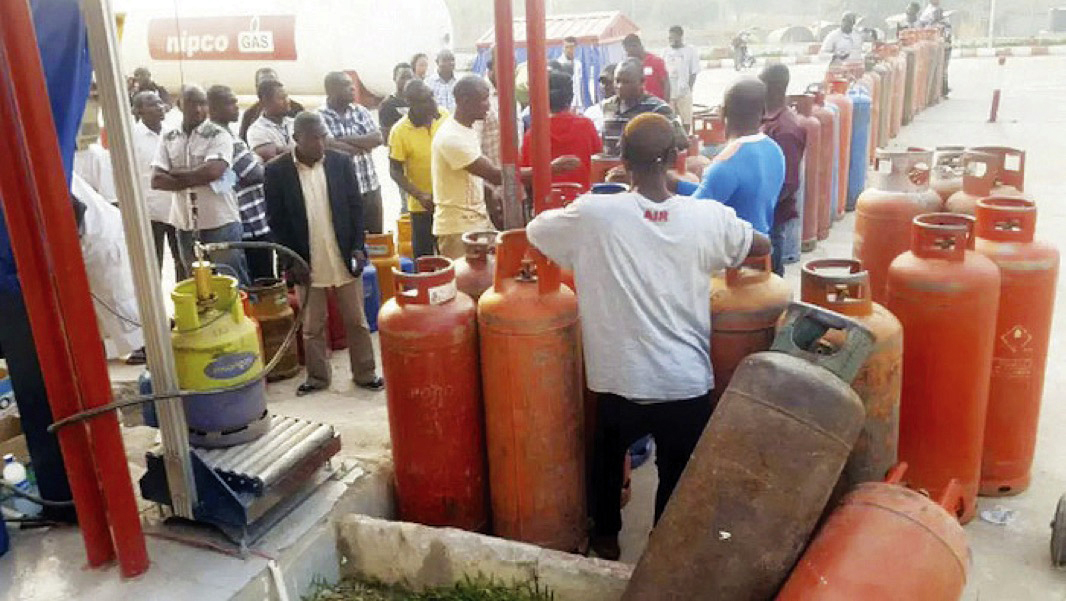
Cooking gas retailers also confirmed that high prices have significantly reduced patronage. Ibrahim Usman, a gas seller in Nyanya, said many customers who previously bought between five and six kilograms now purchase only one or two kilograms:
“Many customers tell us they now divide their money between charcoal and gas, using gas only for emergencies. Our business has really suffered because we are no longer making much profit.”
Another gas retailer in Kubwa echoed the same concern: “We used to attend to customers until 10 p.m., and even after closing, people would still come knocking at our gate to buy gas.
“But now, it is rare to see customers buying 12.5kg or even 6kg cylinders. Most people only buy between 1kg and 3kg because they can no longer afford to rely on gas for daily cooking. For many households, gas is now reserved strictly for emergencies.”