Follow Us on Google

…500m standard cubic feet wasted daily
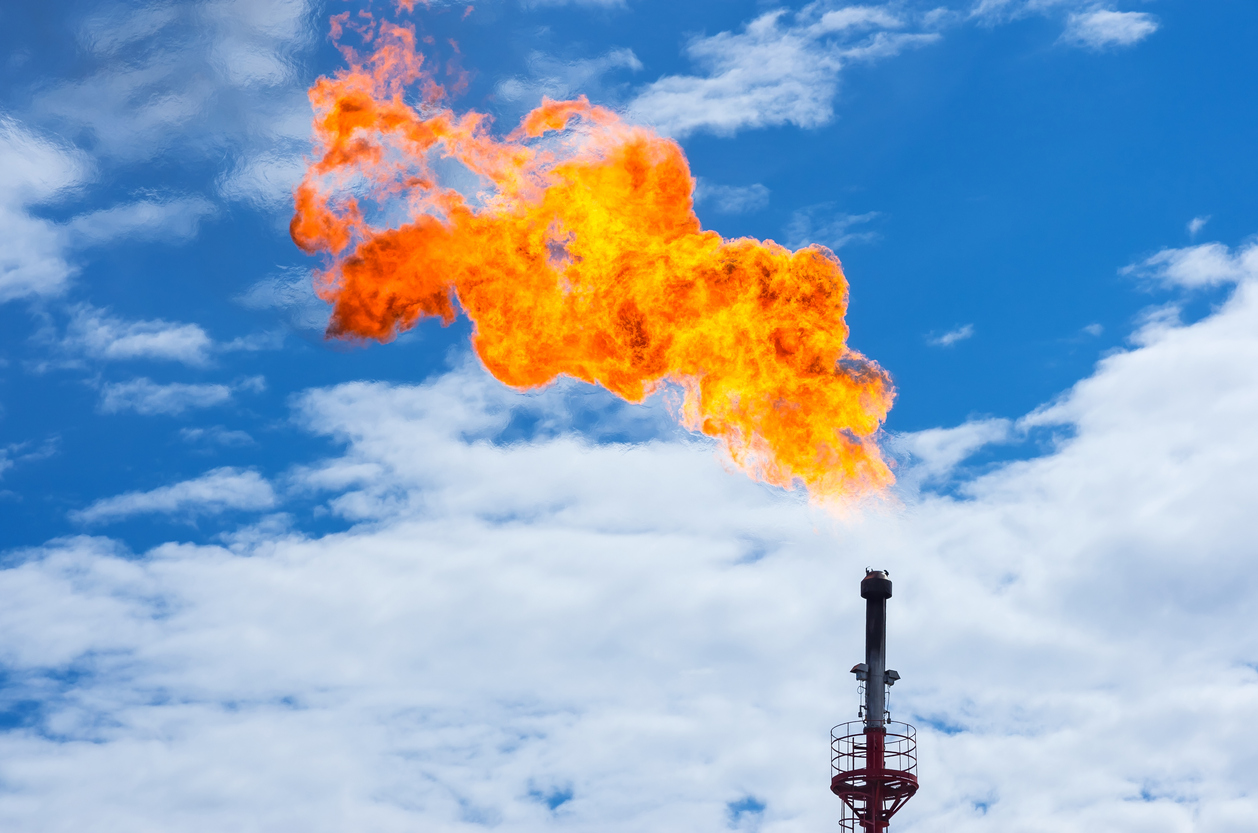
Nigeria has set 2030 as the deadline to end routine gas flaring, as the Nigerian Upstream Petroleum Regulatory Commission (NUPRC) steps up efforts to commercialise wasted gas and penalise offenders.
Chief Executive of NUPRC, Oritsemeyiwa Eyesan, disclosed this on Wednesday at the Emogas International Natural Gas-Based Industry Conference and Exhibition (EINGICE 2026) in Abuja.
Eyesan, represented by the commission’s Deputy Director, Gas Utilisation, Janice Anyanwu, said gas flaring had dropped from about 90 per cent of production in the past to approximately seven per cent.
She, however, said Nigeria still flared about 500 million standard cubic feet of gas daily due to inadequate infrastructure, high investment costs and low gas volumes at some locations.
To address the challenge, she said the commission launched the Nigerian Gas Flare Commercialisation Programme in 2021 and auctioned 42 flare sites to third-party investors.
The projects include mini-liquefied natural gas (LNG) plants and liquefied petroleum gas (LPG) facilities designed to convert wasted gas into commercially viable products.
Eyesan said the Petroleum Industry Act prescribed a standard penalty of $2 per thousand standard cubic feet of gas flared, with additional sanctions for operators exceeding approved thresholds.
She disclosed that Nigeria had proven gas reserves of 215.19 trillion cubic feet as of January 1, representing an estimated reserve life of 85 years.
The country produced an average of 7.42 billion standard cubic feet of gas daily in 2025, with about 92.4 per cent utilised, she added.
Eyesan attributed growing investor interest to regulatory reforms, including Executive Order 40 of 2024. She also identified the Ubeta, HI and Ima gas projects as having a combined prospective production capacity of about one billion cubic feet daily.
She said the commission was developing a gas-swap framework and had launched a licensing round offering 40 blocks to attract fresh investment.
Meanwhile, Managing Director of Oando Energy Resources Nigeria Ltd., Ainojie Irune, has urged African countries to move beyond celebrating their gas reserves and focus on reliable supply, investment and value addition.
Speaking on “Driving Gas Industrialisation through Innovative and Upstream Petroleum Investment Decisions,” Irune said Africa’s gas industry would require about $1 trillion in investment by 2050.
“The real distance in our industry is not between Africa and its gas. It is between the gas we have and the value we create from it,” he said.
He said nearly 600 million Africans lacked access to electricity, stressing that natural gas could boost power generation, manufacturing and industrialisation.
Irune said Nigeria’s gas development remained hampered by inadequate infrastructure, uncertain payment arrangements and delays in commercial decisions, despite its huge reserves.
According to him, more than 55 trillion cubic feet of discovered Nigerian gas remained undeveloped or awaited commercialisation.
He called for stronger coordination among gas producers, pipeline operators, power plants, industrial consumers, financiers and governments to make projects commercially viable.
“The producer will not drill without a buyer. The buyer will not sign without a pipeline. The pipeline will not be built without guaranteed gas volumes,” he said.
Irune urged stakeholders to establish integrated gas-to-market systems, bankable supply contracts, reliable infrastructure and stable regulatory policies to attract investment and ensure steady delivery.
He said progress should be measured by gas delivered and investments executed rather than reserves discovered or projects announced.
“Resources create opportunity. Reliability earns confidence. Integration unlocks investment, and delivery turns Africa’s gas wealth into lasting prosperity,” he said.
EINGICE 2026 brought together energy industry leaders, policymakers, investors, regulators, technology innovators and entrepreneurs.
The conference, themed “Accelerating Africa’s Global LNG Trade Share and Driving Gas Industrialisation,” focused on investment, upstream collaboration, LNG market expansion, gas-based industries and artificial intelligence-driven energy innovation.