Follow Us on Google
By Zika Bobby
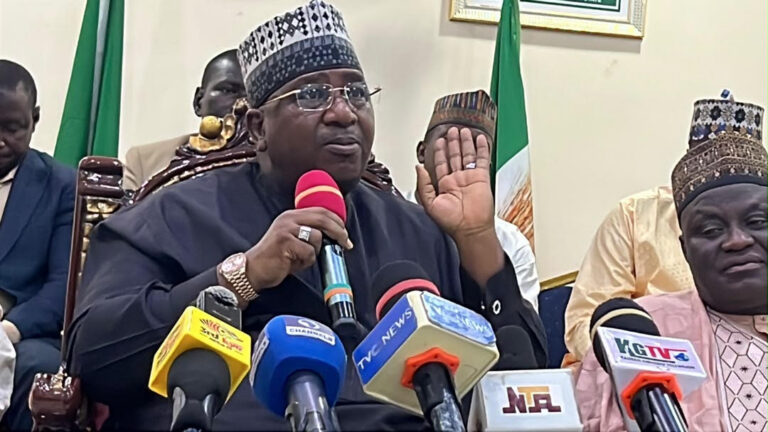
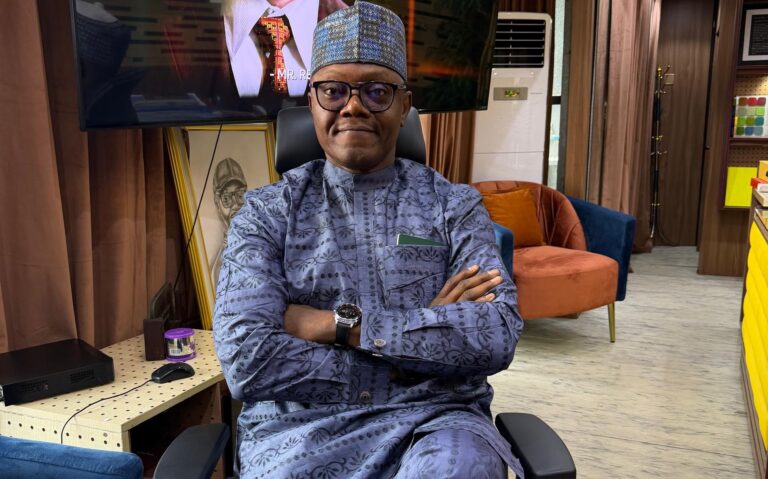
In this gripping conversation, constitutional lawyer, human rights activist, and public affairs analyst Emmanuel Umohinyang delivers a candid assessment of the nation’s political landscape. Evaluating President Bola Ahmed Tinubu’s first term in office, Umohinyang offers a firm defense of the administration’s economic blueprint, contending that the President must be granted a second term to solidify these hard-won reforms and guide Nigeria toward a path of sustainable progress.
Many Nigerians are experiencing severe economic hardship under the current administration. Are you advocating for a change of leadership come 2027?
I am not calling for a change. I am only calling for President Bola Ahmed Tinubu to be given another opportunity to finish his second term. Like most Nigerians, I have the same line of thought. The main challenge we have highlighted is one of understanding. It is a problem that even the government knew was going to come. Yes, we can say there was no adequate preparation on the side of the government to deal with the emerging challenge—which is excruciating poverty in the land.
Did the government fail to put proper structures in place before floating the currency and removing the fuel subsidy?
I agree that the government did not put a strong structure in place to cushion the effect of the removal of the fuel subsidy and the formalisation of the exchange rate. But look, I am one of those who told Mr. President that if he gets to that podium on inauguration day and does not drop the subsidy immediately, he will never be able to do it. Former President Muhammadu Buhari wanted to do it too, but the minute you step down from that podium, the hawks and the mafias will feast on you, using organised labor like the Nigeria Labour Congress (NLC) and Trade Union Congress (TUC) to convince you it’s impractical.
Advisors from all corners will come and tell you that the four state-owned refineries can be fixed, whereas they are often just fraudsters masquerading as investors. Furthermore, the 2023 budget prepared by the outgoing administration made no provision for subsidy beyond May 2023. Former President Buhari knew he could not create an economy that his successor could manage under those conditions. The government was borrowing massively through Ways and Means just to maintain the subsidy regime, and crude oil was being sold on post-dated agreements. President Tinubu inherited a minefield of problems. Where was he going to find the money if he didn’t remove the subsidy?
The President stated recently that state governors need to “wet the grass” to alleviate poverty. Who is truly responsible for the poverty in the states?
The primary responsibility to deal with poverty lies with the state governors because the vast majority of Nigerians reside in the states; the only geographical area under direct federal administration is the Federal Capital Territory (FCT) and President Bola Ahmed Tinubu spoke from the abundance of information available to him. He understands there is poverty in the land—he has his ears to the ground.
When the Catholic Bishops Conference met and visited him, some suggested people around the President were not telling him the truth. That argument is baseless. The President doesn’t need aides to tell him people are hungry. Even if aides failed to tell him, would his wife keep quiet? Nobody wants this country to go down. However, while more money is now going directly to state treasuries from the federation account, the states are harvesting more people into the domain of poverty.
Are state governments handling palliative distributions effectively?
Distribution of palliatives by states has been deeply flawed. Addressing poverty is not about giving a household a single measure of rice or garri—that only feeds a family for one meal. What happens next? What is worse is seeing politicians politicise and brand these basic food items.
I recently saw a video from Paris where small children were being used by politicians who handed out low-quality textbooks while forcing the kids to chant party slogans. In a civilised society, those politicians should be in jail for child abuse. If we want to address poverty, we must teach people how to fish rather than throwing them scraps.
The Federal Government is doing its part, but most governors are not willing partners. In fact, some governors seem content keeping their people in poverty. They sit on federal allocations, divert resources for personal comfort, or prefer building white-elephant projects like unnecessary flyovers where they can demand kickbacks from contractors, rather than investing in human capital or security.
Other News
Security remains a major concern across the country. How do you assess the government’s approach to tackling insurgency and banditry?
We cannot sit here and pretend we have conquered insecurity; we still have children in the bush and citizens in kidnappers’ dens. However, people must understand that acquiring military hardware takes time. Weapons are not off-the-shelf items. When you place an order for an attack helicopter, manufacturers give you a timeline that takes years. Look at how long it took to receive the Super Tucano jets after the United States government approved the sale.
Furthermore, high-grade munitions are extremely expensive—a single precision bomb can cost nearly $200,000. The government is diversifying its defense acquisitions across the U.S., China, and Russia, expanding military formations, and increasing recruitment. They are also deploying technology, such as unarmed reconnaissance and strike drones, to neutralise criminal hideouts.
What is your assessment of the leadership of the Nigeria Police Force?
There is a noticeable difference under the current Inspector General of Police, Tunji Disu, compared to his predecessor, Kayode Egbetokun. Under Egbetokun, police standards dropped significantly, and politicians routinely exploited Section 24 of the Cybercrime Act to detain innocent citizens over private disputes. Senior legal figures like Femi Falana (SAN) rightly criticised that administration for abusing police powers.
IGP Disu has transformed the office into an accessible, responsive institution. He is actively on the move, visiting states unannounced to inspect commands rather than remaining stationary in Abuja. More importantly, for the first time since the tenure of Ibrahim Idris, we have an IGP actively fighting to improve police welfare and salaries. You cannot expect poorly compensated officers to protect lives effectively without addressing their living conditions.
What is your position on the creation of State Police, and do you fear abuse by state governors?
I initially had reservations, but state police has become a necessity due to the operational gaps in the federal system. I support it, and I commend the committee working on the constitutional frameworks and safeguards.
However, we must be realistic: governors will attempt to abuse state police to target political opponents, just as some currently do with federal police deployments. Furthermore, some governors who clamored for state police are now privately admitting they may only deploy a few thousand officers to save money, leaving rural areas exposed. Once Section 214 of the Constitution is fully amended and state police is operational, governors will no longer have the excuse of blaming Abuja for local security failures.
Should executive immunity be removed for governors and the President?
Immunity should be retained for civil actions to prevent political opponents from creating endless courtroom distractions that derail governance. However, immunity should be removed for criminal conduct. If a sitting governor or president engages in theft or criminal infractions, law enforcement agencies like the Economic and Financial Crimes Commission (EFCC) should be able to hold them accountable immediately.
Even so, removing immunity is only part of the equation—strengthening institutions is what yields results. Under its current leadership, the EFCC has made progress because the chairman understands the systemic loopholes. Ultimately, curbing corruption comes down to political will at the top.
What is your closing message to Nigerians concerning the future of the country?
The economic reforms implemented by President Bola Ahmed Tinubu are painful, but they are necessary to prevent complete economic collapse. We are passing through a difficult transition period, but the system will not deteriorate beyond this point. I appeal to Nigerians to remain patient, maintain faith in the administration, and allow the President the opportunity to complete a second term so these foundational reforms can yield permanent results.