Follow Us on Google
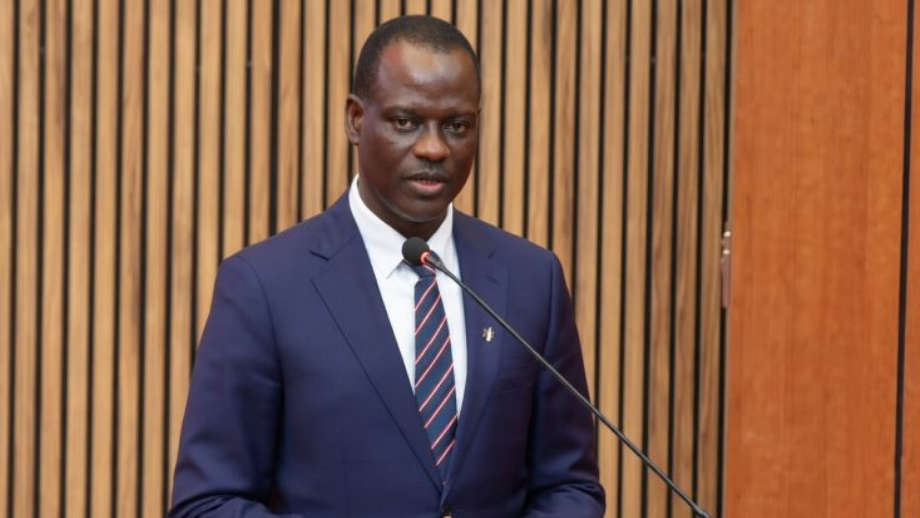
Minister of Finance and Coordinating Minister of the Economy, Taiwo Oyedele, has warned that any attempt to return Nigeria to the old fuel-subsidy regime could trigger a fresh collapse of the naira to as low as N3,000/$ within three months.
Oyedele, who spoke in an interview with Channels Television monitored by Daily Sun at the weekend, said the Federal Government rejected calls for a return to petrol subsidy because the policy would cost between N16 trillion and N20 trillion yearly, drain crude-oil revenue, frighten investors and reverse the gains of the Tinubu administration’s reforms.
He also defended the one-month NNPC Retail fuel discount, insisting that it is a “margin discount” and price-modulation measure and not a return to subsidy.
Is the 30-day petrol discount a form of subsidy?
Politicians will always be politicians, and many of them tend to say what people want to hear even when they know it is wrong.
When this subsidy matter came up, we all thought it was a joke because there is a level of knowledge you expect from certain people; they should know better. But we saw it gaining momentum, and Mr President remained consistent and felt this was wrong.
The whole essence of the press conference was to demonstrate to Nigerians, with data, why it is a dangerous idea to bring back subsidy in the way it was being proposed.
Some of them tried to be clever and called it a “production subsidy”. When you say production subsidy, it reduces your cost of production so that you can compete at market price. What they want to do is pass a consumption subsidy through the refineries.
They do not know how they are going to control the refineries, how the crude price fits into the pump price. We said let us warn Nigerians with data on how dangerous it will be if we return to subsidy.
Why is the government so concerned about the proposal?
The pump price of petroleum products, especially PMS, is the most sensitive to the exchange rate. Imagine if the naira was N500/$1; one litre of PMS would be about N400. Anything you do to affect the exchange rate will affect the pump price of fuel products.
Around the world, we have been speaking to investors who always ask whether we will reverse our reforms. There was a time we were not attracting anything; everything dried up.
The Central Bank of Nigeria (CBN) said net reserves were under $1 billion. That was scary because it was not up to one month of import cover. People could not pay for $20 software applications, access to credit was disregarded, companies were exiting the country, and we had foreign-exchange backlogs.
Reforming the FX market meant we needed to understand the real value of the naira. So it depreciated; it was not devalued. If you do something that leads to panic or foreign exchange exiting Nigeria, the naira will crash. Our estimation is that, in three months, it could get to N3,000/$1, and we would then wish we were paying the current amount for PMS.
What is the fiscal cost of returning to subsidy?
We needed to warn Nigeria with data. If we take subsidy back to what it was before the reforms, it will cost about N20 trillion a year. It does not matter the cost of production.
If we take petrol to N500, as people are proposing, it will cost about N16 trillion. These amounts are equivalent to the entire net distribution from FAAC for 2025.
Therefore, subsidy in the way it was proposed will not solve the problem; it will heighten it, and the consequences will show up with full force. Salaries might not be paid, and there will be no room for development.
The World Bank, in its update, has said the rate of poverty is reducing and that there is more infrastructure now. We are at a point where we will start getting the results.
What quantity of crude can Nigeria boast it controls?
I cannot give a specific number, but I know it is less than what Dangote needs.
Even if we had 700,000 barrels today to give Dangote, Nigerian crude is sweet crude. It will not be the most optimal for Dangote because they still need to import heavy crude.
The reality is that we do not have up to 700,000 barrels of free crude to give anyone, including Dangote. That is why, when Mr President unveiled the naira-for-crude initiative, it was meant to help us gain some stability, and it has worked.
But we do not have enough quantity to give out. As we ramp up production and free up more barrels, we will get to a point where we can give Dangote everything he wants, and other refiners will get enough.
I hope we get to a point where all the crude we produce is refined in Nigeria and we export only products.
But we are not entirely consuming what we produce locally
We also have Dangote, which is into exports. Dangote is a private business, so you cannot control whether it exports or does 100 per cent domestic consumption.
Dangote has helped the country at a very difficult time globally. He has made it possible for Nigerians not to queue for five hours before getting fuel or other products. But he is entitled to export part of his products. So he is exporting on one hand, while we are also importing.
What is the cost of locally refined/imported fuel?
It varies. As of the past few days, our consumption is close to 50 million litres of PMS per day.
There were months when Dangote supplied 70 per cent, and there were months when supply was less. Whatever the gap, we complemented it with imports.
Before the Dangote refinery was launched, we were importing 100 per cent, and we were importing bad products. We have moved from that point to one where we are producing locally and quality standards have improved.
Just recently, the NMDPRA commissioned its first laboratory. It is part of the measures to ensure quality standards, whether products are produced locally or imported. When an average Nigerian buys fuel, they can be assured that their engine will not be faulty.
How much fuel do we export?
The export is done by Dangote, and it varies. Generally, we have been consuming more of the product produced locally than the one we import.
What is stopping our local refineries from operating optimally?
One thing that worries me about this country is that we take national policy matters and turn them into jokes. Sometimes we are superficial, and that is wrong.
When people say that if we refine locally, prices will come down, that was the same argument that led us to waste billions renovating refineries that refined nothing.
Countries with more than 100 refineries,are they selling petrol lower today? The United States and India are examples.
Nigeria ranks among the top 25 lowest pump prices in the world without subsidy. That is because, as Mr President was introducing the reforms, we were intentional and took away taxes.
Within Africa, fuel products attract between six and 10 different taxes. Many countries have been taking about 10 per cent away from the initial 40 per cent they were charging, but you cannot take it all away at once.
Does this benefit a few people rather than Nigerians?
It is benefiting everybody. When you buy a litre of petrol today and pay N1,400, without the waivers, taxes and levies, Nigerians would be paying about N1,800. The saving per litre is between N400 and N600. This is data talking.
At the press briefing, we discussed seven measures the government had already introduced that saved Nigerians N3.3 billion in the first nine months. We also discussed 10 measures being considered, making 17 in total.
I was disappointed that the whole narrative became about someone not understanding what we call a margin discount. This is Accounting 101.
Find any country on earth whose response to fuel-price crises is close to what Nigeria has done, unless you go to Qatar or Saudi Arabia, where they have enough resources to subsidise. There is no country that is not doing some form of subsidy, which is why we are among the top 25 lowest in the world and still have availability.
The idea that if government refineries work, we can sell petrol at N500 per litre has no evidence or basis. You cannot cut petrol to N400 per litre, not even N800. It is simple arithmetic.
Refining is a business with one of the tiniest margins in the world. Refiners survive on volumes, 50 million or 100 million litres a day. It is not as if refiners are making so much money. So where will the reduction come from?
Other News
FG’s arithmetic on the cost of production of crude
Crude is under our soil, but when you bring out a barrel, it has many components. There is the cost of production; it is not free to bring crude out.
There is the portion belonging to the international oil companies under contractual arrangements for lifting the oil. There is royalty, and then profit oil. At the end of the day, having 1.8 million barrels plus condensate a day does not mean all of it is available to give to everyone.
Secondly, whatever is left, if you give that crude below market price, you lose revenue meant for the treasury. When you start defaulting on salaries, you create market distortion.
There was a time we had 90 million litres a day. Do you think it was all consumed in Nigeria? When Mr President removed subsidy, there were protests in Cameroon.
America is the most powerful nation in the world, but it has not been able to secure its border 100 per cent.
To refine petrol, the major component is crude oil. With the crisis involving Iran, a barrel is going up, and pump prices are going up. Dangote will take whatever it can get at whatever price. Trade costs have risen because the number of vessels around the world is constrained.
Financing costs are there too. Before you bring crude oil, you may pay 30 per cent and factor it in.
We do not have free crude enough to meet local refinery demand. Even if we did and sold it below market price, we would create market distortion, which is subsidy. We would deplete the treasury and even print more naira.
Qatar produces 2.5 million barrels and can afford to subsidise because it has one of the largest gas reserves in the world. Nigeria has more than 200 million people and barely produces 1.8 million barrels a day. Divide it per capita; it is not enough.
America produces more than 10 million barrels a day. Have you seen them say they are an oil-producing country and therefore fuel must be cheap? It is very expensive there. Diesel prices in the U.S. have gone up by 73 per cent this year, to $6.5 per gallon.
We should stop deceiving ourselves and face reality. If we understand the problem halfway, we are already on the way to solving it.
The FG is giving Nigerians a discount for one month. What happens on the last day?
Let me clarify this discount issue. It is not a subsidy. A subsidy brings the amount paid below market price: you pay a portion and government pays the balance.
When the private sector decides to cut prices, it is not called a subsidy.
When you say “margin discount”, margin means profit. When you buy refined products, you can buy at the refinery, the gantry, or import it and have a landing cost. Then you transport it, and sometimes there are dealers’ costs before it gets to the retailer.
The retailer adds its own profit and sells at the amount Nigerians pay at fuel stations.
NNPC Retail was set up around 2001 or 2002, at a time of fuel scarcity and product hoarding. There were instances when only NNPC stations were selling. The purpose of going into retail was distribution, availability and affordability—not primarily profit maximisation. That is why NNPC Retail prices have been among the lowest across the country.
On October 1, when Nigeria turned 66, NNPC did an app promotion: if you buy fuel and download the app, you get N66 less.
I called them to understand what they were doing. I asked them to calculate how much profit they would make and limit the discount to their profit so it does not cost them anything.
Once they sent their volumes, I checked and saw they were selling only about 70 million litres a month. I said: how much will this cost you? It is not a lot of money. If you do the promo, people will continue to buy from you, you continue making money, and you can remit dividends to the Federation Account.
The point is that what NNPC is selling after the discount is still market-reflective. They said they are buying all of it from Dangote. Dangote is not giving a subsidy. When NNPC buys at N1,325 from Dangote, adds its own costs and profit, then sells, the profit taken out is called a margin discount. It is not a subsidy.
The FG said let us make this available to Nigerians and not limit it to NNPC’s profit. We are prioritising transporters and limiting it to 30 days.
After that, depending on what is happening between Iran and the United States, if crude goes to $150, we review it. If crude comes down to $80, we are fine and do not need it anymore.
Every country that has tried to manage volatility has used a standard period of 30 days.
There are talks that this is being done because elections are around the corner. Is that true?
I think some politicians think Nigerians are stupid. Elections are in January 2027, and this discount is for one month, this year.
NNPC is owned by the government. What is wrong with saying: give the people a discount and limit it to your profit? We are trying to help Nigerians. If something is right, how does it matter whether it is done before elections?
By the way, I told you the present administration has introduced or is considering 17 measures. How come this is the only one being talked about as an election gimmick?
How did the FG arrive at this price modulation?
Imagine NNPC wanted to do it for a week. First, we changed how it was being done so that it is not a subsidy. Secondly, we extended it to 30 days. Thirdly, we are targeting transporters.
I think the rich do not want the government to help the poor. Any window to help the Nigerian people, we will consider and do it. That is the essence of government.
The government does not want to control prices. Nigeria has done that for a long time. One of the poorest countries in the world is Venezuela, despite having one of the largest crude reserves, because they control prices.
When you control price, the market cannot function properly. If the market cannot function, you cannot grow.
You may say yam is available at N200 and politicians promising discounted fuel should also promise yam at N100 per tuber—then let us see whether farmers will produce.
We want to monitor prices and ensure stability. If I am charged N1,500 per litre today because of what happens in Iran or a tweet from Mr Trump, and then it falls to N1,300 after resolutions, transporters will increase prices based on N1,500, but they will not reduce them as quickly when it falls to N1,300.
But if I am charged N1,400 on day one and the same on day two, I pay N2,800 over two days. This option ensures prices do not go up and refuse to come down. It is a creative way of solving a serious problem.
Do you not think the government is looking at this from one angle? What about suppliers and consumers?
We spoke to the refiners, and I must commend Dangote because they agreed to do this with us. The NMDPRA is also discussing with importers.
If you allow the market without regulation, you may pay N1,500 today and N1,300 tomorrow. We are not pegging the price. We are saying: do not sell above N1,350; if you go above that, you bear the cost.
In the capital market, regulators do not want a stock to lose 90 per cent in one day. When it gets to a certain limit, the NGX stops trading because significant volatility creates uncertainty and adds cost.
This principle is called price modulation, not price control. Instead of selling at N1,500 on day one, keep the N100. Whenever you want to recover it, recover it first. The buyer has not lost anything; the buyer has gained protection from volatility. The seller also benefits because the cost can be recovered later.
People say this government has used fuel-subsidy savings to claim it saved money and created liquidity, yet there are still revenue shortages and capital-release constraints. There is hunger in the land.
It is wrong to say the government is talking about macroeconomics while ignoring the average Nigerian. Every single thing about the reform has always been about the average Nigerian.
When we did the scorecard, we gave data, but many people did not engage with it because, for them, it is intellectual.
The largest item the Federal Government has spent money on was twice the amount saved from fuel subsidy, and it went into salary increases, credit to small businesses and NELFUND.
It has always been about the ordinary person. We are only saying that we need to accelerate it so people can feel that their living standards have increased.
We want to get to a point where, whatever the right price is, your income is higher than that. That is how society works. It has always been about the Nigerian people, and it will continue to be that way as we accelerate prosperity.