Follow Us on Google
• Says Tinubu’s policies have emptied pockets, weakened businesses
From Ndubuisi Orji, Abuja
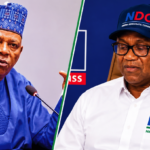
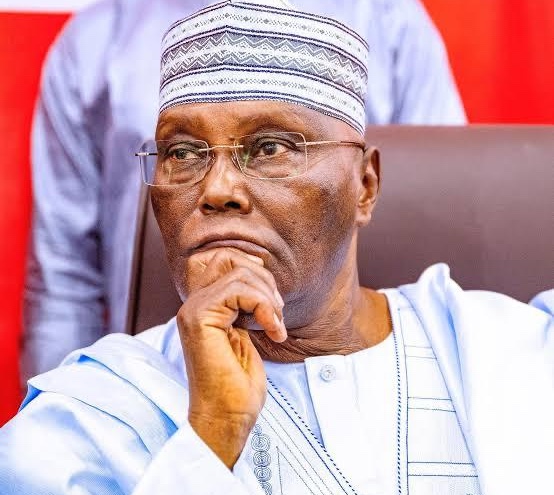
African Democratic Congress (ADC) presidential candidate, Atiku Abubakar, has urged Nigerians to reject the President Bola Tinubu administration in 2027, accusing its economic policies of making everyday life increasingly difficult and eroding citizens’ purchasing power.
Atiku, who has been locked in a war of words with the Presidency over his proposal for a production-linked fuel subsidy, said Nigerians should embrace an alternative economic plan that would support domestic production, reduce costs and put more money in households’ pockets.
In a statement by his Senior Special Assistant on Public Communication, Phrank Shaibu, the former Vice President said the government could no longer rely on positive economic statistics when many Nigerians were struggling with the cost of food, transportation, energy and other basic needs.
“Tinubu removed fuel subsidy from the people, presided over soaring fuel, transport and food costs, and is now attacking a Production Subsidy proposal designed to reduce that burden and return money to Nigerians’ pockets,” he said.
Atiku argued that Tinubu’s policies had weakened consumer purchasing power, with the impact spreading from households to businesses whose customers were increasingly unable to pay for goods and services.
“Tinubu did not inherit this cost-of-living crisis from Nigerians. His policies created and deepened it. He took away relief from the people, made fuel, food, transport and basic survival more expensive, and now wants Nigerians to applaud statistics while their pockets are empty,” he said.
Using the example of a small business owner, Atiku sought to illustrate how rising costs were affecting both traders and consumers.
“Take a woman selling frozen food in Kubwa. She pays more to transport her goods, more to power her freezer and more to restock. Her customers are poorer, so they buy less or ask for credit. Soon she cannot restock, her supplier is owed, and Tinubu’s economic pain spreads through the entire chain,” he said.
The ADC candidate claimed prices of key commodities and services had risen sharply, citing fertiliser, petrol, cement and the exchange rate as examples.
“Nigerians know the prices they meet every day. Fertiliser has moved from about N9,000 to around N50,000; petrol from about N199 to around N1,400 per litre; cement from roughly N4,000 to around N13,500; and the dollar from around N450 to about N1,400,” he said.
Other News
“And after all this pain, what has the ordinary Nigerian received? No reliable electricity. Loan for a degree. No security. No N-Power. Food is expensive. Transport is expensive. Life itself has become expensive. What exactly are Tinubu’s defenders defending?”
Atiku said his proposed production subsidy would differ from the previous consumption-based fuel subsidy regime by targeting locally produced and refined petroleum products, increasing supply and ensuring that the benefits translated into lower pump prices.
“This is why my Production Subsidy is about putting money back into people’s pockets. Support what we produce and refine here, increase supply, monitor the price and make sure Nigerians feel the benefit at the pump,” he said.
He cited the position of the Crude Oil Refinery Owners Association of Nigeria (CORAN) in favour of support for domestic refining, arguing that strategic government intervention in production should not be dismissed outright.
Atiku also referred to measures by the United States to strengthen domestic petroleum production and refining, saying governments elsewhere intervene in strategic sectors where national interests demand it.
“So why does intervention suddenly become bad economics when ordinary Nigerians are meant to benefit?” he asked.
“Nigerians have now seen what Tinubu’s economics means in their daily lives: higher fuel prices, higher food prices, higher transport costs, weaker businesses and emptier pockets. They do not need another lecture on patience. They need relief.”
The former Vice President said the 2027 election would offer Nigerians a choice between continuing with the current economic direction and embracing a production-driven alternative.
“The choice before Nigeria is therefore clear: continue with an economy that takes more from the people, or build one that puts money back in their pockets. Support production. Refine in Nigeria. Create Nigerian jobs. Lower the cost of living,” he said.
“Nigerians must reject a government that has made life harder and embrace a plan that makes life affordable again.
“Enough of empty pockets. Enough of endless hardship. Nigeria must produce more, Nigerians must pay less, and families must have money left to live.”