Follow Us on Google
From Adanna Nnamani, Abuja
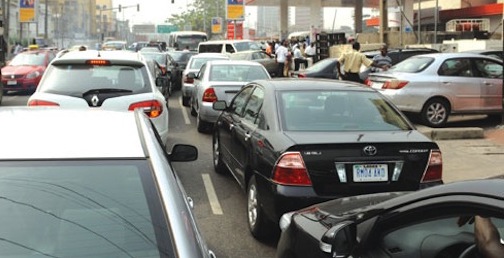
Abuja residents are battling yet another round of petrol crisis as long queues snake their way back to filling stations across the city.
The sudden resurgence of the queues for premium motor spirit (PMS), which reportedly began on Thursday evening, has raised worries among drivers and commuters.
The situation has been worsened by noticeable hike in fuel prices, with reports indicating some stations selling petrol for as high as N850 per litre. Also, black market sellers (hawkers) have also reappeared on the streets peddling the product for as high as N1,000 per litre and N9,500 to N10,000 for 10 litres.
Sunday Sun noticed that many filling stations along the Airport Road, Kubwa Express, Central Business District (CBD) as well as other parts of the city had very long queues in front of them with drivers scrambling to obtain the product.
For instance, Conoil and Total Energy at CBD and AP at Maitama as well as NIPCO along the Airport Road all had very long queues that stretched several metres.
Sunday Sun also observed large crowds of stranded commuters at various bus stations, who were waiting to get vehicles to their various businesses.
As motorists endure the frustration of waiting in line for hours to fuel their vehicles, concerns are mounting over the potential impact on transportation, businesses, and daily life in the city.
An e-hailing cab driver, Mr Sunday Idah, said he had to endure almost eight hours of waiting at one of the filling stations to purchase the product.
He expressed his frustration, saying, “Just think how much I could have earned if I had been working during those eight hours wasted at the filling station, all to buy fuel at a high price.”
Mr. Alia Ahmed, nother cab driver, called on the government to finally deal with the recurring fuel scarcity problem, decisively.
He expressed his disappointment, stating, “It is truly shameful for the nation’s capital to constantly struggle with fuel shortages in a country abundant in petroleum resources. The authorities must identify and resolve the root causes nce and for all. I believe the lack of political will is the reason this issue persists.”
Chinelo Ugwu shared her experience of waiting for over two hours at a bus stop along the Airport road to get to Wuse market on yesterday morning.
She recounted losing a customer due to the delay, as she couldn’t reach her shop on time to provide a service.
Other News
She said: “I lost a client because I could not reach my shop on time. I had assured the client I would be at my office by 8.00 am to install her wig for a wedding she was to attend at 10 .00 am, as she could not make it earlier in the week due to work.
“I left home before 7.00 am, waited over two hours for transportation, and when my client couldn’t wait any longer, she opted for someone else. It was truly heart-breaking. By the time I reached my shop, it was already past 11.00 am.”
Grace Michael also mentioned being compelled to pay an e-cab hailing driver N3,500 instead of the N2,200 charged by the app, as the driver refused to accept the lower amount.
“I went out on Friday evening and when I was ready to go home, I ordered a ride that displayed a fee of N2200 from the location to my house. To my surprise, when the driver arrived, he demanded I increase the fare to N3,500 because he had spent a long time at the filling station and bought fuel at a higher price. What frustrated me more was that he did not even inform me beforehand, giving me a chance to decide whether to cancel or not. With time running out and other ride options cancelling, I had no choice but to pay the increased amount.”
Meanwhile, the Major Energy Marketers’ Association of Nigeria (MEMAN) has attributed the scarcity to supply chain disruption. MEMAN’s Executive Secretary, Clement Isong, disclosed in an interview that recent heavy rainfall, particularly in Lagos, hindered truck operations due to thunderstorms at the depots.
He said, “The supply chain is slower when there is a thunderstorm. A 24-hour supply chain disruption means that the stations are dry. During the rainy season, the trucks drive more slowly, they also get stuck when the roads are flooded.”
He reassured that the queues would disappear within a few days, saying, “There is product in Lagos, the product is coming and the product is moving.”
However, the Nigerian National Petroleum Company Limited (NNPCL), which is the major supplier of PMS in the country, said there has been no price adjustment for the product.
Chief Corporate Communications Officer of NNPCL, Mr Olufemi Soneye, via a phone chat with our correspondent, also added that the company had no supply issues.
“There has been no price adjustment for PMS. For your other questions, please contact the NMDPRA. NNPC Ltd is not a regulator; we are just a player in the market. We also have no supply issues,” he explained.
Also reacting, the Nigerian Midstream and Downstream Petroleum Regulatory Authority (NMDPRA) expressed surprise at the fuel scarcity, stating it was not aware of the situation as at the time of filing this report.
NMDPRA Spokesperson, Mr George Ene-ita told Sunday Sun via a chat: “Please I’m not in Abuja at the moment and when I left a couple of days ago all was well on the S&D side of things. And it’s quite surprising because everywhere else in the country seems stable. Especially where I’m at now.”
He, however, promised to make enquiries about the cause of the fuel problem and revert.