Follow Us on Google

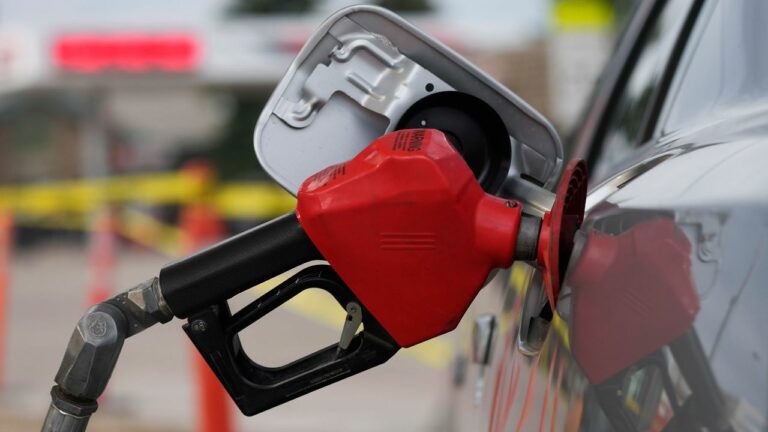
President Bola Tinubu has backed a decision by the Nigerian National Petroleum Company Limited (NNPCL) to forgo its petrol retail profit margin and sell the product at cost for 30 days, as the Federal Government moves to shield Nigerians from the impact of rising global crude oil and petrol prices.
The intervention, announced by the Finance Minister and Coordinating Minister of the Economy, Taiwo Oyedele, on Wednesday, is part of a broader package of measures aimed at cushioning households and businesses from the latest fuel price shock without returning to the petrol subsidy regime abolished in May 2023.
Under the arrangement, NNPC Retail will sell petrol at its actual landing cost, without adding its retail profit margin.
Thus, if the company’s landing cost is N1,300 per litre, it would sell the product to consumers at N1,300, with particular attention to cushioning vulnerable households and commercial transport operators.
The Presidency in a statement by Special Adviser on Information and Strategy, Bayo Onanuga, said NNPC Retail, which already sells petrol at the lowest price in the market, would implement the new arrangement within the next 30 days.
Oyedele urged other petroleum marketers to emulate the NNPC, expressing the expectation that the current sharp rise in crude oil and petrol prices would not persist.
But the minister stressed that the intervention should not be mistaken for a return to fuel subsidy.
He said the government was instead pursuing measures designed to smooth price fluctuations and prevent temporary global market shocks from translating into sharp and persistent increases in domestic pump prices.
As part of the strategy, the Federal Government is negotiating a ceiling of N1,350 per litre for the ex-gantry or landing cost of petrol.
Under the proposed arrangement, refiners and importers would absorb any cost above the ceiling and recover the difference later when crude oil prices or exchange rates become more favourable.
Oyedele said the mechanism would be reviewed monthly, with the figures published to ensure transparency.
“This is neither a subsidy nor a price control: it is designed to smooth prices over time rather than suppressing them,” he said.
According to him, stabilising prices would help consumers and businesses better plan their expenses, particularly because increases in fuel prices tend to quickly translate into higher transport and logistics costs.
“The reasoning is simple. N1,400 a litre today and N1,400 tomorrow is better than N1,500 today and N1,300 tomorrow, because volatility itself adds to uncertainty and cost. And when fares rise sharply, they rarely fall as fast,” Oyedele said.
The government is also planning forward sales of crude oil to domestic refineries as part of efforts to insulate the local market from international price volatility.
According to Oyedele, as crude oil production rises and previously committed supplies are freed up, forward crude sales to domestic refineries will help provide greater certainty for local refining and fuel supply.
The government is also working with state governments and security agencies to curb the collection of road taxes and levies that contribute to higher transport and logistics costs.
The measure is being pursued under the 2025 tax reform laws.
The Federal Government said it was accelerating the deployment of Compressed Natural Gas (CNG) in partnership with state governments.
Other News
The objective is to enable transport operators to reduce their fuel costs and pass the savings to passengers through lower fares.
The Presidency said CNG was between 60 and 70 per cent cheaper than petrol.
The government is also increasing funding for cash transfers to vulnerable households and subsidised credit for small businesses and consumers.
The government is considering an excess profit tax on operators along the energy value chain who take undue advantage of consumers during the current period of price volatility.
It said proceeds from any such tax would be used exclusively to cushion the effect of fuel prices through transport support or vouchers for urban minimum-wage earners.
The Federal Government also plans to work with the National Assembly to consider enhanced tax relief for low-income earners under the 2027 Finance Bill.
At the same time, regulatory costs that feed into the cost of doing business and ultimately raise the prices of goods and services are to be reduced.
In a longer-term measure, the government is investing in a National Strategic Fuel Reserve to protect households and businesses from future energy shocks.
The reserve would allow refined petroleum products to be released into the market under clear and published rules whenever global disruptions or hoarding threaten supply and price stability.
The Presidency said the reserve would not be used to fix prices or restore fuel subsidy.
Instead, it is intended to secure supply, prevent artificial scarcity, discourage market manipulation and reduce price volatility.
The government also plans improved traffic management in major urban centres to reduce fuel consumption arising from prolonged congestion.
It said the Nigerian Postal Service’s newly launched address codes would equally help make logistics operations more efficient and cheaper.
While acknowledging the hardship caused by high fuel prices, the Presidency said the latest measures were not a reversal of the fuel subsidy removal.
It warned that restoring a blanket subsidy would expose Nigeria to the fiscal and economic problems associated with the old regime.
“Removing the fuel subsidy came at a price. But the alternative has been tried. Nigeria has already lived through that cycle: scarcity, smuggling, a collapsing currency and a fiscal crisis,” the Presidency said.
“We cannot afford to live through it again, least of all in response to a temporary disruption, and at the very moment the results of reform are gathering pace.”
The Presidency said the government’s objective was to ensure that the benefits of the reforms reached more Nigerians “faster and in more tangible ways” rather than reversing the reforms.
It added that the Federal Government was working on a comprehensive package of fiscal measures aimed at bringing inflation down to single digits sustainably in the near term.