Follow Us on Google
How 4,500 South-East women were empowered by RHI, SDGs office and Uzodimma
From Juliana Taiwo-Obalonye, Abuja
For a woman struggling to feed her children, a deep-chest freezer is more than an electrical appliance. For another, who has spent years watching business opportunities pass her by because she could not afford basic equipment, a grinding machine could represent the beginning of financial independence.
And for a widow trying to keep a family together, N100,000 in her hands may mean the difference between another month of dependence and the first step towards standing on her own feet.
It is against this backdrop that the empowerment of 4,500 vulnerable women across the five South-East states takes on a significance beyond the ceremony where the equipment was handed out.
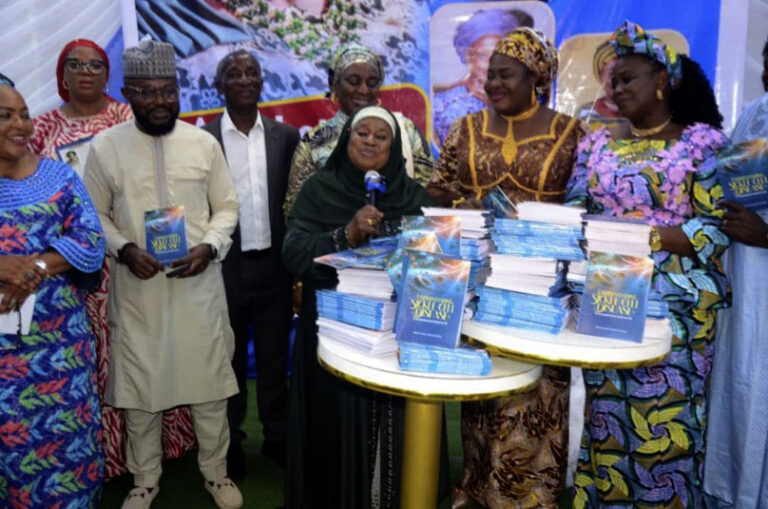
For 2,500 women in Imo State alone, the intervention came with N250 million in direct financial support from Nigeria’s First Lady and Chairman of the Renewed Hope Initiative (RHI), Oluremi Tinubu, who gave each beneficiary N100,000.
Another 2,000 women in the state are to benefit from additional support provided by Governor Hope Uzodimma, taking the number of beneficiaries in the South-East to 4,500.
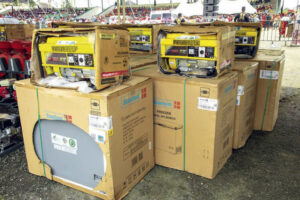
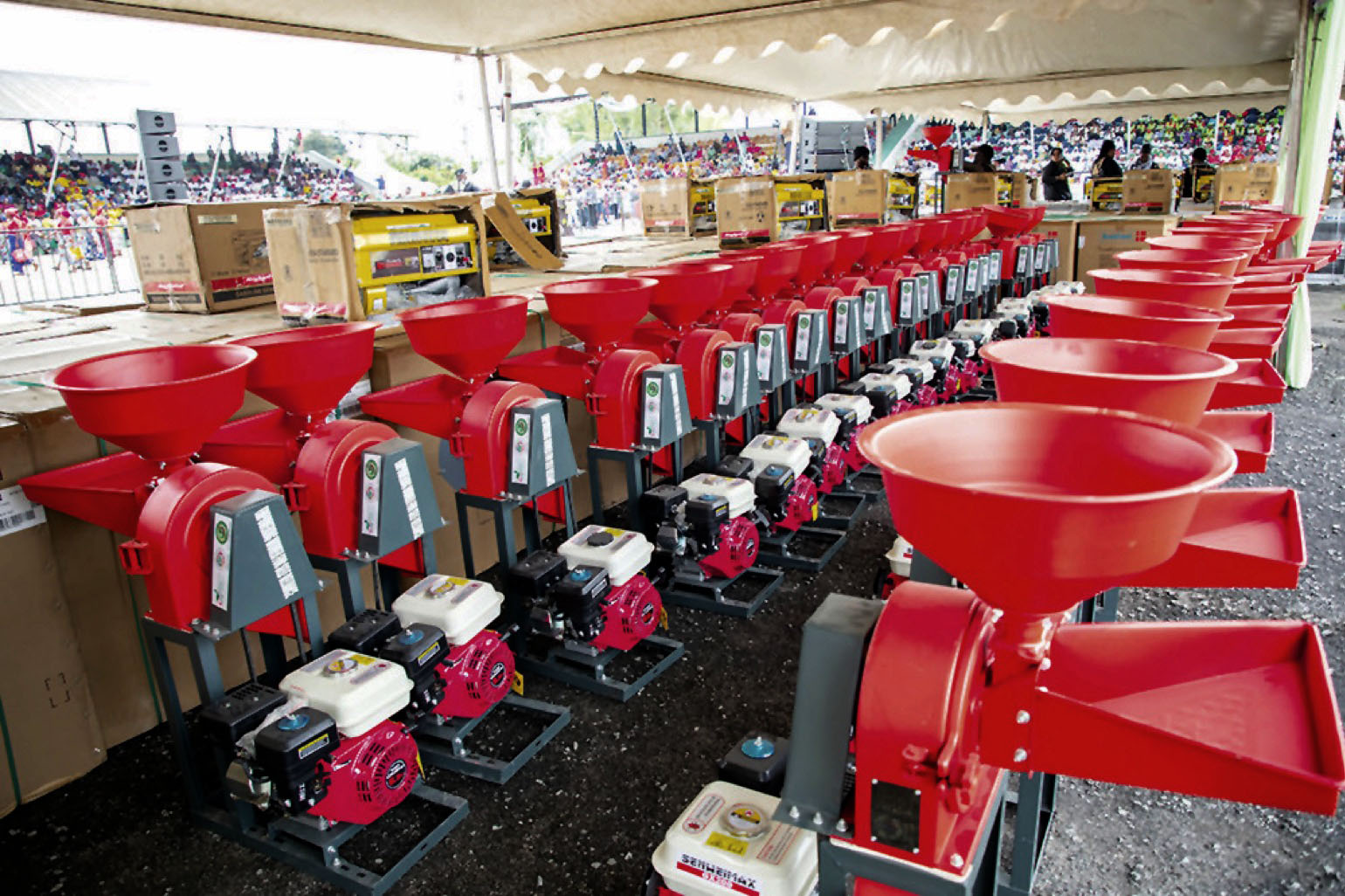
The women, drawn from Abia, Anambra, Ebonyi, Enugu and Imo, also received equipment capable of becoming the foundation of small businesses: deep-chest freezers, maxi gas cookers with ovens, generators and industrial grinding machines.
The intervention was unveiled in Owerri, the capital of Imo State, during the South-East flag-off of the Renewed Hope Initiative (RHI) Women Economic Empowerment Programme, implemented in collaboration with the Office of the Senior Special Assistant to the President on Sustainable Development Goals (OSSAP-SDGs).
But behind the numbers and official speeches is a more intimate story: women being handed tools with which they are expected to begin rewriting the economic circumstances of their families.
The beneficiaries include widows, wives of fallen heroes and indigent women described by the Federal Government as women, who possess the determination to work but lack the productive assets needed to turn that determination into income.
For such women, the equipment is not merely government largesse. It is expected to become a freezer that stores food for sale, a grinding machine that serves neighbours and traders, a cooker that supports a food business or a generator that keeps the enterprise running when electricity fails.
That is precisely the distinction the Senior Special Assistant to the President on SDGs, Adejoke Orelope-Adefulire, sought to make while explaining the rationale behind the programme.
“Our objective is not merely to distribute equipment, but to provide productive assets that can unlock potential, foster economic independence and create opportunities for women to thrive,” she said.
The programme, she explained, was built around the idea that giving a woman the means to earn does more than increase her personal income.
“By equipping women with tools such as gas cookers, generators, deep freezers and grinding machines, we are enabling beneficiaries to establish new businesses, strengthen existing enterprises, earn sustainable incomes and provide greater economic security for their households,” she said.
That household dimension is central to the intervention.
A woman who earns regularly is better positioned to pay school fees, put food on the table, respond to medical emergencies and contribute to the upkeep of her home.
Other News
Orelope-Adefulire said the impact of women’s economic empowerment therefore extends well beyond the individual beneficiary.
“When a woman is economically empowered, the benefits extend beyond income generation. Poverty is reduced, and she is better positioned to support her family’s health and well-being, address hunger, invest in her children’s education and exercise her rights with greater confidence and independence,” she said.
It is this potential ripple effect that gives the South-East intervention its broader development significance.
Under the core programme, 500 women were selected from each of the five South-East states, making 2,500 beneficiaries. The additional 2,000 women supported by the Imo State Government increased the number across the zone to 4,500.
Similar presentations were held in Abia, Anambra, Ebonyi and Enugu, even as the First Lady performed the zonal flag-off in Owerri.
The South-East exercise followed earlier phases in the North-Central, South-South and South-West geopolitical zones.
Nationwide, OSSAP-SDGs and RHI are targeting 18,500 vulnerable women, comprising 500 beneficiaries from each of the 36 states and the Federal Capital Territory.
For Mrs Tinubu, the ultimate test of the intervention will not be the photographs from the flag-off ceremony or the number of equipment items distributed, but what the beneficiaries are able to build with them.
She urged the women to deploy both the financial support and equipment productively to establish or expand businesses, increase their incomes and improve the welfare of their families.
“Let these items serve as a foundation for creating a better life for yourselves and your families. I hope and pray that what you received today will prosper in your hands,” she said.
Her words capture the hope attached to the intervention: that an item handed over today will become a source of income tomorrow.
For Uzodimma, the economic argument is equally straightforward.
Describing the equipment as “start-up tools” and “economic lifelines” for indigent and vulnerable women, he said the benefits of supporting a woman extend into the household and the wider community.
“When you empower a woman, you have empowered an entire household, improved livelihoods and strengthened small businesses,” he said.
The governor’s additional support for 2,000 women has given the Imo component of the programme an added dimension, expanding the reach beyond the 500 beneficiaries selected under the core OSSAP-SDGs/RHI arrangement.
The wife of the governor and RHI State Coordinator, Chioma Uzodimma, a lawyer, said the additional empowerment items would be distributed across the state’s three senatorial zones – Okigwe, Orlu and Owerri.
She urged the beneficiaries to use the equipment judiciously and ensure that the intervention translates into sustainable businesses, increased incomes and improved family welfare.
Yet, the success of the programme will ultimately be measured in quieter places far removed from the applause of the flag-off.
It will be measured in the homes where a widow can finally say she has a business of her own. In the kitchen where a woman begins selling meals instead of worrying about where the next meal will come from. At the grinding machine where customers begin to gather. At the freezer where products are stored for sale. And in the household where children begin to benefit from an income their mother is now able to generate herself.
This is why Orelope-Adefulire cautioned the beneficiaries against treating the equipment as gifts to be sold or abandoned.
“Please do not see them merely as gifts to be received and disposed of. Put them to productive use. Build with them. Grow your businesses with them,” she said.
The philosophy behind the intervention is captured in the Federal Government’s commitment to “Leaving No One Behind” – a principle that, in practical terms, means ensuring that women who are economically vulnerable are not permanently trapped by their circumstances.
The programme also feeds into the Sustainable Development Goals, particularly SDG 1 on No Poverty, SDG 5 on Gender Equality, SDG 8 on Decent Work and Economic Growth, and SDG 10 on Reduced Inequalities.
But for the 4,500 women receiving the equipment, the global development goals are likely to feel most real when the first customer walks through the door, the first product is sold and the first income is taken home.
For them, the real story may only be beginning.