Follow Us on Google
•State police will fight terrorism, banditry despite fear of abuse by govs
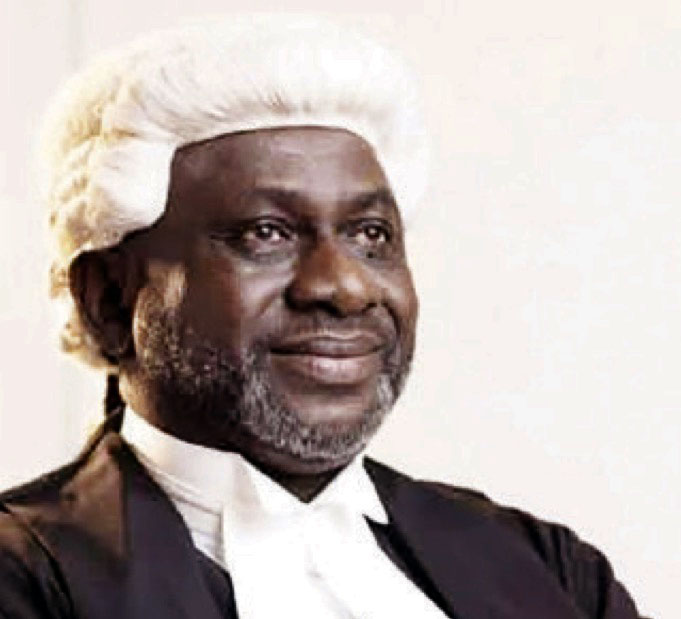
From Godwin Tsa, Abuja
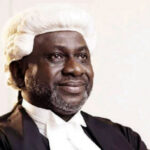
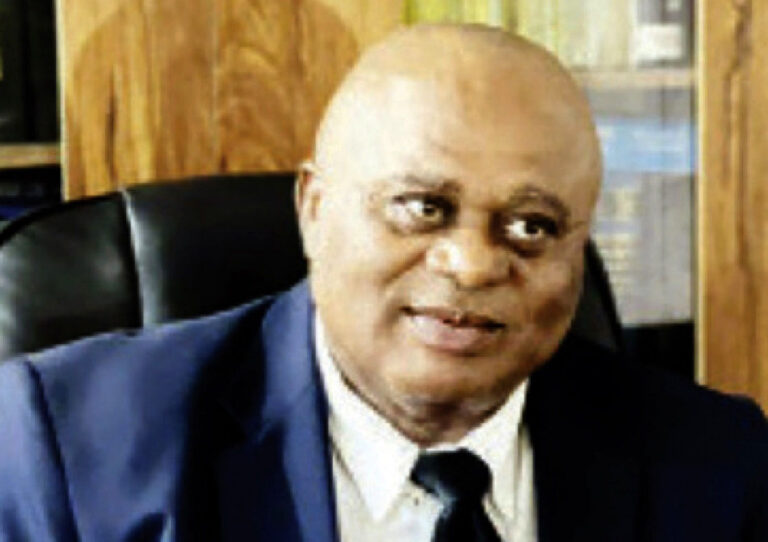
Senior Advocate of Nigeria (SAN), Godwin Sunday Ogboji, has said that godfatherism in Nigerian politics will “die a natural death” the day the country conducts truly free and fair elections. In this interview with Sunday Sun, he argues that godfathers thrive not because the people are behind them, but because they have the means to manipulate the electoral process in favour of their chosen candidates.
Citing the recent Osun State governorship election, Ogboji said the electorate showed that the power of the masses can defeat money and state machinery. He also blamed the culture of treating politics as a business for the surge in pre-election litigation, and urged political leaders to put the nation above personal aggrandisement.
The legal practitioner also spoke on the independence of the judiciary, the controversial Section 65 of the Electoral Act 2025, delays in high-profile criminal trials, and why he supports state police.
How would you assess the independence of the judiciary in the trial of high-profile cases?
Sincerely speaking, the Nigerian judiciary is very independent, but the challenges arise in the adjudication of high-profile cases. Even so, I maintain that our judiciary is independent, because we do not have only one tier of adjudication in Nigeria. We have the High Court, the Court of Appeal and the Supreme Court. If a matter is decided at the High Court, where one judge presides, and you feel he was compromised, you can appeal. The appeal is heard by three Justices, who may not be easily compromised. Even if they are, you can proceed to the Supreme Court, where you have people who have reached the peak of their careers, who have only legacies to leave behind, and who would want to deliver judgments in accordance with the law.
Yes, you are correct that in recent times we have seen things that should not have happened. But the judiciary’s independence is shown by the fact that erring judges are punished when they do wrong. To that extent, I can confidently submit that the Nigerian judiciary is largely independent. We have three tiers of adjudication that correct any errors or mistakes made at the lower rungs.
Some critics view pre-election litigation as a tool of political witch-hunt or sabotage by politicians rather than a genuine electoral process. Do you share this view?
In that context, I agree with you. In Nigeria, politics has turned into a business venture into which people put all their investment. So if they do not get what they want, they do everything humanly possible to bring the other person down. Instead of allowing the process to run its course and the will of the people to prevail, they do everything possible to ensure that their opponent does not get there. You will see a process that is fair, and they still want to challenge it, wasting time and creating confusion.
Look at what happened recently in Osun, where the Peoples Democratic Party (PDP) had to come out and deny that it had filed a petition. Adeleke won an election that was reasonably free and fair, because it was extremely transparent and the whole world saw it. On what basis, then, would any litigation arise? If the PDP had not come out to say that it did not instruct anybody to challenge the outcome, it would have become a distraction to the Governor.
So I agree with you, but we must be mature enough to say, “If I don’t get it now, I will get it tomorrow.” If we have that maturity, and politics is about real service rather than about how you go in as a pauper and come out as a multi-billionaire, this kind of political witch-hunting will lessen.
The present Electoral Act has attracted criticism and has its challenges. Which sections or provisions do you find troubling?
There is a fundamental provision in the Electoral Act 2025, specifically Section 65, which gives the Independent National Electoral Commission (INEC) the power to review or reject results one week after a complaint by external staff. That cannot be. It is a repugnant and illegal provision, and we are taking it up with them, because the power to adjudicate belongs exclusively to the judiciary. INEC cannot adjudicate. It cannot be seen to usurp the powers of the court, and it cannot be a judge in its own cause.
INEC cannot reverse an election result because of a complaint by a staff member, whatever the reason. That should be a ground for a petition before the court, and if it is proven beyond reasonable doubt, the court will do the needful, not INEC. The provision is extremely repugnant to natural justice and conscience, because a man should not be a judge in his own case. It should be expunged, along with several others, but for me it is the most urgent.
INEC is being given Herculean powers that it does not deserve. Its duty is to conduct elections. How a winner is determined should not be left in its hands. We have an arbiter in this country, which is the judiciary. Any complaint about irregularities, of whatever nature, should be addressed by the judiciary, which is competent and has the expertise to deal with them.
Despite the enactment of the Administration of Criminal Justice Act (ACJA) in 2015, criminal trials, especially high-profile corruption cases, still drag on for years in court. What can you say about that?
That is not the real fault of the judiciary or the judge. You must also take into consideration that the workload of the Nigerian judiciary is enormous. I am involved in a lot of criminal matters, and I can tell you, with the benefit of hindsight and experience, that some courts sit until 6 p.m. handling matters. As a judicial correspondent, you can see that for yourself.
We have an analogue system of work in the judiciary, and it is killing us. It is unimaginable that, in the 21st century, the Nigerian judiciary is still operating in longhand. It is embarrassing that Nigerian judges still listen to you and write in longhand. Moreover, a cause list can have 20 to 25 cases. With such a high volume of work, how can you expect the expeditious determination of a matter when the judge is still writing in longhand? If proceedings were recorded mechanically, the time a judge spends recording a matter would be greatly shortened, and trials would be far faster.
Other News
So the problem goes beyond ACJA. ACJA has done its best, and cases are now moving much faster. But the entire system ought to be changed and effectively enhanced so that this clog in the judiciary is removed. Let us modernise our judiciary so that judges do not have to take cases in longhand, and let proceedings be recorded electronically. I can assure you that electronic recording will aid the expeditious determination of matters in Nigeria.
One nagging problem that refuses to go away is that of conflicting decisions or rulings by courts of competent jurisdiction, despite the efforts of the NJC to address it. How can this be handled?
It is not an insurmountable problem. In every society, you have bad eggs. I am happy that you mentioned the efforts of the National Judicial Council (NJC) on the issue. The good thing is that judges who are guilty of this are not allowed to go unpunished. But you can never tell the heart of a man. Some politicians openly brag that “what money cannot do, more money can do.” Some people are gullible and cannot resist temptation, and some are simply not upright.
The most important thing is that the NJC is up and doing to ensure that these bad eggs are cleared out. Yes, it is Herculean, difficult and a recurring decimal that is not pleasant. But those decisions or rulings are most often overturned by the appellate courts, which gives us succour and joy. Those judges are punished, which also gives us joy, and the lawyers involved are punished too, as you have seen in recent decisions of the Legal Practitioners Disciplinary Committee.
There are many pre-election cases currently ongoing in various courts, contesting the outcome of the last party primaries. These cases cut across different political parties. What can be done to reduce their number?
Unfortunately, we have reached a stage in Nigeria where politics is seen as a business and not as service. That is why people are ready to do whatever they can to get into power. Some persons will attack even what is obviously transparent, because of one godfather or another, to see if they can come to power through the back door. Godfatherism, whereby certain individuals determine who gets what irrespective of the mandate and the wishes of the people, also contributes to the increase in pre-election litigation.
I believe many people in society want particular persons to occupy certain offices because of their integrity. But somebody somewhere will say, “I have a godfather, I have the political structure in my pocket, so I will impose whoever I want.” These are some of the challenges. We must blame the political leaders. They should think of the country and not of personal aggrandisement. They should allow the will of the people to prevail, and you will not see such a number of political cases in court.
But because they see politics as a business, and because people do not want to retire from politics but want to hold political parties as their personal estates, we have this situation. The good thing, however, is that the judiciary is there and is up and doing to correct some of these things. By the time politicians begin to change their mindset and see politics as service to the nation and not as their personal estate, these problems will be over.
How can we overcome the problem of godfatherism in Nigerian politics?
The day we have free and fair elections, godfatherism will die a natural death. We have godfathers because of the ability of certain individuals to manipulate the electoral system. A godfather is not someone who has the people behind him. A godfather is someone who has the means to manipulate the electoral process to the advantage of his chosen ones. But the day power moves through transparent, free and fair elections, there will be no such thing as godfatherism. We will overcome it in no distant time.
The day the masses take their power into their own hands, godfatherism will fizzle out. We saw it play out in the recent Osun State governorship election, where the masses stood their ground to defend their mandate. We saw APC governors go to Osun State, and we saw how money was deployed, but the people said, “We will collect your money, but we will still vote for the people of our choice.” The state machinery was deployed there, but the people stood their ground.
So godfatherism will pass in no distant time with transparent elections. Despite the huge sums of money on display, people still have minds of their own, and no matter who you are, the people will prevail.
Are you for or against state police, and why?
Naturally, I am for state police. Yes, abuse and mismanagement of state police might occur at the initial stage, but, my brother, look at the situation we are in in this country. Herdsmen, bandits and terrorists invade communities with impunity, and whatever evil governors might do with state police will be small compared with what these groups are doing to society today.
They say governors will manipulate state police to arrest and imprison political opponents. But communities would be safeguarded, because the instrument of coercion, which is the gun, would be legitimately in the hands of community and state policemen. Their members would be drawn mostly from their own communities, and they would be ready to die for them.
The excesses of bandits, terrorists and herdsmen persist because there are no checks and balances, so they take advantage of vulnerable communities to kill and destroy at will. But when they come to a place and know there is a counterforce, they will be restrained. For me, the fear that governors will abuse state police is legitimate, but I look at the bigger picture.
Look at what is happening in Benue and Plateau States. If those communities had men serving in a police force with legitimate firearms at their disposal, herdsmen, bandits and terrorists would be restrained. As things stand, if someone in those communities is found with even a Dane gun, he is arrested for illegal possession of a firearm. State police, by contrast, would be fully armed by the state, and its officers would stand and defend their communities. I am looking at a deterrent to the massive and unprovoked killings by herdsmen, bandits and terrorists.
So yes, it is painful to know that governors might abuse it, but it is a bitter pill we have to take for the wider security of communities across Nigeria.