Follow Us on Google
By Kelechi Ebubedike
Nigeria is a country grappling with ethnic and religious problems. A Nigerian from another ethnicity or with a different religious persuasion is sometimes perceived as a stranger, despite carrying a green passport. There have been cases when Nigerians from the other parts suffer prejudices before and after elections. They are either prevented from voting or forced to vote against their interests. This tends to polarise the nation further.
If Nigeria must make any headway in the 21st century, it is a matter of utmost importance to put the concept of unity in diversity into practice. Unity in diversity entails harmony and unity among people with different cultural, religious, social and other demographic differences. A concept that originated in ancient times, it is used by political, social groups and nations like Nigeria, a country of over 250 ethnic groups with secular religion.
To promote unity in diversity, it is often recommended that citizens must accept differences. Though we may have different beliefs, live differently, and act differently as Nigerians, we are obliged to respect each other’s biases. Unity in diversity also involves promoting understanding and dialogue among different ethnic groups. In a multicultural society, you are expected to celebrate differences as a source of strength, not for discord. Besides, citizens are expected to challenge and condemn ethnic slurs and stereotypes. For political leaders, unity in diversity means creating inclusive policies that make political representation, economic opportunities, and social programmes accessible to all citizens.
China, one of the greatest economies and most powerful nations in the world, boasts of 56 officially recognised ethnic groups, but their ethnicities are not as pronounced in interpersonal relations and politics as ours. They have managed to create unity in diversity by thinking about one nation and advancing a collective national interest. Since independence, Nigeria has made attempts at unity in diversity, but the results have not been totally successful. To achieve a resounding success, individuals, politicians, religious leaders and stakeholders must promote peace, engage in dialogue, and counter narratives that are divisive.
The Igbo people are one of the most travelled in Nigeria, Africa and the world. Wherever they go in Nigeria, they not only contribute to the economy of the state but build homes and contribute to the development of the state. From Lagos to Kaduna, Kaduna to Borno, there is a thriving Igbo population engaged in different fields of human endeavour legitimately. They have stamped their authorities in commerce outside Igboland more than other facets of life.
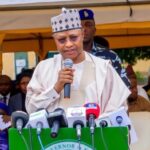
Kaduna State is one of the states in northern Nigeria with a strong Igbo representation in commerce. The current Kaduna State Governor, Senator Uba Sani, since he mounted the saddle of office five years ago, has extended his hand of friendship to the Igbo community in the state. Unlike in the past, when they were made scapegoats by criminal elements during religious and political crises in the north, he has ensured they go about their businesses like any other indigene of the state.
Recently, Governor Sani approved the allocation of a large expanse of land for the building of a new Spare Parts Market in Kaduna State. He also donated a bus to the Igbo community in Kaduna, commending them for keeping the peace in Kaduna, as demonstrated by their refusal to join the recent nationwide protests. The governor, who disclosed this on the occasion of the 2024 Igbo Cultural Day Celebration held in the state capital, said that the papers for the land were being perfected by the Kaduna Geographic Information Service (KADGIS). He promised to “personally perform the groundbreaking for the construction of the spare parts market.”
He assured that Kaduna State Government was willing to partner with Igbo industrialists and entrepreneurs, as his administration offers very attractive incentives. The governor described the Igbos as a unique people who are “industrious, hardworking, resilient, resourceful and accommodating.” He commended them for contributing to the growth and development of Kaduna State, adding Kaduna State is home to Igbos.”
The Igbo community unanimously conferred Governor Sani with the traditional title of Ezi Enyi Ndigbo (friend of the Igbo people). The conferment of the chieftaincy title has a significant import. In Igbo culture, chieftaincy titles are not given to everybody. They are conferred on men of repute, warriors, remarkable achievers, great farmers and outstanding leaders. It is not all the time that Igbo communities confer chieftaincy titles on host governors. The chieftaincy title given to Sani by the Igbo community in the state marks him out as a great leader.
Sani deserves commendations for his generosity to the Igbo community in the state by granting an expanse of land to build a Spare Parts Market. This is one business dear to migrant Igbo communities in Nigeria. Without doubt, they control this business nationwide. Without these spare parts markets in close proximity to major cities and towns in the country, buying affordable parts would be a nightmare to many Nigerians. One of the advantages of having a big spare parts market in a central location is the ease of doing business for buyers and sellers. Centralisation also creates an increased competence level of the marketing organization and gives a better leverage of best practices. It increases synergies and a better addressing of strategic issues. Pricing is also transparent to all and sundry, so it’s a win-win situation.
His intervention should be emulated by every Nigerian political leader. He has demonstrated that Nigerians are capable of showing love across ethnic and political divides. In a polarized nation like Nigeria, governors who admit the good in others and encourage them to blossom like Sani should be celebrated. With political leaders like him, there is a possibility of a new Nigeria we clamor for. Unity in diversity must not only be a concept meant for rhetoric during political campaigns. It must be put into action like Governor Uba Sani has done with the enterprising Igbo community in Kaduna.