Follow Us on Google

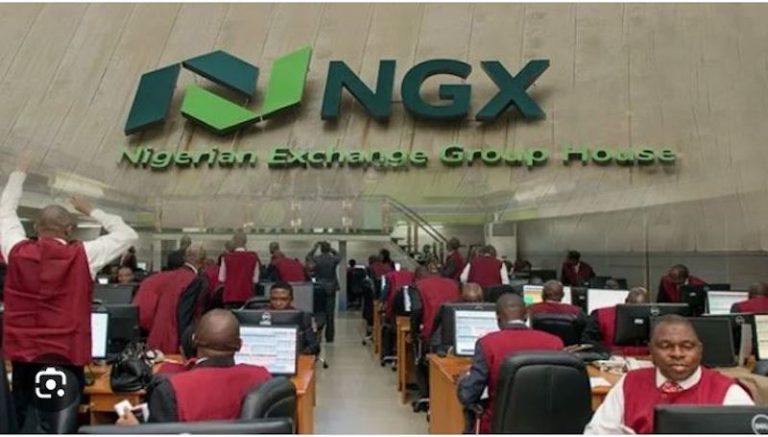
Foreign investors’ purchases of equities on the Nigerian Exchange Limited (NGX) fell by 38.6 per cent to N632.35 billion in the first nine months of 2026, while sales and liquidations of investments rose, reflecting a decline in foreign participation in the market.
The NGX’s Domestic and Foreign Portfolio Investment Report for September 2026 showed that foreign portfolio outflows increased by 12.7 per cent to N913.61 billion between January and September, from N810.39 billion in the corresponding period of 2025. The decline in inflows, alongside rising outflows, left foreign investors with a net outflow of N281.26 billion over the nine-month period, compared with net inflows of N219.94 billion in the corresponding period of 2025.
The figures indicate a reversal in the balance between foreign purchases and sales of Nigerian equities, even as overall trading activity increased and domestic investors accounted for a larger share of transactions.
Foreign investors’ total transactions fell to N1.55 trillion in the first nine months of 2026, from N1.84 trillion in the corresponding period of 2025, representing a decline of about 16 per cent. Their contribution to total transactions on the NGX also dropped from 21.56 per cent to 10.26 per cent, while domestic investors’ share increased from 78.44 per cent to 89.74 per cent.
The report stated that “Total domestic transactions accounted for about 78 per cent of the total transactions carried out in 2025, whilst foreign transactions accounted for about 22 per cent of the total transactions in the same period.”
By September 2026, the balance had shifted further towards local investors, who executed transactions worth N13.52 trillion, up from N6.70 trillion in the corresponding period of 2025, representing an increase of about 102 per cent. The growth in domestic participation was driven largely by institutional investors, whose transactions rose to N8.37 trillion from N4.09 trillion. Retail investors accounted for N5.15 trillion, compared with N2.61 trillion in the corresponding period of 2025.
The growing influence of local investors comes amid changes in the investment limits available to pension funds. In February 2026, the National Pension Commission (PenCom) revised its investment regulations, increasing the limits for equity investments across several Retirement Savings Account (RSA) fund categories. Under the revised regulations, the limit for ordinary shares in RSA Fund I rose from 30 per cent to 35 per cent, while that for RSA Fund II increased from 25 per cent to 33 per cent. The limit for RSA Fund III rose from 10 per cent to 15 per cent, while RSA Fund VI (Active) increased from 25 per cent to 33 per cent.
Despite the decline in foreign transactions over the nine-month period, September figures showed a recovery in foreign trading activity.
Foreign transactions rose by 208.14 per cent to N191.14 billion in September from N62.03 billion in August. Domestic transactions also increased by 34.58 per cent to N1.63 trillion from N1.21 trillion over the same period.
Other News
The NGX report said that “In September 2026, the total value of transactions executed by Domestic Investors outperformed transactions executed by Foreign Investors by circa 78 per cent”.
Total transactions on the exchange consequently rose by 43.06 per cent to N1.82 trillion in September from N1.27 trillion in August. Compared with the N1.62 trillion recorded in September 2025, total market transactions increased by 12.01 per cent.
Foreign inflows in September stood at N92.52 billion, while outflows were N98.62 billion, leaving a net outflow of N6.10 billion for the month.
The monthly rebound in foreign transactions therefore did not eliminate the cumulative decline in foreign purchases recorded during the first nine months of the year. Market analysts have previously linked weak foreign participation in Nigerian equities to factors including the country’s market classification by global index provider FTSE Russell. Nigeria was downgraded to an Unclassified market in 2023 before returning to the Frontier Market classification in September 2026.
The reclassification has been viewed by market participants as a step towards improving Nigeria’s visibility among international investors. However, the September trading figures alone do not establish whether the change has begun to produce sustained foreign inflows.
Overall, investors traded N15.06 trillion worth of equities on the NGX between January and September 2026, compared with N8.54 trillion in the corresponding period of 2025. Domestic investors accounted for N13.52 trillion of the total, while foreign investors contributed N1.55 trillion, underscoring the extent to which local capital has driven trading activity on the exchange this year.
The increase in transactions also coincided with a rise in equity market valuations. Market capitalisation grew from N99.38 trillion at the beginning of 2026 to N163.11 trillion at the end of September, an increase of N63.73 trillion, or 64.13 per cent.
The NGX All-Share Index rose by 61.43 per cent over the same period, increasing from 155,613.03 points to 251,211.67 points. The figures show that the expansion in market activity and equity valuations has occurred alongside a reduction in foreign investors’ share of trading, leaving domestic investors responsible for nearly nine-tenths of transactions on the exchange.