Follow Us on Google
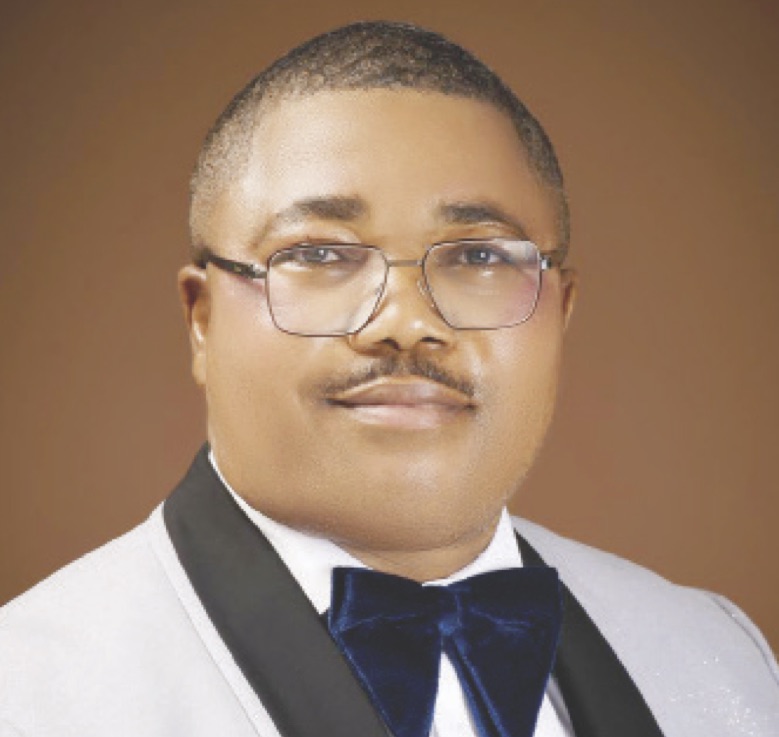
From Aloysius Attah, Onitsha
Ifeanyi C. Ejiofor, Esq. renowned lawyer and human rights advocate is a man who speaks truth to power no matter whose ox is gored. In this interview, he bares his mind on sundry issues of the moment in Nigeria and the recently concluded governorship election in Anambra.
So many reactions have trailed the recent statement by American President Donald Trump about Christian Genocide in Nigeria. Some have criticized such while others said he spoke the true reality. What do you think is the reason that statement is rattling some people in Nigeria?
The big questions is how did a nation once called the Giant of Africa become so helpless before the monsters it created? Let’s not hide behind pretense. Boko Haram, ISWAP, deadly cattle-rustling militias- Fulani herdsmen and bandits of various labels are not strangers from outer space. The majority were imported while many were born and bred here, in our soil, in our politics, and in the greed of men who thought they could control chaos. It began with whispers about “using them” for elections or intimidation. Now, those same creators watch in silence as their Frankenstein monsters dictate the rhythm of our national sorrow. Today, vast parts of Borno, Yobe, Zamfara, Katsina, Niger, Benue, Kaduna, and even down to Enugu, Ebonyi and Plateau are either under siege or partially conquered. Villages once bustling with laughter now echo only with gunshots and wailing. Ask the people of Baga, where Boko Haram turned a fishing town to ashes; ask Zangon Kataf in Kaduna, where attackers have massacred families in single nights; or the displaced farmers of Otukpo in Benue who must pay “levies” to till the soil their fathers died protecting. The truth hits differently when you meet the victims.In Shiroro and Munya LGAs of Niger State, bandits have effectively become landlords, collecting taxes and dictating who enters or leaves. Birnin Gwari in Kaduna has repeatedly been the scene of mass kidnappings and attacks. And yet the country pretends it’s all “under control.”
Meanwhile, in Abuja and other cities, politicians still walk free, some of them the very enablers and financiers of this chaos. Retired security chiefs have publicly admitted how the seeds of these monsters were sown within political circles, but the silence that follows each revelation is louder than any gunfire. The truth is that Nigeria has been in a dangerous relationship with denial, and like every toxic relationship, it is costing us lives.The irony deepens when we see “negotiations” between state officials and bandits played out on television. You see men with AK-47s slung across their shoulders being treated like peace envoys, while government representatives smile awkwardly beside them. In any sane country, such a public surrender of sovereignty would spark outrage; here it has become a national culture of shame. And now, America sneezes and Nigeria catches a fever. When Donald Trump recently declared his intention to “wipe out the monsters committing genocide against Christians in Nigeria”, you could almost hear the political class jump in unison. Suddenly, we became born-again defenders of sovereignty, those that failed to protect children in Chibok, girls in Dapchi, or farmers in Benue. How convenient! Let’s be clear: the noise isn’t about patriotism. It’s about self-preservation. Too many people have turned insecurity into a thriving enterprise: those who negotiate ransoms, those who supply arms, those who collect “security votes” without securing anything, and those who profit politically from fear. The prospect of a foreign force dismantling this network terrifies them, not because they love Nigeria, but because it would collapse their cash cow.The world knew the scale of our tragedy long before any single politician made headlines. Human-rights organisations and investigators have documented widespread atrocities and urged accountability. Thousands of lives have been lost, millions displaced, and entire communities erased from maps. The evidence is on every Nigerian lip, every burnt village, and every weeping IDP camp.During one of my visits to an IDP camp in Abuja earlier this year, I saw toddlers, one, two, three years old, who had no memory of home or parents. Some were born in the camp and might die there if nothing changes. I left that camp broken. Nigeria has happened to them, and it is shameful that our leaders can still sleep at night. So, when Trump talks tough, instead of shouting “sovereignty!” maybe we should ask ourselves: sovereignty over what? Over ungoverned territories? Over mass graves? Or over a nation that now negotiates with killers in broad daylight? Those crying foul are simply afraid of losing their political bargaining chip. The monsters some reared to fight their perceived enemies have outgrown their control. They now decide who farms, who lives, and who rules. If Nigeria truly wants peace, it must stop romanticising terror and start confronting it. Foreign help should not be a taboo word when our sovereignty has already been auctioned to bandits. What the world offers is not colonisation, it is rescue. The terms and scope of any intervention should be discussed and diplomatically agreed. Nigeria’s security services must play a pivotal role in directing operations against these common enemies. Nobody is coming to dismantle Nigeria’s democratic institutions. No! Nigeria truly needs help. Until we summon the courage to punish the enablers, expose the sponsors, and secure our borders, we will keep mourning the same dead under different headlines.
Minister of the Federal Capital Territory Nyesom Wike is trending now following what transpired between his team and the young military officer during an enforcement exercise. While some are hailing the military officer for standing against perceived excesses of the Minister and his team, others are condemning him. What is your take on the matter?
When the custodians of decorum turn into clowns, the society loses its moral mirror. The show of shame by the Minister is a national disgrace.There comes a time in the life of a nation when its people must pause to examine not just institutional failures, but the moral emptiness of those who lead them. The disgraceful public altercation between the Minister of the FCT, Nyesom Wike, and a 24-year-old military personnel, was not merely unfortunate. It was a painful reflection of the depth of moral decay and leadership bankruptcy afflicting our political system. Nigerians saw not the majesty of authority but the vulgarity of power. A man entrusted with the administration of the nation’s capital descended into arrogance, condescension, and aggression. It was painful to watch, a public official, intoxicated by power, hurling insults at a uniformed officer who, by contrast, embodied restraint, decorum, and discipline. To the credit of that gallant officer, he maintained composure throughout, choosing professionalism over provocation, dignity over derangement. In that moment, he became a silent teacher of moral instruction, exposing the thinness of Wike’s pretensions to leadership. His calmness shamed the chaos before him; his discipline illuminated the Minister’s darkness. Yet, what is most tragic is not the behaviour of one man but what it represents. Wike is not an anomaly; he is a symptom of a nation that has separated power from principle and leadership from character. Nigeria has become a society where position is mistaken for capacity and authority confused with wisdom. Insolence in leadership and vulgarity in public discourse have become normalized. In a saner clime, a minister who behaves like a street urchin would not only resign but be ostracized from public life. His membership of a revered body such as the Body of Benchers, the guardian of the legal profession’s integrity, would have been immediately suspended.That Wike still retains such honours despite repeated misconduct indicts our collective conscience. It questions the seriousness of our institutions and the sincerity of those entrusted with preserving their sanctity. The Body of Benchers does not only reward learning but demands character as a sacred standard. It is this moral filter that distinguishes the noble profession of law from others. When a member publicly exhibits arrogance, vulgarity, and abuse of power, the very vices the institution exists to check, then we must ask: What does the Body of Benchers now stand for? Has membership become a title for the politically connected, or does it still symbolize moral and intellectual discipline? Leadership is not noise or muscle; it is the disciplined exercise of power with humility. True leadership respects the dignity of others, inspires confidence, not fear; respect, not resentment. What we witnessed in Wike was not leadership; it was theatre, a show of shame, an exhibition of insecurity disguised as bravado. When a leader must shout to assert control or humiliate others to feel relevant, he exposes his inner emptiness and loss of moral authority. We cannot ignore the implications for the younger generation. In a society where officials speak the language of the gutter and behave like thugs in designer suits, what moral lessons are we offering our youth? How do we tell them that character matters when those at the top lack home training? We lament that our youths are drawn to internet fraud and drug abuse. But what moral reference do they have when adults in power model corruption, vulgarity, and impunity? The time has come for President Bola Ahmed Tinubu, as Wike’s appointing authority, to draw a moral line. Silence in the face of such misconduct is complicity. If the President truly believes in restoring dignity to governance, this is the moment to act, to remind his appointees that office is a privilege that demands civility and restraint. Similarly, the Body of Benchers must defend the integrity of its name. It must not allow political favouritism to erode its moral standard.
Your home state Anambra just concluded the governorship election and returned Soludo for a second term in office. What is your reflection on the election and words for Soludo?
I must congratulate Governor Soludo, on his resounding and well-deserved reelection as the Executive Governor of Anambra State in the just concluded gubernatorial election. The victory, though emphatic and overwhelming, came as no surprise to discerning observers of Anambra’s political landscape. It was a triumph long foretold, a success I had publicly predicted days before the poll. All empirical indicators and political permutations pointed unmistakably to the fact that Governor Soludo was, in truth, in a contest against himself. While many may have speculated otherwise, the handwriting on the wall was crystal clear: his broad-based acceptance across the length and breadth of Anambra State, his grassroots engagement, and the visible imprints of his developmental strides spoke louder than any campaign slogan. Indeed, among all the contestants, none possessed the political capital, performance record, or people’s trust strong enough to alter the tide. What transpired at the polls was not merely an election, it was, in every sense, a coronation by the people of Anambra State, reaffirming their confidence in a visionary leader. Governor Soludo’s reelection is, therefore, not only a personal victory but a collective triumph for Ndi Anambra, a renewed mandate for consolidation, continuity, and accelerated transformation. It affirms that leadership founded on intellect, courage, and integrity still resonates deeply with our people.As he embarks on this second mandate, I urge His Excellency to remain magnanimous in victory. The season of campaign rhetoric is over; governance, in its purest form, must now take centre stage. The Governor must see himself as the leader of all, those who supported him and those who did not. The spirit of inclusiveness, tolerance, and visionary governance should continue to define his stewardship. This victory should rekindle his avowed commitment to transform Anambra State into the real “Dubai of Africa”, as he has consistently envisioned. The people have renewed their faith in him; the task ahead is to translate that faith into greater prosperity, unity, and sustainable development for our dear state.