Follow Us on Google
After months of aggressive tightening and a fragile calm in the foreign exchange (FX) market, the Central Bank of Nigeria (CBN) can point to early signs of disinflation and a more resilient banking system.
Yet, inside the Monetary Policy Committee (MPC), the fiercest fight is no longer over the next basis point on the policy rate, but over something monetary tools cannot easily fix, which is the stubborn surge in food prices that continues to erode household incomes and threaten the credibility of the entire stabilisation effort.
Nigeria’s headline inflation rate stood at 15.43 per cent year-on-year in July 2026, down from 15.91 per cent in June 2026, representing a 0.48 percentage-point decline.
This decline in July was supported by lower domestic energy costs and modest appreciation of the naira. The moderation in price pressures was also reflected in the monthly reading where inflation slowed for the fourth consecutive month to 1.57 per cent in July 2026, from 1.66 per cent in June, reflecting a 0.09 percentage-point decline.
According to the National Bureau of Statistics (NBS), this indicates that the pace of increase in the average price level was slower in July than in the preceding month.
Food inflation, a major component of the headline index, stood at 20.31 per cent year-on-year in July 2026, compared with 26.20 per cent in the corresponding period of 2025. However, on a month-on-month basis, food inflation accelerated to 5.56 per cent in July, from 3.75 per cent in June, representing a 1.82 percentage-point increase.
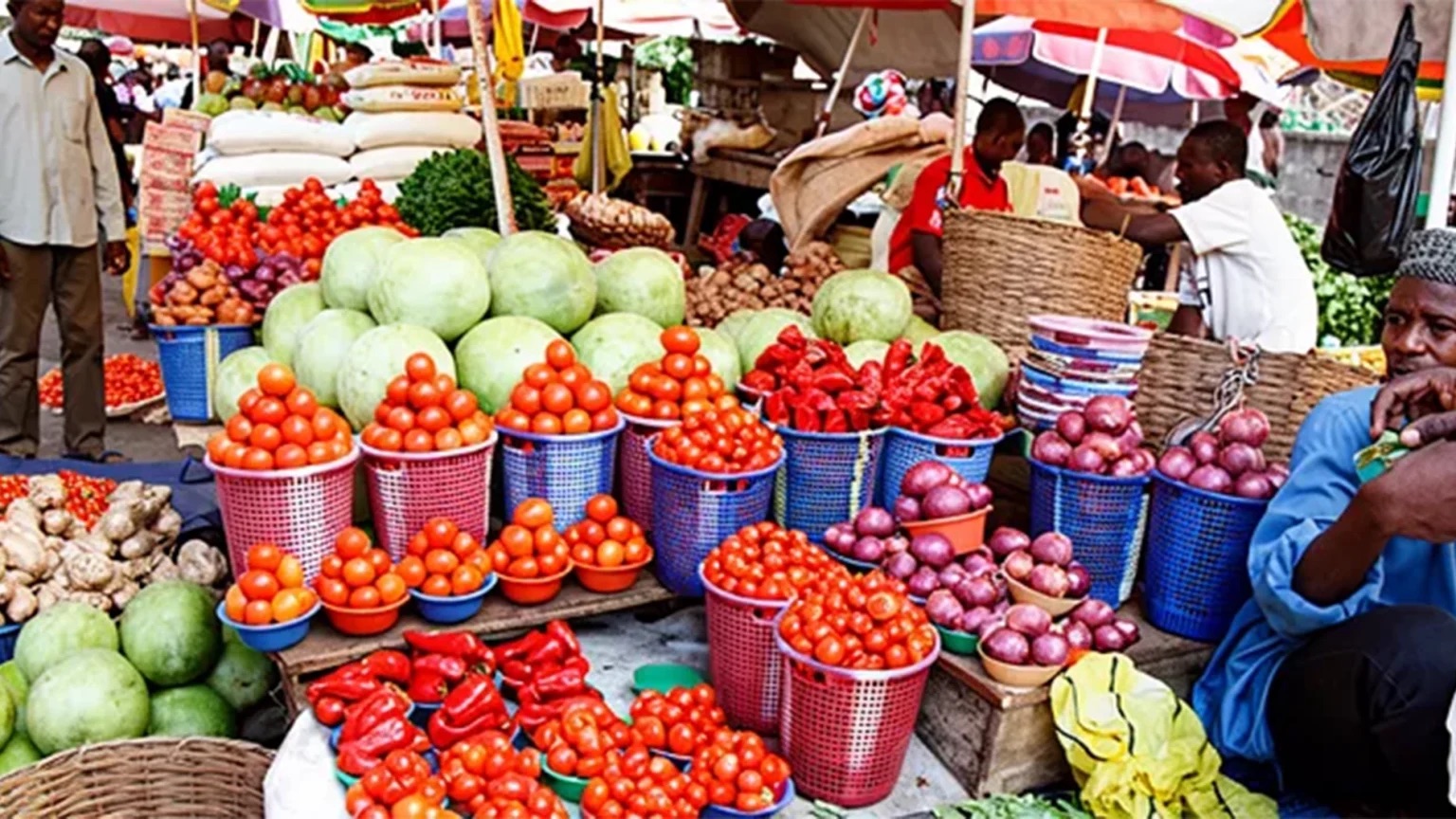
The month-on-month increase in food inflation was primarily driven by changes in the average prices of commodities including crayfish, fresh pepper, fresh onions, carrots, rice, water yam, fresh tomatoes, garri, plantain, beef, eggs, guinea corn, ginger and plantain flour, among others.
This suggests that, despite the broader moderation in headline inflation, food prices continued to exert significant pressure on households during the month.
In April, food inflation even overtook the headline rate for the first time in eight months, underscoring how the battle for price stability is increasingly being lost in markets, farms and motor parks rather than in the CBN’s boardroom.
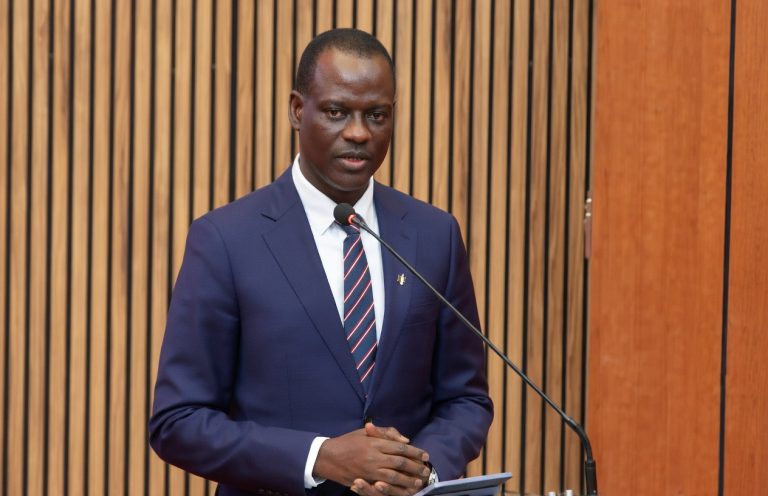
It is against this backdrop that Bandele Amoo, a member of the MPC, issued one of the committee’s most pointed warnings after the May meeting.
While supporting the decision to hold all policy parameters unchanged, he stressed that “the persistence of weak structural drivers of inflation, particularly within the food segment” remains the key risk to durable price stability.
According to him, without a coordinated fiscal push to fix agriculture and food supply chains, monetary policy risks becoming a blunt instrument fighting the wrong enemy.
On the surface, Nigeria’s inflation trajectory looks encouraging. After peaking above 25 per cent in early 2025, headline inflation has been on a gradual downtrend, supported by tighter liquidity, a more unified exchange‑rate regime and some pass‑through of lower global energy prices.
The apex bank has been able to argue that its painful tightening cycle is finally working, with banks passing on higher rates, credit growth moderating and expectations slowly anchoring.
But the composition of that inflation tells a different story. Food and non‑alcoholic beverages remain the single largest contributor to headline inflation, accounting for about 6.18 percentage points of the 15.43 per cent recorded in July.
In other words, more than two‑fifths of the inflation Nigerians feel every day comes from what they put on their plates. When food prices accelerate, as they have since March 2026, they can quickly offset gains made elsewhere in the basket, from telecoms to manufactured goods.
The NBS’s own breakdown shows the breadth of the pressure. In July alone, month‑on‑month food inflation jumped to 5.56 per cent, driven by higher prices for crayfish, fresh pepper, onions, carrots, rice, yam, tomatoes, garri, plantain, beef, eggs and guinea corn. These are not luxury items but are the core of the typical Nigerian household’s food budget.
According to BudGIT’s The Price of Survival: Nigeria’s Cost of a Healthy Diet Tracker Q1 2026 report, the average cost of a healthy diet rose from N1,458 per adult per day in January to N1,541 in March, representing a 5.8 per cent quarterly increase.
Also, the SBM Intelligence Jollof Index report for Q2 shows that the national average cost of cooking the country’s most popular staple meal rose from N25,798 in July 2025 to N29,578 in June 2026, representing a 14.6 per cent increase in just one year.
Over the past decade, however, the increase has been far more dramatic, with the cost of a pot of jollof rising by 624 per cent nationwide.
When a plate of jollof rice costs multiples of what it did a decade ago, the political and social salience of food inflation dwarfs that of any other component. This is where Amoo’s concern cuts to the heart of the MPC’s mandate.
The CBN’s primary objective is price stability, and its main lever is the monetary policy rate, supplemented by reserve requirements, open‑market operations and liquidity management.
These tools work best when inflation is driven by excess demand, loose money or an overheating credit cycle. They are far less effective when prices are being pushed up by broken supply chains, insecurity on farms, climate shocks and high logistics costs.
Amoo made this distinction explicit in his May statement. He argued that “neither further tightening nor premature easing appears justified” given the progress on exchange‑rate stability and overall disinflation. But he warned that additional tightening “could impose unnecessary constraints on economic activity and private sector credit” without solving the underlying food problem.
In effect, he was cautioning against using interest rates as a substitute for a coherent agricultural and infrastructure strategy.
This reasoning reflects a broader debate among emerging‑market central banks: how much of today’s inflation is cyclical and responsive to rates, and how much is structural and immune to them? In Nigeria’s case, the evidence increasingly points to the latter when it comes to food.
Insecurity in key farming regions, climate‑related floods and droughts, poor rural roads, inadequate storage, high fuel costs and expensive imported inputs have all converged to keep farm‑gate and market prices elevated. No amount of basis‑point adjustments can build irrigation systems, clear bandits from farmlands or fix a collapsed rural electrification grid.
Amoo’s statement reads like a checklist of Nigeria’s long‑ignored agricultural bottlenecks. He called for “greater fiscal focus, especially at the sub‑national government levels” on improving productivity, strengthening rural infrastructure, addressing insecurity, expanding irrigation and enhancing access to affordable finance across the agricultural value chain.
Other News
He also emphasised investments in storage, transportation, processing and market access to reduce post‑harvest losses and improve distribution efficiency.
Each of these points maps onto a well‑documented driver of food inflation.
Insecurity has displaced farmers and disrupted planting and harvesting cycles in several food‑producing states, shrinking supply and raising risk premiums along the value chain. Climate shocks, including the severe floods of 2025, wiped out crops and raised the spectre of higher prices in subsequent seasons. High fuel costs feed directly into transport and logistics, making it more expensive to move food from farm to market.
At the same time, Nigeria’s agriculture remains predominantly rain‑fed, low‑mechanisation and fragmented, with limited use of improved seeds, fertiliser and modern techniques. Post‑harvest losses are estimated in the tens of billions of naira annually, as poor storage and bad roads cause perishables to spoil before reaching consumers.
The result is thus, a system that is highly vulnerable to shocks and slow to respond when prices rise, precisely the conditions that sustain food inflation even as headline numbers improve.
Fiscal‑monetary coordination – the missing link
Amoo’s insistence on a “more coordinated approach between monetary and fiscal authorities in supporting agriculture” is perhaps the most politically sensitive part of his message.
It implicitly acknowledges that the CBN cannot deliver price stability alone, and that the federal and state governments must step up with targeted spending, policy reforms and security interventions. This has been echoed severally by even the CBN Governor, Olayemi Cardoso in several MPC post briefings.
This could mean several things. Firstly, a renewed focus on public investment in rural roads, irrigation schemes, storage facilities and market infrastructure, funded through the budget rather than quasi‑fiscal interventions by the central bank.
Secondly, smarter subsidies and credit guarantees that lower the cost of inputs and working capital for smallholder farmers and agro‑processors, without reigniting broad‑based fiscal slippage.
Finally, there has to be a serious security strategy for farming communities, recognising that no amount of fertiliser or finance will help if farmers cannot access their fields safely.
For Cardoso, coordination also requires fiscal restraint. If fiscal policy remains expansionary in ways that fuel demand or put pressure on the exchange rate, the central bank may be forced to maintain tighter monetary conditions much longer even when much of the food inflation is driven by structural factors.
Conversely, if fiscal consolidation and targeted agricultural spending gain traction, the MPC could afford to pivot earlier towards a more accommodating stance, as Amoo himself suggested is possible “provided the current disinflation trend is sustained, and exchange rate stability continues.
Hence, there lies a stark political reality and that is food inflation is the inflation that voters feel most acutely. A 15.43 per cent headline rate is an abstract statistic; the price of garri, tomatoes, rice and beef is not.
When food inflation runs above 20 per cent, as it did in July, households are forced to cut portions, skip meals or switch to cheaper, less nutritious alternatives. Urban workers see their real wages eroded; rural net food buyers, including many smallholders who also purchase staples, face similar pressures.
This dynamic creates a dangerous feedback loop. High food prices fuel social discontent, which can spill over into protests, strikes and political instability. That uncertainty, in turn, discourages investment, weakens the currency and complicates the task of macroeconomic management. In this sense, food inflation is not just an economic problem but a governance test.
How the state responds, with short‑term palliatives or long‑term structural fixes, will shape not only price dynamics but also public trust in institutions.
The next phase
Looking ahead, the MPC’s dilemma is likely to intensify. On one hand, if headline inflation continues to moderate and the exchange rate remains stable, there will be growing calls, including from parts of the private sector, for rate cuts to revive credit and growth.
On the other hand, if food inflation remains stubborn or accelerates further, especially in the run‑up to seasonal peaks, any move towards easing could be portrayed as irresponsible, risking a de‑anchoring of expectations.
Amoo’s own outlook is cautiously optimistic but conditional. He expects inflation to continue its “gradual moderation over the medium term” but flags risks from global geopolitics, commodity‑price volatility, domestic supply constraints and fiscal pressures.
He said, “These uncertainties reinforce the need for policy vigilance and careful monitoring of incoming data. Consequently, provided the current disinflation trend is sustained, and exchange rate stability continue, the policy environment
could gradually shift towards a more accommodating stance, increasing the likelihood of downward review of monetary policy instruments at subsequent
MPC meeting in the near future”.
Conclusion
For now, food inflation remains the wild card that could either validate the CBN’s strategy or expose its limits. If the government treats Amoo’s warning as a blueprint for action, coordinating monetary caution with fiscal courage on agriculture and infrastructure, Nigeria may yet secure a soft landing.
If not, the MPC’s battleground will shift from interest‑rate votes to a more uncomfortable question like how long can a central bank defend price stability when the real fight is on the farm, the road and the market stall?