Follow Us on Google
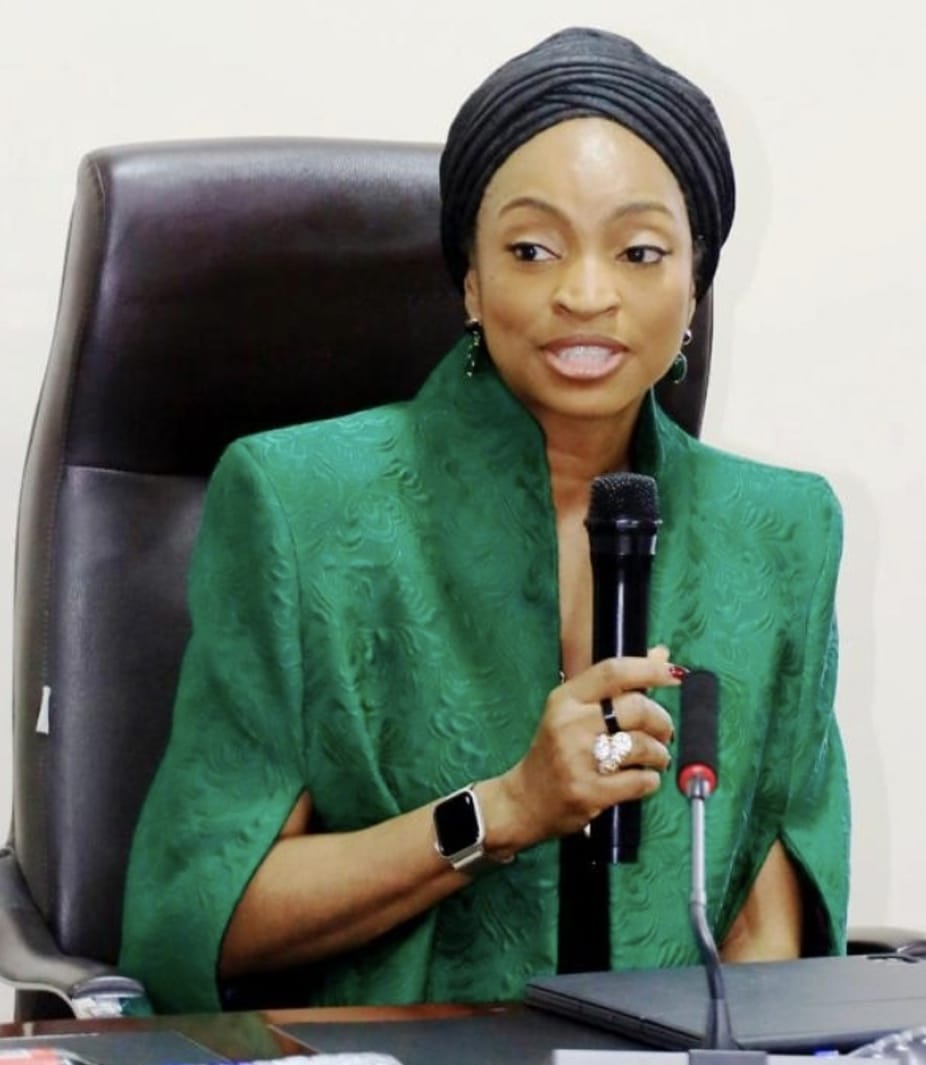
The Federal Government has moved to tighten the regulatory framework governing Nigeria’s Special Economic Zones (SEZs), assuring legitimate investors that existing incentives will be protected while loopholes that enable abuse of the Free Zones scheme are being closed.
The Minister of Industry, Trade and Investment, Dr Jumoke Oduwole, gave the assurance as the Special Economic Zones Legislative and Regulatory Reform Committee commenced a dedicated drafting retreat to translate ongoing consultations into revised legislative and regulatory instruments.
The retreat assembled officials from the Ministry of Justice, the Ministry of Industry, Trade and Investment, the Nigeria Export Processing Zones Authority (NEPZA), the Oil and Gas Free Zones Authority (OGFZA), and the Nigeria Customs Service and the Nigeria Revenue Service (NRS).
Oduwole said the reform was not aimed at dismantling the Free Zones regime or withdrawing the incentives that have historically attracted investors to Nigeria.
The minister said legitimate incentives, including duty-free importation of capital goods, tax exemption on qualifying export profits, 100 per cent foreign ownership and unrestricted repatriation, would remain central to the framework.
“A Free Zone cannot become an alternative route into the Nigerian domestic market on terms unavailable to manufacturers operating in the Customs Territory.
“But this is not an argument against Free Zones. It is an argument for protecting them. Legitimate investors who have committed capital to Nigeria deserve certainty. The rules must be clear. Institutional responsibilities must be clear. Customs and tax treatment must be predictable. And lawful incentives must remain defensible,” she said.
She said the reform followed renewed scrutiny of the integrity of the Free Zones scheme after recent Nigeria Customs Service enforcement actions involving allegations that goods entering under Free Zone concessions were subsequently diverted into the domestic market.
According to her, the government’s objective is to address such weaknesses without undermining investors and operators who have complied with the existing rules.
“The choice before Nigeria is not between preserving the Free Zones scheme and dismantling it. It is whether we can preserve what works, correct what does not and build a framework capable of serving the economy we are becoming,” Oduwole said.
The minister said the participation of Customs and the NRS as core members of the drafting committee was deliberate, particularly because the two institutions will play key roles in implementing customs and tax provisions under the new framework.
Other News
The minister noted that a key principle emerging from stakeholder discussions is the call for “one authority, one visit, one record” to reduce regulatory friction for businesses operating in the zones.
Oduwole described the principle as a useful test for the final implementation framework.
In addition, she said the reform marks a significant expansion of the Free Zones framework to accommodate digital businesses.
She pointed out that for the first time, the draft regulations expressly recognise Digital Free Zones and Digital Free Zone Enterprises, with proposed licence categories including Innovator and Sandbox licences for businesses that may not require a conventional physical presence.
The development, according to her, followed President Bola Tinubu’s directive to move the Digital Free Zones initiative into implementation, with a roadmap for full launch within 180 days.
Oduwole said Nigeria’s export ambitions must extend beyond physical goods.
“Nigeria’s future exports will not only leave our ports in containers,” she said.
“Nigerian companies increasingly export technology, financial and professional services, creative products, intellectual property and other digitally delivered services. A modern Special Economic Zones regime must be able to attract those businesses as deliberately as it has historically sought to attract manufacturers.”
The minister said the reform is aligned with the Renewed Hope Agenda and the Federal Government’s efforts to expand Nigeria’s productive base, increase non-oil exports and create jobs.
Also, NEPZA Chairman Hadi Mutallab said the reform would strengthen the integrity of the scheme while ensuring that legitimate operators were protected during the transition.
Similarly, the Executive Secretary of the Nigeria Economic Zones Association, Toyin Elegbede, welcomed the consultative process, saying operators wanted reforms that addressed genuine regulatory gaps without creating uncertainty for existing investments.