Follow Us on Google
By Chinwendu Obienyi
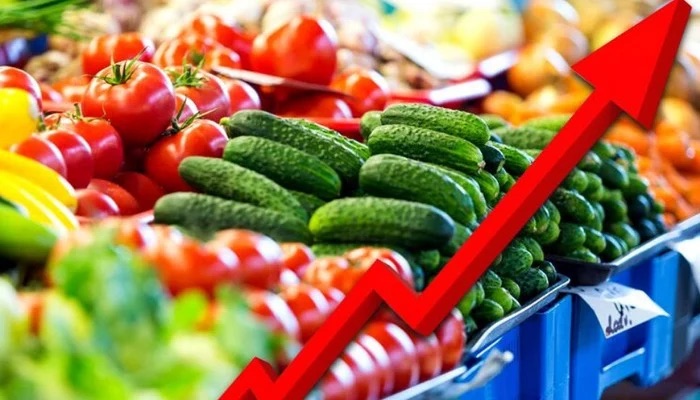
Nigerian households spent an estimated N1.25 million more on food in 2025 than on rent, education and other essential needs combined, underscoring the deepening pressure on living standards despite signs of easing inflation.
A new cost-of-living report by Risevest reveals that food has become the single biggest drain on household income, as rising prices for basic necessities continue to dominate spending patterns nationwide.
The findings come as Africa’s largest economy attempts to stabilise following months of currency volatility and surging inflation. Although Nigeria rebased its Consumer Price Index earlier this year—bringing headline inflation down from over 34 per cent in December 2024 to between 18 and 24 per cent through much of 2025—the relief has yet to reach most households.
Instead, the report highlights a growing disconnect between official data and everyday realities. Key expense categories, including food, transport, healthcare and education, remain stubbornly high, with low-income earners bearing the brunt.
While incomes have risen, the gains have been marginal. Median monthly earnings increased to N200,225 in 2025 from N140,000 a year earlier. However, with 73 per cent of over 19,000 respondents earning below the average, most households are still navigating tight budgets with little room for financial flexibility.
Analysing the report, income growth, though evident, has done little to offset the pressure. Median monthly earnings rose to N200,225 in 2025 from N140,000 a year earlier. Yet with 73 per cent of respondents out of 19,000+ sample size earning below the average income level, the majority of households continue to operate with limited financial flexibility.
Specifically, about N104,118.39 was spent on food in a month. Hence when checked in a year, this grew to about N1.249 million.
As a result, more than half of household income is typically spent on basic living expenses, leaving little room for savings or long-term financial planning. Although the report notes a 21.5 per cent increase in savings rates, this progress remains fragile as many Nigerians continue to hold funds in cash or low-yield accounts, limiting their ability to build wealth in an inflationary environment.
Chief Marketing Officer, Risevest, Eneyi Obienyi, in a keynote statement, stated that the next frontier is not just maintaining these higher savings rates but ensuring that money works harder for households.
“That means better education, more accessible financial products, stronger markets, and stable economies that let people plan with confidence rather than fear”, she said.
According to her, the firm’s goal goes beyond collecting statistics as it wants to understand people, their decisions, emotions, and aspirations in the face of shifting realities.
“This year’s report captures those voices with greater clarity than ever. Across Africa, from Lagos to Nairobi, Accra to Kampala, people are waking to the same economic truth that the world has changed, and so has the price of living in it.
Inflation may have slowed, currencies may have found new balance, but the cost of everyday life has rewritten itself in ways that numbers alone cannot explain”, Obi explained.
The report highlighting growing emphasis on intentional spending and long-term planning, even as immediate cost pressures remain acute, warned that structural challenges, including weak wage growth, income inequality and the high cost of essential goods, may continue to undermine financial stability for many families.
It noted that without meaningful improvements in real incomes and affordability, the gap between statistical recovery and lived experience is likely to persist.
“Economic stability on its own is not enough to ease the financial strain many households face. Inflation in essential categories, such as food, transport, education, and healthcare affects lower income households the most, even when overall inflation appears moderate.
The data shows that policies need to address more than headline economic indicators. The underlying issues that keep income inequality in place and limit financial resilience must be confronted directly. Until wages grow, income distribution becomes more balanced, and the cost of essential goods and services aligns with what people can realistically afford, the gap between economic recovery on paper and real financial security for households will continue across the country”, the report concluded.