Follow Us on Google
• Campaign targets 2.2m zero-dose kids in 6 states
By Doris Obinna
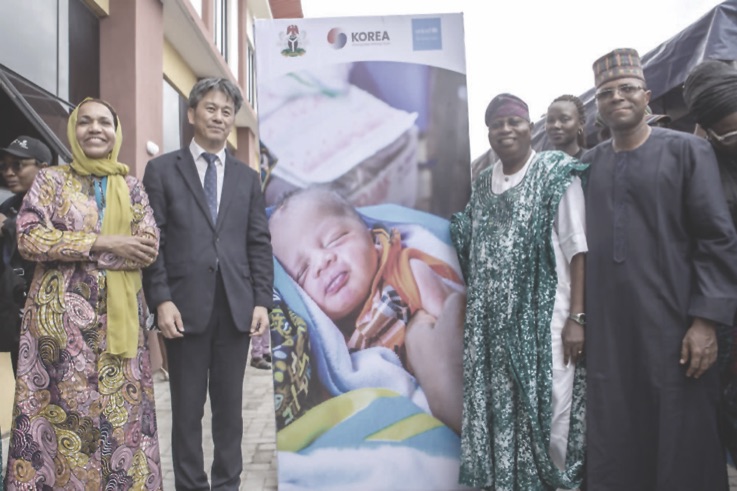
A fresh push to close Nigeria’s immunisation gap has been launched as the United Nations Children’s Fund (UNICEF), in partnership with the Federal Government.and Republic of Korea, unveiled a $5.6 million vaccination programme aimed at reaching 2.2 million children who have never received a single routine vaccine.
The initiative, formally flagged off in Badagry, Lagos State, is targeting 40 local government areas in six high-burden states: Lagos, Ogun, Bauchi, Niger, Adamawa, and the Federal Capital Territory (Abuja) where “zero-dose” children are most concentrated.
Health officials and development partners say the intervention is part of a wider effort to close deep inequality gaps in Nigeria’s primary healthcare system, particularly in hard-to-reach and underserved communities.
A crisis of “zero-dose” children
UNICEF says Nigeria currently carries one of the heaviest burdens of unvaccinated children globally, with an estimated 2.2 million children who have never received even a first dose of routine immunisation.
UNICEF Nigeria Country Representative, Wafaa Saeed, described the situation as a critical development and health emergency, stressing that the affected children are often concentrated in fragile urban settlements, remote border communities, and conflict-affected areas.
“These are not just statistics but real children whose lives are at risk,” she said, warning that the issue reflects inequality in access rather than failure of vaccines.
She added that strengthening outreach, rebuilding trust in communities, and improving primary healthcare delivery systems would be central to the success of the programme.
Global partnership expands health reach
The funding is part of the broader Access to COVID-19 Tools Accelerator (ACT-A) investment mechanism under a global partnership between UNICEF and the Republic of Korea.
According to Korean officials, the third phase of the programme (2025–2026) allocates $20 million across 12 countries, with Nigeria receiving $5.6 million due to its high burden of zero-dose children.
Consul General, Republic of Korea in Lagos, Lee Sang Ho, said the partnership reflects a shared commitment to global health security, noting that unvaccinated populations anywhere pose risks everywhere.
He explained that the Nigerian component would focus on targeted vaccination campaigns, strengthening routine immunisation systems, and addressing social and behavioural barriers that prevent vaccine uptake. “Over the full programme cycle, South Korea is expected to contribute $70 million globally under the initiative.”
Government and local leaders back intervention
Other News
Representing the Lagos State Government, health officials said rapid urbanisation and population growth continue to stretch healthcare access, leaving pockets of vulnerability even in densely populated areas like Badagry.
They noted that the programme would deploy data-driven strategies and strengthen frontline health workers to identify and reach missed children.
Similarly, local government leadership in Badagry welcomed the intervention, describing it as critical for coastal and border communities where geography and mobility often limit access to healthcare services.
Focus on equity and sustainability
UNICEF stressed that the programme is not only about delivering vaccines but also about strengthening long-term systems that can sustain immunisation coverage beyond donor funding cycles.
Saeed said success would be measured by whether Nigeria can build resilient systems capable of continuously identifying and reaching children who are missed.
“Every child belongs in the national health system,” she said, adding that immunisation is central to human capital development, productivity, and social stability.
Six-state rollout and community outreach
The campaign will be implemented through Nigeria’s existing primary healthcare structures in collaboration with the National Primary Health Care Development Agency (NPHCDA) and state health boards.
Activities will include intensified outreach campaigns, tracking of missed children, expanded immunisation sessions in underserved communities, and improved community engagement to address vaccine hesitancy.
Officials say the approach is designed to ensure no child is excluded due to distance, insecurity, or lack of awareness.
Partners in the initiative say the urgency of Nigeria’s immunisation gap makes it a global concern, not just a national one.
The programme’s supporters argue that reducing the number of zero-dose children is essential to preventing disease outbreaks, strengthening health security, and improving child survival outcomes.
As implementation begins, stakeholders say the success of the initiative will depend on sustained political commitment, community participation, and continued international support.
For now, the message from partners is closing Nigeria’s immunisation gap is both a moral imperative and a public health necessity and it must leave no child behind.