Follow Us on Google
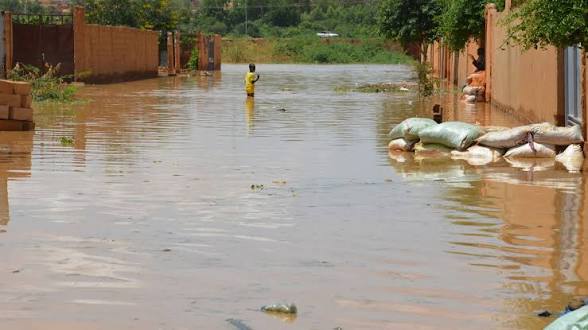
As the rains return across Kaduna State, bringing renewed hope for farmers, herders and communities, environmental experts are warning that the season also exposes years of harmful human activities that threaten public health, livelihoods and the environment.
This was the central message at a stakeholders’ engagement in Kaduna, where environmental experts, development practitioners and journalists examined the link between human activities, climate change and environmental degradation.
Speaking at the meeting, Hajiya Halima Haruna, a lecturer in the Department of Mineral and Petroleum Resources Engineering at Kaduna Polytechnic, described rainfall as a “revealer” rather than a destroyer.
“Rain is clean. It is a blessing and a gift. It is not the rain that destroys our environment; it only reveals the consequences of our actions,” she said.
Haruna identified poor farming practices, indiscriminate waste disposal and open defecation as major activities worsening environmental degradation during the rainy season.
According to her, many farmers remove all vegetation cover from their farmlands, overgraze fields or burn crop residues after harvest. These practices destroy beneficial soil organisms that help bind soil particles together and maintain soil fertility.
Other News
She warned that the loss of fertile topsoil could leave farmers with unproductive land, forcing them to abandon their farms in search of new areas.
Executive Director of Transparency and Accountability for Totality Initiative, Haliru Ahmed Khalifa, shared the story of a teenage girl whose daily struggle to fetch water and care for family members has worsened due to climate-related challenges.
He said prolonged droughts; erratic rainfall and flooding are increasing the burden of unpaid care work across communities in Northern Nigeria.
Also speaking, a journalist, Angela Okafor, stressed the critical role of environmental communication in driving behavioural change.
Lydia Saleh of the Centre for Water and Environment Development noted that Kaduna has experienced recurrent flooding for decades, with major incidents recorded in 1988, 1994, 1999, 2003, 2012, 2020, 2022 and 2024.