Follow Us on Google
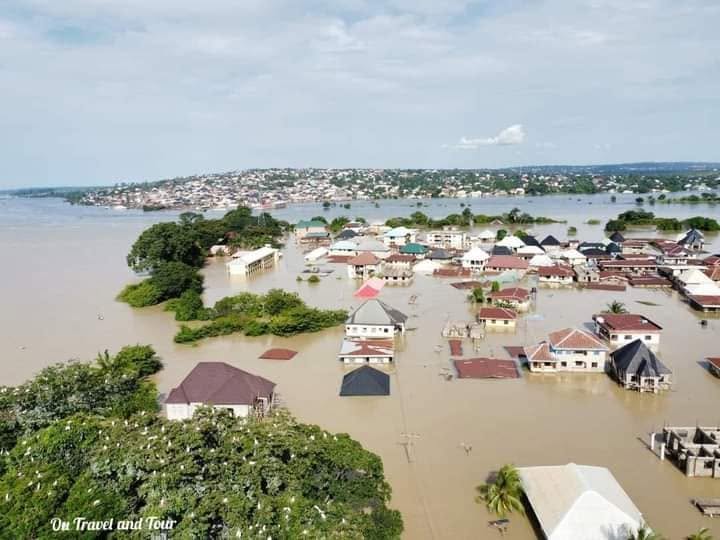
An indigene of Anambra West Local Government Area of Anambra State, Mr. Onyekachukwu Okonkwo, has stressed that the flood crisis ravaging the people could only be addressed when competent individuals are elected to represent them. He, therefore, called on the residents of the area to make competence, rather than financial inducement, the overriding consideration in choosing political leaders in the 2027 elections.
Speaking about the recurring incidence of flooding in Anambra West, Okonkwo said the annual disaster had moved beyond a seasonal environmental challenge to a governance and development crisis requiring competent representation at the local, state, and federal levels.
He said communities, including Oroma-Etiti Anam, Umudora Anam, Umueze Anam, Mmiata Anam, Nzam, Inoma, and Olumbanasa, were routinely affected by flooding between July and October last year, with farmlands destroyed, homes submerged, businesses disrupted, and residents displaced to emergency camps.
He said the consequences extended beyond physical destruction to education, healthcare, agriculture, and human capital development. He wondered how children in the flood-affected communities could compete in a technology-driven economy when schools are regularly disrupted by flooding while many educational facilities lacked basic infrastructure, including furniture, laboratories, and electricity.
He also highlighted the healthcare challenges confronting the riverine communities, arguing that the absence of adequate medical
infrastructure leaves residents vulnerable during emergencies, particularly women in labour during the flood season.
He said the situation is not inevitable, stressing that while the government might not be able to prevent rainfall or the flow of rivers, competent leadership could substantially reduce the consequences of flooding through appropriate infrastructure, policy, and federal intervention.
Okonkwo identified the completion of the Dasin Hausa Dam in Adamawa State as one of the major federal interventions capable of reducing the impact of flooding downstream. He noted that the dam was conceived as a buffer to help absorb excess water associated with releases from Cameroon’s Lagdo Dam, but had remained uncompleted for decades.
He, therefore, urged the people of Anambra West to elect legislators capable of using legislative motions, oversight functions and effective engagement with the Federal Government to push for the completion of the project. He further called for flood-resilient infrastructure in the zone, including all-season roads constructed on appropriate embankments and elevated markets, and healthcare facilities capable of remaining functional during the flood season.
He also opposed the continued use of public primary schools as emergency Internally Displaced Persons camps, saying the government should establish permanent emergency holding centres equipped with electricity, potable water, sanitation, and medical facilities.
On agriculture, he urged the government to support farmers with early-maturing and flood-resistant crop varieties, particularly rice
and cassava, as part of a broader strategy to protect Anambra West’s food production capacity. He also advocated the use of flood early-warning data, land-use mapping, and appropriate building regulations to ensure that new structures in flood-prone areas were properly elevated or kept away from active floodplains.
He maintained that effective representation at every level of government was critical to addressing the challenges, arguing that competent local government chairmen could attract primary healthcare and digital learning facilities, while state and federal legislators could use their constitutional responsibilities to pursue infrastructure, ecological and flood-control interventions.
He consequently urged voters to reject what he described as the monetisation of politics and the practice of electing leaders principally on the basis of sentiment, popularity, or financial inducement.
“The year 2027 presents a defining opportunity,” he said, urging the people to choose “educated, credible, and accountable leaders” with the capacity to understand governance and address the area’s longstanding development challenges.
He argued that the future of Anambra West depends on changing the quality of political representation, insisting that the recurring flood crisis should be treated as a governance challenge requiring long-term solutions, rather than temporary relief. “If we fix our politics in 2027, we will fix our flood,” he submitted.