Follow Us on Google
As the Federal Inland Revenue Service (FIRS) prepares to transition into the Nigerian Revenue Service (NRS) next month, it has taken a major step toward modernising tax administration through international collaboration.
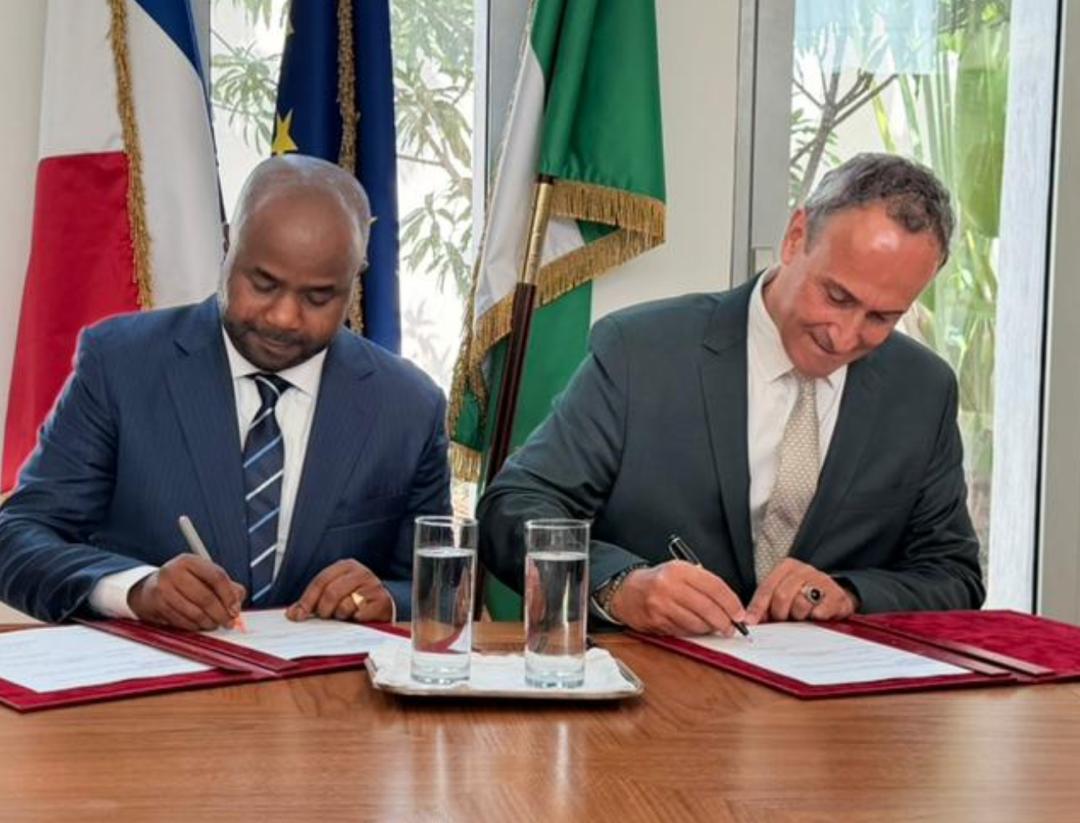
On Wednesday, FIRS signed a memorandum of understanding (MoU) with its French counterpart, the Direction Générale des Finances Publiques (DGFP), aimed at promoting efficient, technology-driven tax systems and fostering areas of mutual interest.
The signing ceremony, held at the French Embassy in Abuja, was witnessed by FIRS Chairman Zacch Adedeji and French Ambassador to Nigeria Marc Fonbaustier, who signed on behalf of DGFP. Adedeji described the MoU as reflecting “a shared commitment to building stronger, more resilient, and more forward-looking tax administrations” in both countries. Ambassador Fonbaustier emphasized the importance of collaboration in achieving this goal.
Digital transformation emerged as a central pillar of the partnership. In a statement released by his Special Adviser on Media, Dare Adekanmbi, Adedeji highlighted that Nigeria seeks to leverage France’s advanced technology in compliance management, taxpayer services, and data-driven enforcement.
He noted that France would also benefit, gaining “fresh perspectives from Nigeria’s rapid digital expansion, our agile adoption of new tools, and the unique solutions we are developing for a fast-growing, technology-driven population.”
“This two-way exchange is essential as both countries adapt to emerging challenges such as Artificial Intelligence deployment, cybersecurity, and cross-border taxation,” Adedeji said.
Other News
The partnership will also focus on workforce development. “While we look forward to learning from France’s well-structured human capital systems, particularly in professional standards, continuous learning, and organizational discipline, we also believe that our experience in managing a young, dynamic and diverse workforce will offer valuable insights to DGFIP,” he added.
Adedeji emphasized the broader strategic benefits, including sharing innovations, exchanging ideas, and strengthening institutional culture.
“Together, we can develop models that build global competencies and prepare our respective institutions for the future of public finance administration,” he said.
The MoU is also expected to deepen cooperation in international taxation, transfer pricing, information exchange, and Base Erosion and Profit Shifting (BEPS) initiatives. “As economic activities become increasingly borderless, the ability of both our institutions to collaborate, share intelligence, and harmonize approaches will be crucial. This MoU provides exactly the platform we need to deepen that cooperation,” Adedeji said.
He described the partnership as a cornerstone of Nigeria’s transformation into the Nigerian Revenue Service, positioning it as “modern, trusted, innovative, and globally connected.”