Follow Us on Google
By Merit Ibe
Industries, businesses and households in Nigeria may soon experience relief from persistent power challenges as DMCA Energy Ltd has introduced a hydraulic electricity generating plant designed to provide reliable, round-the-clock power supply.
The innovation is expected to boost productivity, reduce dependence on expensive fuel-powered generators, and cut operational costs for industries across manufacturing, logistics and service sectors.
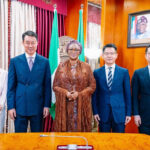
The Chief Executive Officer of DMCA Energy, Amabi Christopher, disclosed this during a joint meeting with the National President of the National Association of Chambers of Commerce, Industry, Mines and Agriculture (NACCIMA), Jani Ibrahim; the Director-General of NACCIMA, Dr. Sola Obadimu; representatives of the Manufacturers Association of Nigeria (MAN); and DMCA’s internal consultant, Oyefunke Owuru.
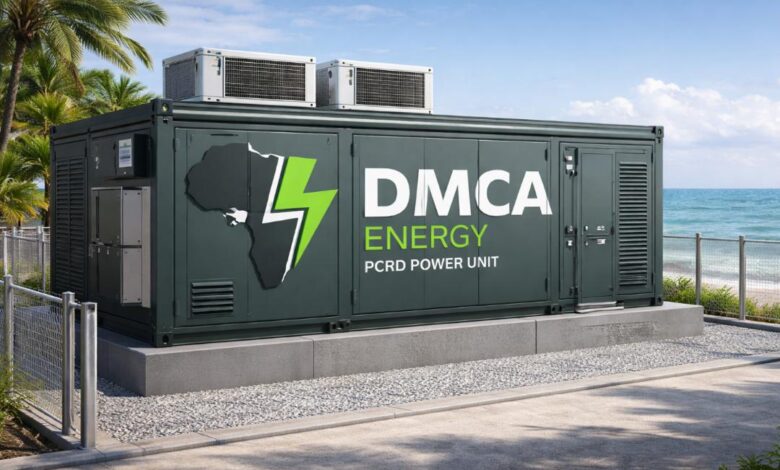
According to Christopher, the technology, known as the Principle of Converted Regenerative Device (PCRD), has the potential to significantly reshape Nigeria’s energy landscape by delivering affordable, clean and sustainable electricity to industries, commercial enterprises, government institutions and residential clusters, particularly in underserved and off-grid areas.
He described the initiative as a major economic catalyst capable of stimulating growth through direct and indirect value creation.
Christopher explained that the PCRD system has an operational lifespan of about 35 years, offering long-term reliability and cost efficiency. Unlike generators or solar installations, users are not required to purchase the equipment outright.
“Under our Power Purchase Agreement (PPA) framework, DMCA deploys the machines at customer locations, and subscribers only pay for the electricity consumed,” he said.
He added that the system provides both primary and backup power, addressing one of Nigeria’s biggest energy challenges.
“This is a two-in-one solution. The absence of dependable backup power has crippled productivity for years, and our technology completely eliminates that gap,” Christopher said.
Other News
He disclosed that 100 PCRD units are already available in Nigeria and will be deployed to the first 100 subscribers under a pilot phase targeting high-energy users such as factories, hospitals, commercial centres and large estates.
To boost public confidence, Christopher said the technology has undergone extensive technical evaluation. He noted that the machine, which has been in Nigeria since 2024, was tested and certified by the Faculty of Engineering, University of Lagos, and the Standards Organisation of Nigeria (SON). The Lagos State Government also reviewed the technology and recommended independent validation prior to nationwide deployment.
“The Lagos State Government examined the machine and advised independent technical assessments, which led us to UNILAG and SON. Both certified the principles and performance of the system,” he said.
Christopher added that beyond addressing Nigeria’s power deficit, the technology offers investors stable returns while supporting industrialisation, energy security and economic diversification across Nigeria and Africa.
Reacting, NACCIMA President Jani Ibrahim described the innovation as potentially transformative if independently verified and deployed at scale.
“Anyone who solves Nigeria’s electricity problem would have economically liberated the nation. However, for public trust, DMCA should subject this innovation to NACCIMA’s proof-of-concept platform so the private sector can adopt it with confidence,” he said.
Ibrahim noted that reliable electricity remains a critical driver of industrial growth, competitiveness and investment, particularly in line with President Bola Ahmed Tinubu’s ambition of achieving a $1 trillion economy by 2030.
Similarly, NACCIMA Director-General Dr. Sola Obadimu said the association would recommend the technology to its members once verification is completed.
“Energy cost is a major burden for manufacturers. Any solution that improves efficiency and reduces cost will be embraced,” Obadimu said.
Both officials assured DMCA that once the system’s efficiency and reliability are confirmed, steps would be taken to support its adoption in addressing Nigeria’s persistent power supply challenges.